
On June 5, the world marked World Environment Day under the theme “Inspired by Nature. For Climate. For Our Future.” It is a call to look at the natural world as a blueprint in the fight against climate change. Across Africa, nature is communicating through droughts, floods, and shifting agricultural seasons.
For decades, Africa has been described as the “continent of the future.” The conversation can no longer be about Africa’s potential but whether the continent is prepared to seize that future.
Today, Africa stands at a defining crossroads. Home to the world’s youngest population, abundant natural resources, vast arable land, and growing urban centres, the continent possesses all the ingredients required for economic transformation.
However, the challenge is no longer about potential but about execution. The transition to a climate-resilient economy must happen now.
Africa is home to more than 1.4 billion people, the youngest population on earth, and is projected to account for a quarter of the global workforce by 2050. Its workforce will become one of the largest globally, offering a demographic advantage that many developed economies can only envy.
However, demographic growth alone does not guarantee prosperity. Without deliberate investment in education, healthcare, infrastructure, climate-smart agriculture, and job creation, this demographic dividend could become a missed opportunity.
Every citizen represents a source of ingenuity, ambition, creativity, and productivity. They are the entrepreneurs, farmers, innovators, and young people who are the reason Africa matters to the global economy. But their future depends on a healthy planet. When nature inspires our solutions, we build an economy that works for both people and the climate.
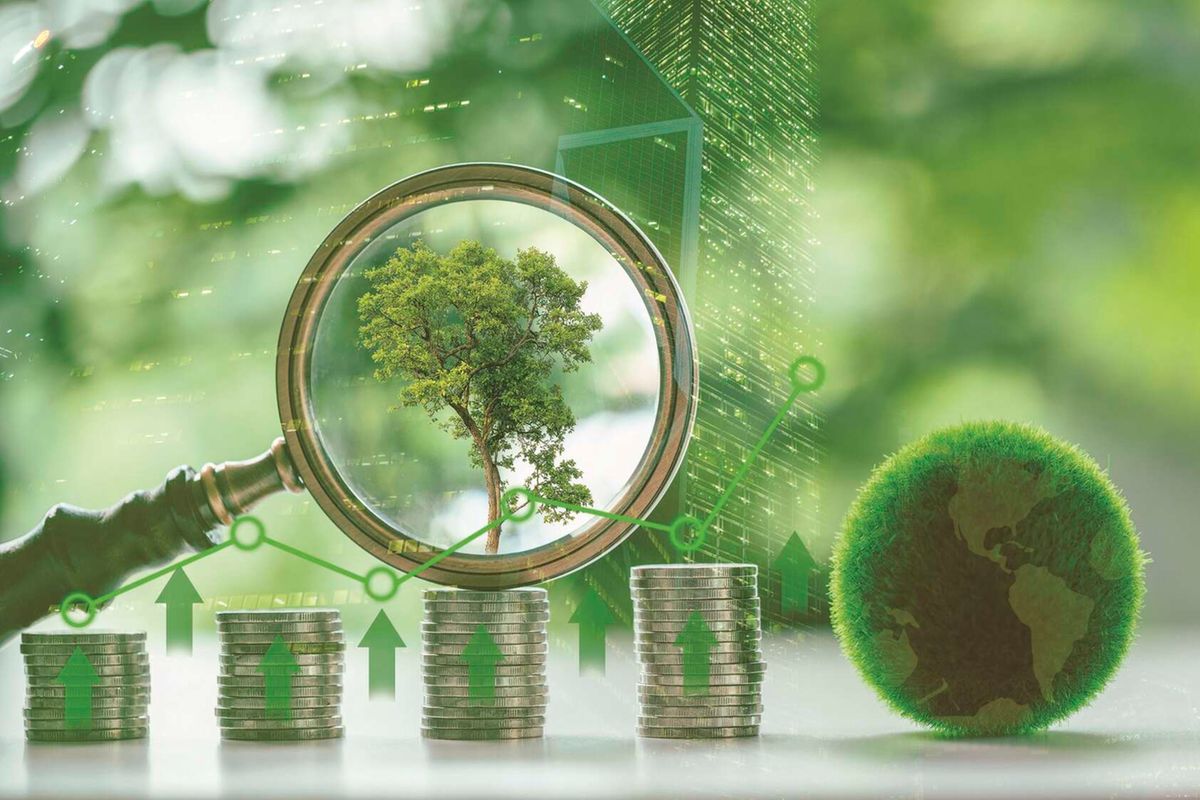
Funds must proceed every economic transition. Industrialisation did not happen because factories were built but because capital was mobilised.
The green and inclusive transition demanded of Africa requires the same architecture while the financial institutions that build it will define the shape of the economies that emerge.
At KCB, we extended over Sh48.8 billion in green finance facilities, or 25.84 percent of our total loan portfolio. Through our Clean Energy Access Programme, we’ve provided Sh782.5 million in financing to transition 266 schools to solar power.
This shift has reduced deforestation, improved learning environments, and saved schools up to 90 percent on energy costs.
If Africa is to secure its place in the economy of the future, the time to act is now. The global economy is being reshaped by artificial intelligence, shifting supply chains, and new energy systems.
Capital is flowing towards economies that can adapt quickly and compete effectively. Africa is uniquely positioned to benefit from the global transition to a low-carbon economy, with its renewable energy potential, biodiversity assets, and critical minerals providing a strong foundation for green growth.
As we reflect on World Environment Day 2026, let us remember that nature is our economy. To be inspired by nature means recognizing that a healthy climate and a prosperous future are one and the same. For Africa, for climate, and for our future we cannot afford to wait any longer.
The writer is the KCB Group CEO and Chairman of Kenya Bankers Association (KBA).