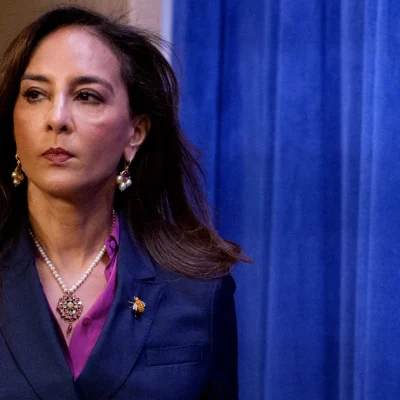

Below is a transcript of Sr. Staff Attorney Isabel Carlota Roby’s remarks before the Tom Lantos Human Rights Commission, delivered on July 15, 2026 regarding the human rights situation in Venezuela.
Good afternoon,
Thank you, Co-Chairman McGovern, Co‐Chairman Smith, members of the Commission. I will address the human rights situation in Venezuela, focusing on victims’ access to justice, including international mechanisms, and the urgent need for an orderly transition to democracy and accountability, made all the more pressing by the severe earthquakes that struck Venezuela on June 24, 2026.
The catastrophic June 24 earthquakes add to an already dire political and humanitarian crisis, creating an unprecedented emergency amid repression, mass migration, and entrenched corruption. This crisis is unfolding squarely within an authoritarian context characterized by repression and state control. The regime’s repressive hold and institutional weaknesses shape, and constrain, the response, magnifying its incapacity to meet basic needs and exposing its inability to plan or carry out reconstruction, further strengthening the case for a prompt democratic transition.
In a functioning state with a genuine rule of law, judicial guarantees and due process serve as essential limits on the state’s punitive power. In an authoritarian setting, like Venezuela, the individual is at the mercy of the authorities, which uses its penal system to develop a state policy of repression that criminalizes and persecutes dissident and critical voices, or anyone who challenges the spheres of power.
Factions in power are likely to exploit the earthquakes to delay negotiations over a democratic transition, a delay that might seem reasonable in a state with genuine rule of law but, in an authoritarian system, like Venezuela, would only entrench control. Authoritarian regimes are adept at buying time and exploiting crises to consolidate power.
The political and humanitarian crises that predated the earthquakes are not incidental but part of a deliberate model the regime uses to control the population. This is a highly repressive system sustained by pervasive state control. This underscores the nature of the current Venezuelan regime, regardless of who is leading it: Currently led by Delcy Rodriguez, Jorge Rodriguez and Diosdado Cabello, the regime appears to be receiving external backing from the United States, while it now commands the response to the country’s worst-ever disaster, including management of humanitarian aid. That control risks the discriminatory weaponization of assistance for political ends, heightening the likelihood of violent conflict in the short and medium term.
If human rights and humanitarian concerns ever influenced US involvement in Venezuela, this disaster gives the current administration a chance to show its priorities extend beyond financial interests. Incorporating a human-rights perspective into the disaster response is pivotal, but impossible under an authoritarian, criminal regime. A human rights-centered approach to relief is essential both to affirm the dignity of vulnerable people and to prevent post-disaster conflict and abuse.
This is the right course not only for Venezuela and its democratic future, but for the moral standing of the region and the United States as a whole. Yet the Trump administration is backing an authoritarian regime that, since 2014, has detained more than 19,000 people for political reasons, and has relied on crimes against humanity to stabilize power and enforce state control.
Gross human rights violations in Venezuela are not incidental or isolated phenomena but a deliberate and adaptive strategy of State repression. Arbitrary detentions, torture, enforced disappearances, sexual violence, extrajudicial executions, are embedded in the country’s political order and have been calibrated over time to neutralize dissent, consolidate control, and project strength.
For example, following the July 28, 2024, presidential elections, Venezuelan authorities and state-sponsored civilian collectives or “colectivos” carried out widespread abuses, killing 25 protesters and bystanders, arbitrarily detaining thousands, and systematically using enforced disappearances as a core tool of political repression.
Our organization’s 2025 report, which we have submitted in advance for the record, shows how enforced disappearances are used as a tool of control and to stabilize power, particularly during electoral periods when spheres of power are challenged.
Enforced disappearances precipitate other grave human-rights violations, including violations of the rights to life, personal liberty, denial of due process, and practices of torture. Despite the severity of these crimes, the state authorities tasked with investigating and prosecuting them fail to fulfill their duties.
A 2024 report by the Expert Panel on Venezuela of the Organization of American States (OAS) found that the Venezuelan state failed to initiate judicial proceedings in 53% of the cases reviewed and secured convictions in only 6%. Findings from international mechanisms converge on the same conclusion: domestic avenues for justice are effectively closed.
This is because Venezuela’s judiciary is not independent but instrumental to the repressive apparatus; it aids and abets gross human‐rights violations rather than checking them. The Fact‐Finding Mission concluded that the justice system has made an essential contribution in implementing the state policy of quashing opposition.
Recent changes to the judiciary are merely cosmetic: they retain key figures of the repressive apparatus, which remains intact even after Maduro’s removal.
The Fact-Finding Mission has also repeatedly stated that crimes against humanity are being committed in Venezuela, particularly the crime of persecution. The International Criminal Court (ICC) opened a formal investigation in 2021, and this investigation remains ongoing.
And while public narratives before and after Maduro’s removal have often focused on drug‐trafficking links, that must not obscure ongoing impunity for crimes against humanity. The impunity gap further enables other crimes.
The importance of accountability efforts at the international level cannot be overstated; victims rely on international mechanisms to obtain justice, and therefore, such mechanisms must be supported, not attacked or weakened.
The recent US attacks on the ICC are deeply troubling. The Court—recognized by 125 sovereign states—was created to hold perpetrators of the gravest crimes accountable, yet the State Department’s new campaign under Secretary Rubio goes beyond rejecting its jurisdiction and seeks to weaken an institution essential to international justice. International justice is not a threat to sovereignty; impunity is a threat to humanity. The world needs strong, independent institutions to act when national systems cannot or will not. No country should be above the law, and no victim of genocide, crimes against humanity, or war crimes should be denied justice for political convenience. The United States should be strengthening the international system of justice, not working to dismantle it.
This is especially troubling for Venezuela, where victims have no realistic prospect of justice under the current authoritarian system unless a democratic transition and genuine institutional rebuilding occur. Undermining international accountability is therefore an affront both to the global system and to the thousands of Venezuelan victims of crimes against humanity who await redress. In 2023, the Pre‐Trial Chamber directed the Victims Participation and Reparations Section (VPRS) to gather victims’ views on resuming the investigation on crimes against humanity committed in Venezuela; the VPRS collected input from 8,900 victims and published a public report summarizing those testimonies. These victims need real leadership to boldly reinvent and reform the international system without embracing the needless destruction of multilateralism. Impunity cannot be an option.
One thing is clear, justice is intrinsically linked to democracy. There can be no real justice in Venezuela without a democratic transition. Victims have no prospect of redress under a current authoritarian system whose leaders, by all indications, are implicated in the chain of command responsible for these crimes.
The United States and the international community must choose whether to support an orderly, rights‐based transition, help finance the reconstruction of Venezuela, or continue to support an authoritarian regime.
Choosing the former means taking decisive steps to neutralize the repressive apparatus, restore democratic institutions, repeal repressive laws, and enable free, fair, and prompt elections as soon as possible.
I believe the first milestone has been the unfettered entry and deployment of international humanitarian actors, without military screening or the regime’s constant presence. For the first time the regime has lost its monopoly and ceded territorial control, creating a significant strategic advantage. That shift directly advances efforts to neutralize the repressive apparatus. The regime lacks the capacity to rebuild without international assistance and has been compelled to admit actors it previously barred. Their presence bolsters civilians’ sense of security and, combined with robust international backing and committed political leadership, can create the conditions for tangible steps toward a democratic transition.
The second milestone must be the unconditional, not transactional, release of all political prisoners. This is an operational prerequisite to show the regime is losing its capacity for institutional kidnapping, not merely a gesture of goodwill, but a full, non-negotiable reform. The United States should and can insist on this, given its significant leverage over the regime’s decisions and finances.
Third, accountability — not impunity — must be a priority, and attacks against multilateral institutions must cease. A transition in Venezuela cannot begin with pardons for crimes against humanity or the expansion of the impunity gap; on the contrary steps for a transition must guarantee that international mechanisms (including the Fact-Finding Mission and the Inter American Commission) can operate on the ground, access the country, document, and collect evidence without institutional obstruction or reprisals. It must also include support for the continuation of the ICC investigation for crimes against humanity committed in Venezuela by the Maduro and Rodriguez regimes.
Finally, the United States—given its influence and leverage with Venezuela—has a special responsibility to ensure Venezuela returns to a democratic path rather than privileging a more profitable authoritarian partner. Democracy is not a commodity to be traded for oil or profit; it is a fundamental right of everyone in this hemisphere. It is my hope that this Human Rights Commission remembers that, even as the United States grapples with its own rule‐of‐law challenges.
Learn more about the hearing here. Download a copy of Isabel’s remarks with citations here.