

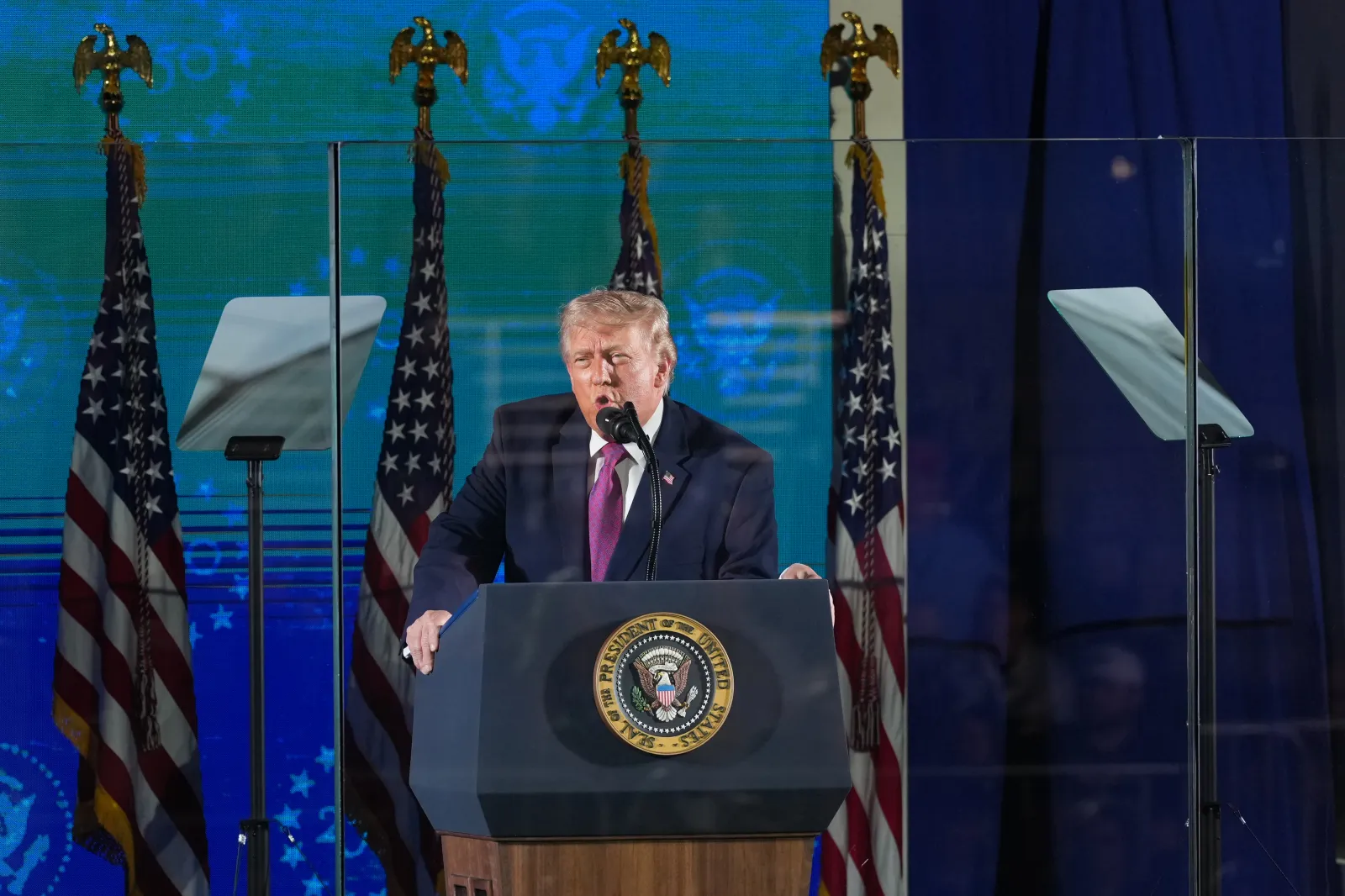
President Donald Trump on Friday referenced a recent Democratic resolution pushing to eliminate the Senate filibuster and consider expanding the Supreme Court in a Truth Social post, urging Republicans to act before Democrats do, warning that otherwise “the Republican Party will never win another Election.”
Trump’s message echoed positions he has taken before but reinforced them with the recent Democratic resolution as a rationale for urging Republicans to move first.
His post comes about four months before the midterm elections, with Democrats hoping to win back control of Congress after Republicans secured majorities in both the House and Senate in 2024. The party in the White House historically loses seats in the midterms.
What to Know
In his post, the president wrote, “The Dumocrats [sic] are openly stating that they plan to TERMINATE THE FILIBUSTER if they ever take power, and EXPAND THE SUPREME COURT.” He linked to a Politico article from June 24 detailing a resolution from the Black, Hispanic and progressive caucus chairs that includes “enacting structural changes” to the court as well as ending the filibuster.
Trump concluded the post by warning that Democrats “will TERMINATE THE FILIBUSTER in their first hour, and I’ll be sitting home with tears in my eyes saying, ‘I TOLD YOU SO!’”
The warning is notable because Trump has repeatedly called for ending the legislative filibuster, including during negotiations over government funding and other priorities during his first term.
The Senate filibuster generally requires 60 votes to invoke cloture, the procedural step needed to advance most legislation to a final vote. Supporters argue the filibuster encourages bipartisan compromise and protects minority-party rights, while critics contend it can obstruct legislation supported by a majority of senators.
A May Marquette Law School Poll found Americans are split on expanding the size of the court, with 50 percent in favor of adding more justices and 50 percent opposed to the measure. The survey of 1,001 adults was conducted between May 20-26, 2026, and has a margin of error of plus or minus 3.4 percentage points.
The Supreme Court has had nine justices since 1869, although Congress has changed the court’s size several times throughout U.S. history.
Calls to expand the court, along with term limits, have come primarily from some Democrats, particularly after Republicans confirmed three justices during Trump’s first term—Justices Neil Gorsuch, Brett Kavanaugh, and Amy Coney Barrett—giving conservatives a 6-3 majority that has since issued major rulings on abortion, voting rights, presidential power and other issues.
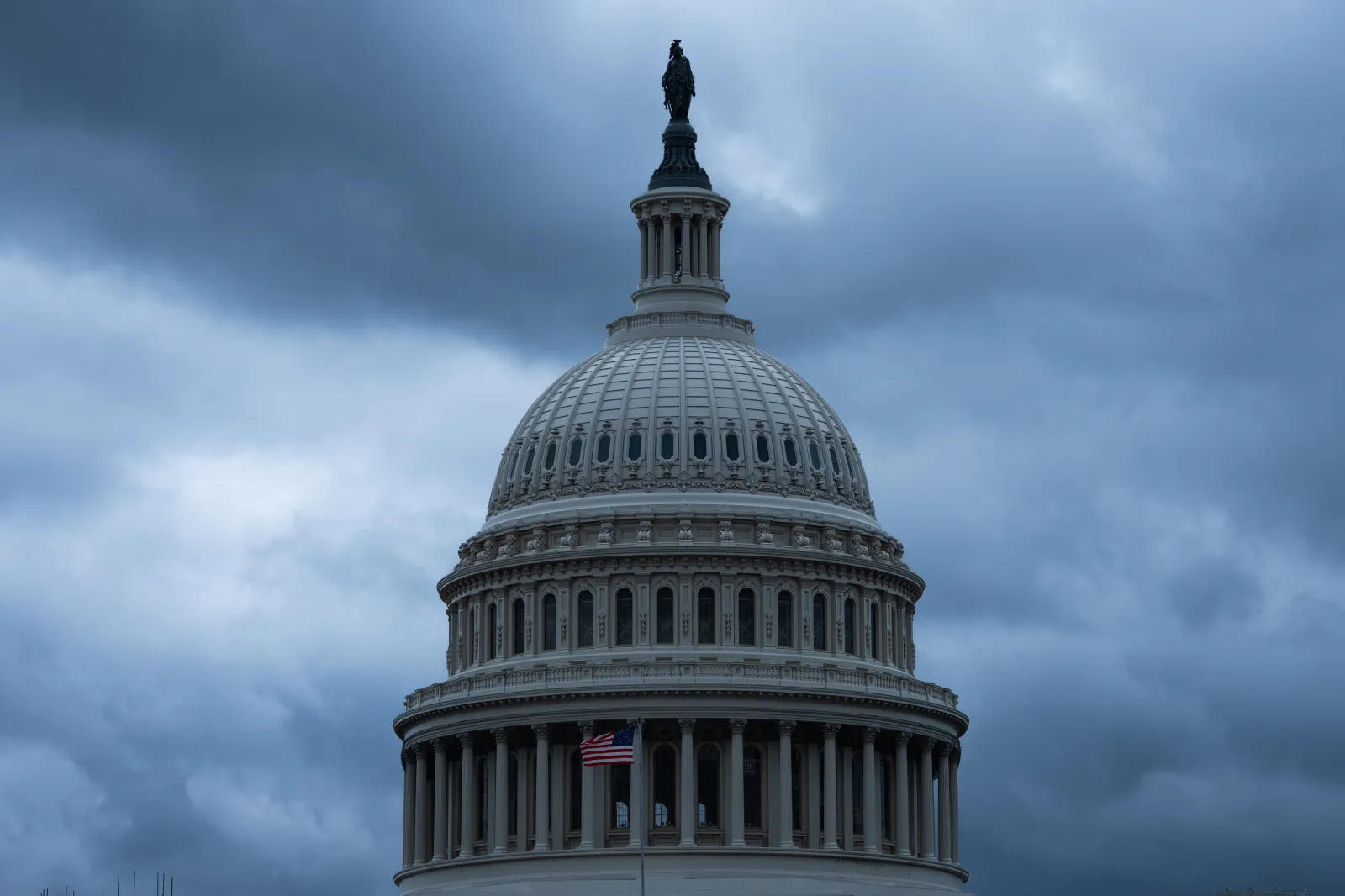
The resolution calls for restoring the Voting Rights Act, eliminating the Senate filibuster and considering structural reforms to the Supreme Court, including expansion. It was introduced on June 24 by Representative Greg Casar—a Texas Democrat and chair of the Congressional Progressive Caucus—and cosponsored by Representatives Yvette Clarke, Adriano Espaillat, Grace Meng, Hank Johnson and Kweisi Mfume. The measure drew attention because it was backed by leaders of several House Democratic caucuses, though it is not an official Democratic Party platform and has little chance of advancing in the current Republican-controlled Congress.
Much of the resolution focuses on voting rights, with the Democrats stating that the court’s April 6-3 ruling in Louisiana v. Callais “effectively gutted what remained of section 2 of the Voting Rights Act of 1965.” One of the Voting Rights Act’s most important provisions, known as Section 2, bans voting practices, including district maps, that dilute the voting power of minority groups. For decades, the law has been used to challenge redistricting plans and to require states to create districts in which minority voters have a fair opportunity to elect representatives.
The justices concluded that Louisiana’s creation of a second majority-Black district went too far in relying on race, raising constitutional concerns under the Equal Protection Clause. Trump applauded the ruling earlier this year.
The resolution specifically states that the House supports “under the next prodemocracy governing moment—(A) the elimination of the 60-vote threshold in the Senate; and enacting structural changes to the Supreme Court, taking into consideration a wide range of reforms, such as establishing a binding judicial code of ethics for Supreme Court Justices, term limits for Supreme Court Justices, and expanding the size of the Supreme Court.”
It was referred to the House Committee on the Judiciary.
Upcoming Midterm Elections
With four months until the midterm elections, Democrats hold a polling lead over Republicans to retake control of the House of Representatives in a race that is poised to become a referendum on Trump’s popularity. Democrats’ optimism stems from overperformance in special and state elections the past year and Trump’s declining approval rating.
Republicans currently hold a 218-212 majority in the House, so Democrats need to flip only a handful of seats to win control of the chamber, which is better odds than the Senate. Aggregate pollsters Silver Bulletin and RealClearPolling put Democrats’ margin on the generic congressional ballot around +6, with the Bulletin putting Democrats around 48 percent to Republicans’ 42 percent, and RealClearPolling finding Democrats around 49 percent to Republicans 43 percent.
Even if Democrats regained control of both chambers of Congress in November, proposals to eliminate the filibuster or expand the court would still face significant political hurdles and would likely require broad support within the party.
Primary elections have taken place across the country in recent weeks, with additional contests scheduled through September. The general election is on November 3.
Contact Newsweek editors on this story: Steve Mollman and Anthony Murray.