
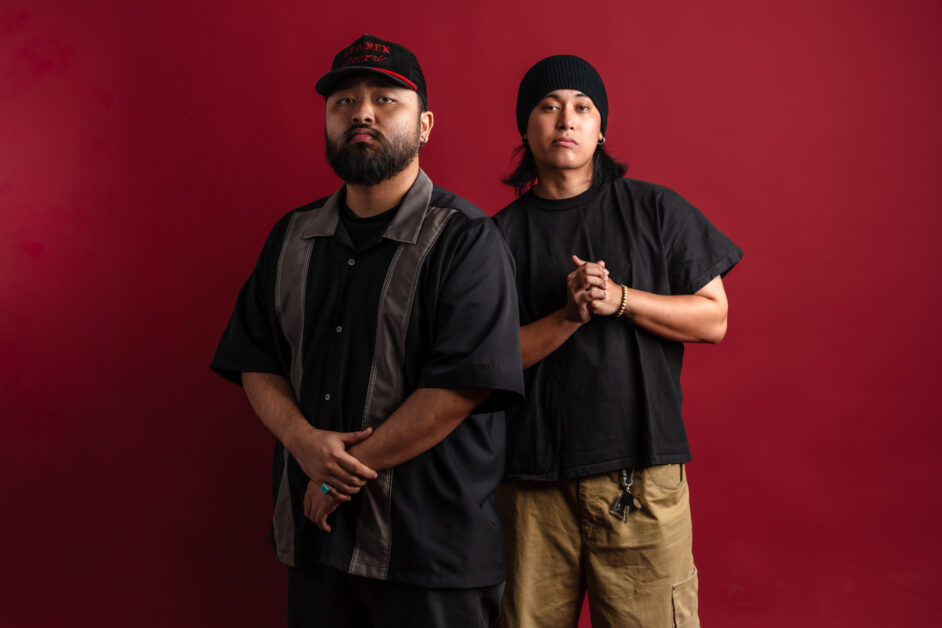
DAVAO CITY (7 August 2026) — When most people hear the word “Davao,” Delinquent Society says they tend to think of politics first. But in an interview, Aud and Contemplate — two of the frontmen of the hip-hop collective — told MindaNews how they want them to think of something else.

“What we’re trying to do is redefine what Davao is through our music,” said Aud. “When you hear Davao, you immediately associate it with a certain politician or a certain family. What we’re trying to do is show them that there’s something more than that through our music.”
“We won’t let that image or that reputation dictate what the city really means and what the people are,” he added.
This mission has shaped the group’s music since its beginnings in 2016. Across their discography, Delinquent Society repeatedly grounds its songs in the city they call home, weaving references to neighborhoods, places, and everyday life into verses that blend English, Filipino, and Cebuano.
Rather than translating Davao into something more familiar for listeners elsewhere, the group insists on meeting audiences on its own terms.
“We mention a lot of places even if other people don’t know where it is,” Aud said. “Just like … famous rappers in Canada or the States, they mention certain hoods or certain streets that people like us haven’t been to, but nagre-resonate sa amin (it resonates with us).”
“Nage-gets namin (We get) what they’re trying to say … because they paint pictures with their lyrics. And that’s what we’re trying to do with Davao as well,” he added.
That philosophy extends even to seemingly ordinary references. In songs like “No Visa,” the group mentions landmarks like Abreeza instead of replacing them with more universally recognizable symbols.
“Para sa akin, dito kasi kami pinanganak, so parang automatic na dapat i-represent,” said Contemplate. “Parang rare din ang mga rapper na galing Davao City din (For me, it’s because we were born here, so it’s almost automatic that it should be represented. Rappers from Davao City are rare).”
The city, they added, is what distinguishes Delinquent Society from the rest of the Philippine hip-hop scene.
“‘Di naman nila ma-reference ‘yong Abreeza, ‘di naman nila ma-reference ‘yong ibang lugar. Kami lang makagawa ‘non (They cannot reference Abreeza or other places. We’re the only ones who can),” Aud explained. “They cannot copy that fact.”
Speaking the way Davao speaks
The commitment to that sense of placeness also shapes the group’s language — Delinquent Society’s songs move fluidly between English, Filipino, and Cebuano, reflecting how they naturally communicate.
“In Davao, we naturally speak the mix,” Aud said. “That’s how we speak here. So I think, subconsciously, kahit hindi namin sadyain (even if it’s not on purpose), nai-incorporate siya sa (it’s incorporated into) the way we write and the way we rap.”
Code-switching, he explained, also allows them to preserve meanings that would otherwise disappear in translation. This multilingual approach has also become one of the group’s defining characteristics, allowing Delinquent Society to bridge local and national audiences while remaining rooted in the linguistic realities of Mindanao.
Clearly that potential has been realized, as Delinquent Society’s “8000WABAD” was among the nominees at this year’s Awit Awards — a recognition that brings attention both to the music and to the city it represents. The track also reflects the group’s fondness for that layered, multilingual lyricism. One line in particular — “Please, don’t copy my shadow” — initially struck as a meditation on imitation, that copying can only ever reach the outline rather than the real thing. Aud and Contemplate, however, revealed that when performed, the line can also be heard as “don’t copy masyado” — “don’t copy too much” — turning the phrase into a bilingual pun that reinforces the song’s message about originality and authenticity.
On authenticity
While Delinquent Society’s music often projects confidence, the duo kept coming back to authenticity as the group’s guiding principle.
“We’re just trying to stick with kung ano talaga kami (who we really are),” Aud said. “We’re not trying to be like somebody else.”
That perspective also informs songs such as “No Balance,” which critiques social class, cultural trends, and performative success. Growing up in a middle-class family without industry connections, Aud said the song emerged from watching people embrace underground culture only when it became fashionable.
“We’re trying to critique the people that are only here to be a culture vulture to what we’re trying to do,” he said, “as well as giving hope to people na same sa amin (who are like us) who have to fight for what we want.”
One lyric in particular — “No money but we have the knowledge” — captures that outlook. When asked, Aud explained that “knowledge” here refers to a kind of cultural instinct: knowing music, fashion, and street culture before they become fashionable or commercially valuable, and developing taste without necessarily possessing the money to purchase the status that would later be associated with that commercial value.
“We don’t have money, but we have the style, we have the taste that you cannot buy,” he said. “You cannot teach.”
But even with Delinquent Society’s flexing, as Aud described, much of the group’s writing is satirical, playing with the familiar language of hip-hop bravado only to undermine it a line later: one line might boast about having money, only for the next to admit they are broke.
The contradiction pokes fun at the carefully constructed personas people present online — the person who “flexes” online despite those around them knowing the reality behind the performance: “Flex ka nang flex… kilala kita eh (You keep flexing… but I know you),” Aud illustrated.
Crucially, however, Delinquent Society does not pretend to stand outside the system it ridicules. “We’re not afraid to say that we’re also that,” Aud said. “We’re just a product of [where] we’re from.” He described the group as “hypocrites in a way” — trying to resist the behaviors they observe around them while recognizing that they, too, participate in the same social world.
“In a sense, we’re trying to resist it, but at the same time, tao lang din naman kami na kailangan makisama,” Aud explained. He said rather than claiming moral distance, the group writes from inside those contradictions: “Kung anong nakikita namin, ‘yon ‘yong sinasabi namin” —what they see around them is what they write about.
From landmarks of Davao, to the multilingualism they grew up on, to the performance of success online, to even their own complicity in those performances, Delinquent Society’s authenticity lies in acknowledging that they, too, are shaped by the world as they encounter it. Rather than positioning themselves as outsiders looking in, the group turns the same critical gaze on themselves. The satire works precisely because it begins from recognition — “kilala kita eh” — and ends with the admission that they know themselves just as well. For Delinquent Society, writing authentically means refusing to pretend they stand outside the realities they observe and critique.
Returning after silence
Delinquent Society’s latest chapter comes after an unexpected interruption: the group stepped away from music for nearly four years during the pandemic before returning in 2025 — a comeback Aud believes proved the longevity of their earlier work.
“Mahirap talaga ‘yong ginawa namin na … bumalik after four-year hiatus (It’s really hard to do what we did, coming back after a four-year hiatus),” Aud said.“Rare lang magawa ‘yon na maging relevant ulit (It’s rare to do that and still be relevant again), after years of being absent from the scene … ‘yong music namin, it aged well.”
That return has already been marked by new releases, a growing audience, and “8000WABAD”’s Awit Awards consideration. Looking ahead, however, Aud said the group’s ambitions extend beyond commercial success.
“We’re trying to do something new for Mindanao,” he said. “Whatever you see in Manila, sa kanila na ‘yon (that’s theirs). We have to have our own identity too. We don’t need to copy them. We don’t need to sumabay sa kanila (go along with them). We can survive in our own ecosystem.”
For Delinquent Society, that ecosystem begins with Davao — a place capable of producing stories, sounds, and identities entirely its own. (Bea Gatmaytan/MindaNews)