
For years, Kenya’s sugar industry has occupied a complicated position within East Africa’s economy. The country is one of the region’s largest consumers of sugar, yet domestic production has consistently struggled to meet demand. Successive governments have attempted to revive the sector through reforms, subsidies and trade protections aimed at supporting local farmers and millers.
Now, a provision in Kenya’s Finance Act 2026 is reigniting fresh debate across the region. The law raises the excise duty on imported sugar from KSh7,500 ($58) per tonne to KSh40,000 ($308), an increase of more than 300%. Kenyan authorities say the measure is necessary to protect local producers and reduce dependence on imports.
Neighbouring countries, however, see the policy differently. Exporters argue that the higher levy will significantly increase the cost of accessing one of East Africa’s largest sugar markets. The dispute arrives at a sensitive moment for African trade integration, as regional blocs such as the East African Community (EAC), the Common Market for Eastern and Southern Africa (COMESA) and the African Continental Free Trade Area (AfCFTA) seek to encourage greater movement of goods across borders.
As a result, Kenya’s sugar levy is increasingly being viewed as more than a domestic tax measure. It has become a test of how African governments balance industrial protection with commitments to regional trade.
Kenya’s sugar tax sparks regional backlash
The scale of the increase has surprised many regional exporters. Although the levy is technically structured as an excise duty rather than a conventional tariff, businesses say the practical effect is similar and could disrupt established trade flows across East Africa. Imported sugar entering Kenya becomes significantly more expensive, reducing its competitiveness against local supplies.
Kenyan policymakers argue that the intervention is necessary because the country’s sugar industry continues to face deep structural challenges. Many factories struggle with ageing infrastructure, high production costs and financial difficulties. Farmers have also complained about delayed payments and inadequate support systems, contributing to years of underperformance.
The government has paired the levy with other measures designed to strengthen the sector, including tax relief on sugarcane transportation. Together, the policies reflect a broader effort to improve the competitiveness of Kenya’s sugar value chain.
For exporters across Eastern and Southern Africa, however, the concern is that the new levy could significantly disrupt established trade flows and make access to the Kenyan market considerably more difficult.
Uganda stands to lose one of its biggest export markets
Among Kenya’s regional trading partners, Uganda appears to be the most immediately exposed. Over the past decade, Uganda has emerged as one of East Africa’s leading sugar producers through investments in processing capacity and agricultural productivity. Kenya has become an important destination for surplus Ugandan sugar, helping sustain growth across the industry.
The significance of the dispute extends beyond sugar alone. Kenya exported goods worth approximately $951 million to Uganda in 2024, while Uganda exported products valued at about $527 million to Kenya, making the two countries among each other’s most important trading partners. Industry estimates also suggest Uganda exports around 100,000 tonnes of sugar to Kenya annually.
The Uganda Sugar Manufacturers Association (USMA) has already protested Kenya’s new sugar levy. In letters sent to Uganda’s ministries of Trade and East African Community Affairs, the association warned that Kenya’s decision threatens both Uganda’s sugar exports and broader regional integration efforts.

“The implementation of this measure is expected to significantly reduce the competitiveness of Ugandan sugar in the Kenyan market and disrupt longstanding regional trade relations developed under the EAC integration framework,” USMA chairman Jim Mwine Kabeho said.
Manufacturers fear the levy could reduce demand for Ugandan sugar, leaving producers with excess inventories and placing pressure on revenues. The consequences could extend beyond factories to thousands of sugarcane farmers and rural communities that depend on the industry for income and employment.
The dispute has also revived wider concerns about the future of regional trade integration. Businesses across East Africa have spent years making investment decisions on the assumption that markets would become more integrated over time. For many exporters, the key question is whether Kenya’s move represents a temporary intervention or a broader shift towards stronger protection of domestic industries.
Why Eswatini and COMESA exporters are also worried
The implications of Kenya’s decision extend far beyond Uganda. Earlier this year, Kenya officially exited the COMESA sugar safeguard regime after 24 years. The safeguard had allowed Nairobi to restrict sugar imports from regional producers while its domestic industry underwent restructuring. Exporters across COMESA viewed the end of the arrangement as an opportunity to expand access to the Kenyan market.
Instead, the introduction of the new levy has created fresh uncertainty. Among the countries watching developments most closely is Eswatini, whose economy depends heavily on sugar exports. The country is Africa’s fourth-largest sugar producer and one of the world’s leading net sugar exporters, with more than 70% of production destined for foreign markets.
Industry stakeholders had expected to benefit from Kenya’s post-safeguard market opening. However, the new excise duty has already begun affecting export plans.
Eswatini Sugar Association chief executive Banele Nyamane said exporters were forced to cancel planned shipments after realising they would not arrive before the July 1 implementation date.
“We have had to urgently cancel shipments,” Nyamane said. “We had planned to ship around 8,000 tonnes every month from July onwards. Of that amount, about 2,500 tonnes had already been booked for shipping and is now at risk of facing this excise tax.”
The response illustrates how rapidly trade flows can change when access costs rise unexpectedly. For exporters, the legal classification of the measure matters less than its commercial impact. If selling sugar into Kenya becomes significantly more expensive, producers may be forced to redirect supplies elsewhere.
That concern is shared by other regional exporters, including Zambia and Mauritius. While Kenya may not be their largest market, shifts in trade patterns can affect prices and competition across the wider region. Sugar that can no longer be sold profitably in Kenya may be redirected to alternative destinations, increasing supply and putting pressure on margins elsewhere.
A test for East Africa’s free-trade ambitions
Beyond the immediate commercial impact, Kenya’s sugar levy is raising broader questions about the future of regional trade integration.
Sugar is among the most actively traded agricultural commodities within COMESA, linking producers, processors and consumers across multiple countries. Any policy that alters access to one of the region’s largest markets has the potential to influence investment decisions and trade flows far beyond East Africa. The concern is particularly relevant for countries such as Eswatini, Zambia, Mauritius, Malawi and Zimbabwe, all of which have developed export-oriented sugar industries.
A recent study by the COMESA Competition and Consumer Commission (CCCC) and the Centre for Competition, Regulation and Economic Development (CCRED) identified Eswatini as the leading exporter of raw sugar within COMESA. The country exported 439,581 metric tonnes of raw sugar in 2024, making it the region’s leading net exporter.
The same study identified Zambia and Mauritius among COMESA’s major sugar exporters. For industries operating at this scale, predictable market access is critical. Changes in trade conditions can influence investment decisions, production planning and long-term growth strategies.
The issue becomes even more significant when viewed against Kenya’s market potential. Industry forecasts suggest Kenya’s sugar market could grow by 11.67% in 2027, placing it among Africa’s fastest-growing sugar markets. Demand is expected to remain strong over the coming years, making Kenya an increasingly attractive destination for regional producers.
For exporters, the debate is not only about current sales. It is about future opportunities. If Kenya becomes a less accessible market, producers may redirect exports elsewhere, potentially reshaping trade patterns across several COMESA economies. Increased competition in alternative destinations could place downward pressure on prices and reduce profitability across the region.
Supporters of the levy argue that temporary protection is necessary to revive Kenya’s struggling sugar industry. Exporters, however, warn that policies which restrict market access risk undermining confidence in regional trade agreements.
Kenya’s argument for protecting its sugar industry
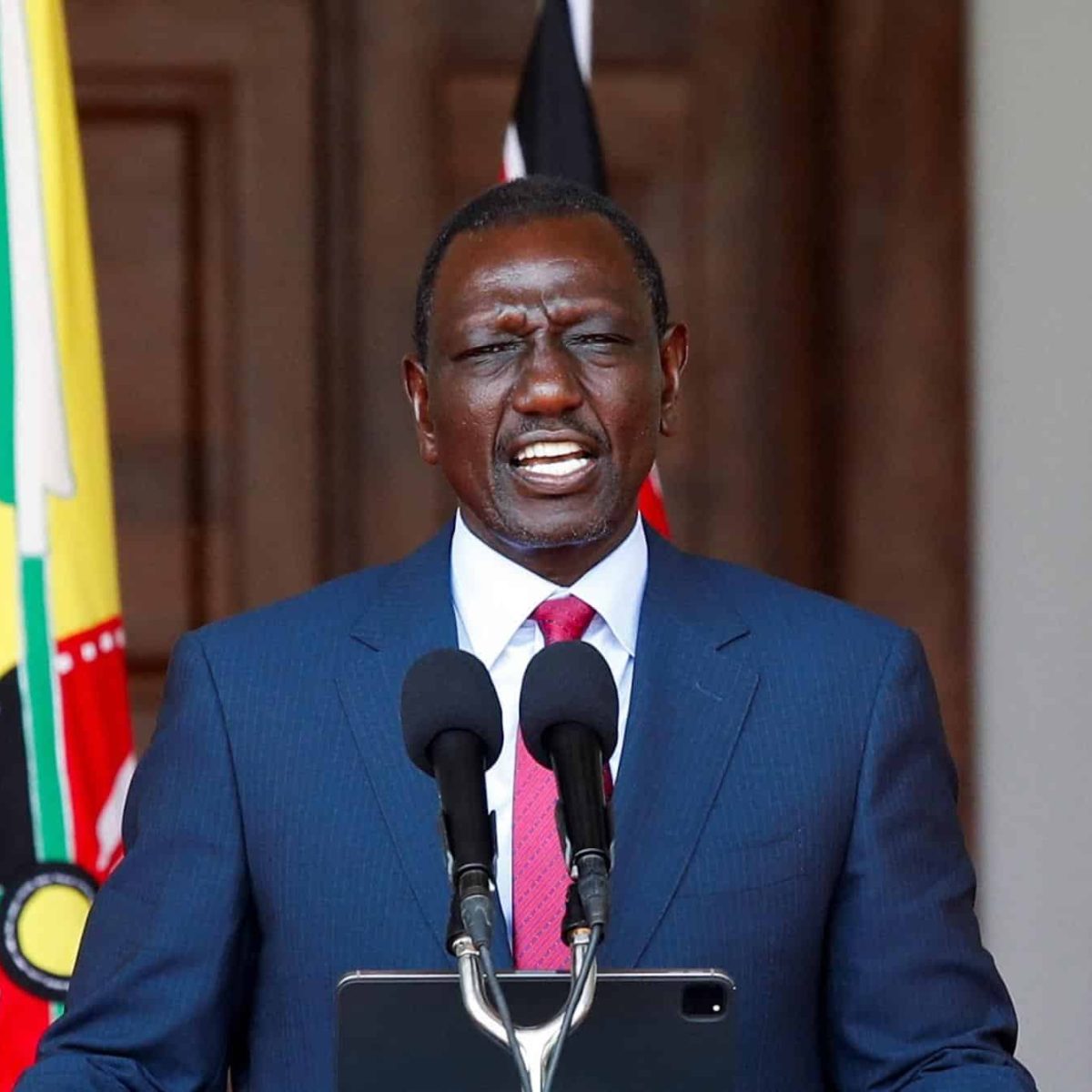
While exporters have criticised the levy, Kenyan authorities insist the policy is necessary. President William Ruto has defended the increase, arguing that it will help protect the country’s 17 operational sugar factories and support the livelihoods of roughly two million farmers and nearly 10 million people who depend directly or indirectly on the industry.
The government’s position is rooted in the longstanding weaknesses of Kenya’s sugar sector. Domestic producers have often struggled to compete with lower-cost imports because of high operating expenses, ageing infrastructure and years of underinvestment. These challenges have contributed to recurring supply shortages and greater reliance on imported sugar.
Officials argue that raising the cost of imports will provide local producers with breathing space to improve efficiency, strengthen supply chains and increase output. Supporters of the policy maintain that protecting domestic production is not only an economic issue but also a matter of rural employment and food security.
The government’s confidence is reinforced by expectations of continued market growth. Industry projections suggest Kenya’s sugar market will expand by 11.9% in 2025 and 12.59% in 2026 before moderating to 2.37% by 2029. While growth is expected to slow later in the decade, demand is projected to remain substantial, creating incentives for Nairobi to ensure a greater share of future consumption is supplied locally.

Annual growth rate, 2025-2029
In addition to the levy, the Finance Act includes measures intended to reduce production costs, including the removal of value-added tax on sugarcane transportation. Authorities believe these reforms, combined with import protection, will strengthen the competitiveness of Kenyan sugar producers over time.
What this means for Africa’s wider trade agenda
The significance of Kenya’s sugar levy extends far beyond a single commodity. Across Africa, governments are increasingly attempting to balance two competing priorities. One is the need to industrialise, create jobs and strengthen domestic manufacturing. The other is the commitment to regional integration and freer trade. Kenya’s decision to sharply increase the cost of imported sugar highlights the growing tension between those objectives.
The issue is particularly relevant at a time when the African Continental Free Trade Area (AfCFTA) is seeking to expand intra-African commerce and create larger markets for businesses across the continent. While trade agreements can lower tariffs and remove formal barriers, their success ultimately depends on whether member states maintain predictable and reliable market access.
Adeyemi Olorunda, an economist and trade analyst, told Businessfront that while Kenya has legitimate reasons to protect its domestic sugar industry, the wider implications of the levy extend beyond the sugar sector itself.
“When a country like Kenya makes a decision to change the economics of a key commodity like sugar, exporters across the region immediately begin adjusting production, investment and market strategies. The long-term impact will depend on whether Kenya’s domestic industry becomes more competitive or whether regional trade simply shifts elsewhere,” Olorunda said.
His observation reflects the broader concern among exporters across Eastern and Southern Africa. Businesses often make long-term investment decisions based on assumptions about future market access. When access conditions change suddenly, production plans, export strategies and capital allocation decisions can change as well.
The outcome of Kenya’s policy will therefore be watched closely across Africa. If the measure succeeds in strengthening domestic production without significantly disrupting regional commerce, it could strengthen the case for targeted industrial interventions. If it results in prolonged trade tensions or major market distortions, however, it may reinforce concerns about the difficulty of balancing national development priorities with regional integration commitments.
The debate is about more than sugar. It is about how African economies intend to pursue industrial development in an era of expanding regional cooperation. As countries seek to build stronger domestic industries, disputes such as this are likely to become increasingly common. How governments, businesses and regional institutions respond may help determine whether Africa can strengthen local production while maintaining momentum towards a more integrated continental market.