
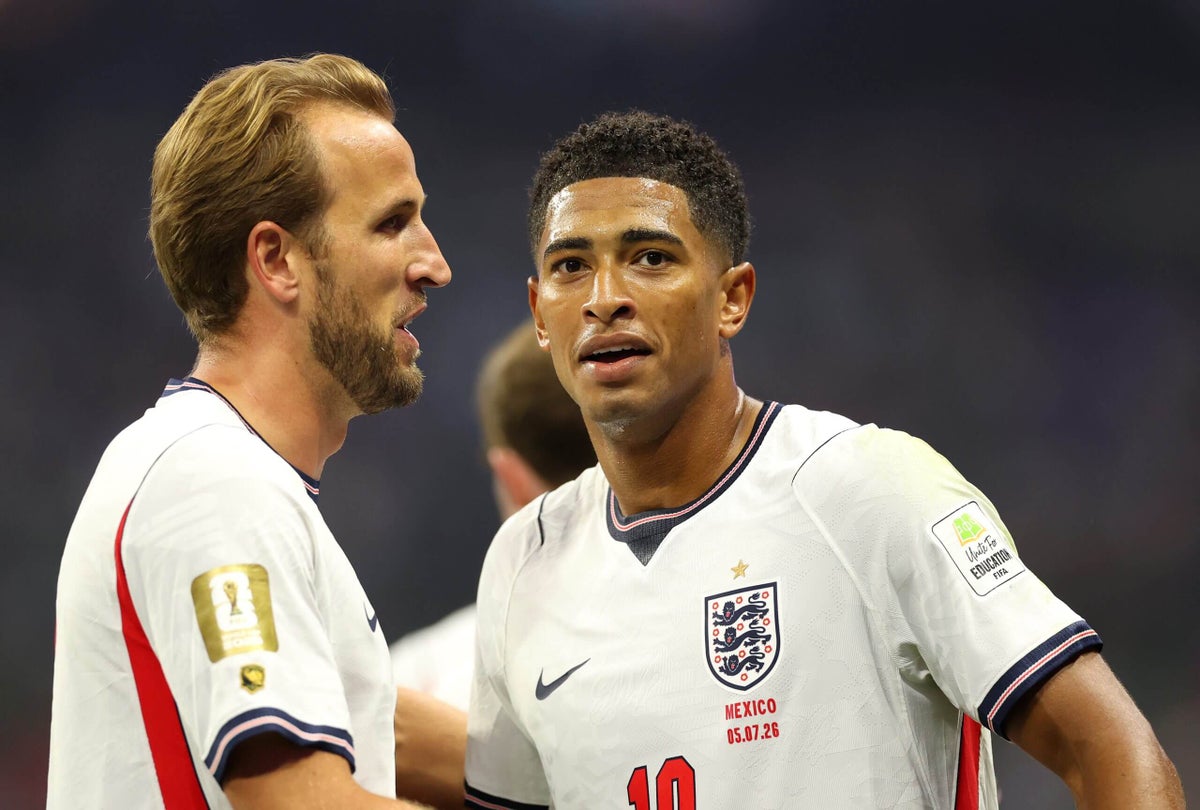
FIFA has announced its ‘Dream XI’ of the 2026 World Cup, which was decided by fan voting throughout the tournament. It features three players from eventual champions Spain, the same number from France and two from Argentina, with England’s Jude Bellingham, Erling Haaland of Norway and Cape Verde’s Vozinha completing the line-up.
To make life a little more interesting, we asked some of The Athletic’s writers to choose their best XI from this World Cup, with one rule: they could have a maximum of two players from any one nation.
Nobody went for Unai Simon, despite the Spain goalkeeper conceding only once in eight matches en route to lifting the trophy, while the cap on how many you could choose from each country meant there was room for some slightly left-field names. Julian Quinones and Youri Tielemans, come on down.
Here are those teams, along with their reasons for picking them…
Oliver Kay
The two-players-per-nation limit had a severe impact on the defence, which might otherwise have been an all-Spanish affair. The two Spain players I have chosen are captain Rodri and teenage central defender Pau Cubarsi, which is harsh on Pedro Porro, Aymeric Laporte and Marc Cucurella.
The most obvious alternatives in central defence were Argentina duo Cristian Romero and Lisandro Martinez, but while they both made eye-catching contributions in certain moments, I felt they were all over the place in the victories over Cape Verde and Egypt in the knockout stage. I’ve turned instead to Diney, who was outstanding for Cape Verde in the group stage, particularly that opening 0-0 draw with Spain.

(Brett Davis/Imagn Images via Reuters/Brett Davis)
In goal, there will be a lot of votes for Vozinha, whose heroics for Cape Verde at the age of 40 were wonderful to watch, but I felt there was a stronger case for Egypt’s Mostafa Shobeir.
The front six picked themselves, really. It wouldn’t be any different without the restrictions.
It might seem a little surprising to have only one player apiece from runners-up Argentina and third-placed England, but it was the back-four positions that were up for grabs and I didn’t feel either of those teams defended particularly well. They were heavily reliant on Lionel Messi and Jude Bellingham, respectively.
There would be a case for England’s Harry Kane and Ousmane Dembele of France, but it’s impossible to look beyond that Kylian Mbappe-Erling Haaland-Lionel Messi front three.

Mark Carey
It is an outside, data-led shout, but Switzerland’s Gregor Kobel deserves credit for exceeding shot-stopping expectations — conceding four goals fewer than the quality of shots he faced, which is more than any other goalkeeper in the tournament.
Daniel Munoz’s marauding, box-crashing runs were as much of a joy to watch for Colombia (below) as they have been for Crystal Palace, while England’s Djed Spence secured his cult-hero status with some memorable moments at both ends of the pitch on the other flank. Cubarsi and Martinez can hold the fort while the full-backs push on, with both being excellent in possession throughout this World Cup.

(Daniel Becerril/Reuters)
Rodri’s place in the team was never in doubt, but from here things get a little… top-heavy.
I have squeezed in Bellingham in a deeper midfield role (one he did play on occasion this summer), to allow Messi to play as the No 10 ahead of him. While those two scored 15 goals between them, both are also crucial in catalysing their team’s attack creatively from the middle third of the pitch.
I am shifting Michael Olise back to the right flank after his World Cup roaming central role, while Mbappe is moved from his centre-forward role to the left side — given that he drifts into those spaces anyway.
That allows me to shoehorn in Haaland through the centre, with a ridiculous return of seven goals from five games in his first World Cup.

Phil Hay
It’s not too easy to think outside the box because this World Cup was dominated by the biggest names, right from the start.
Messi, Mbappe and Haaland all have to figure up front. They notched 25 goals combined. There’s also no way you can leave out player-of-the-tournament Rodri (back to his Ballon d’Or-winning best). Similarly, Bellingham and Olise were too influential to overlook.
At the back, though, I thought I’d mix it up a little (with the exception of Cubarsi — again, he should make every XI here). Munoz scored a beauty for Colombia from right-back and was full of beans until his team ran out of steam against Switzerland in the last 16. Pico Lopes put in a huge shift for lovable Cape Verde, and Spence (below) came of age internationally with England. He was one of this World Cup’s surprise packages.

Really, Cucurella should have been at left-back with Unai ‘You shall not pass’ Simon in as the goalkeeper, but the rules set for us meant my quota of Spaniards was full. So for good reason, I went with Australia’s Patrick Beach in net.

Amelie Claydon
Rodri is the foundation. The Golden Ball winner controlled Spain’s title run, completing a tournament-record 790 passes. His positional discipline will also give Bellingham and Olise the freedom to play further forward. Mbappe is equally unavoidable after winning the Golden Boot with 10 goals, while Messi is my team’s chief creator.
Vozinha made the case for an expanded World Cup and supplied much of the tournament’s romance. The 40-year-old former electrician made seven saves in that goalless draw with eventual champions Spain, then another eight against Argentina as Cape Verde pushed the holders turned runners-up into extra time.
Achraf Hakimi and Nuno Mendes provide elite pace and recovery speed that allow Messi and Mbappe to move into central areas without leaving the side too narrow. Manuel Akanji offers composure and experience between them, while Cubarsi (below) takes Spain’s second allowed place after winning the Best Young Player award and helping the tournament’s winners concede just once in their eight matches.

(Calvin Hernandez/Eurasia Sport Images/Getty Images)
Haaland gives the attack a focal point after his seven goals powered Norway to the quarter-finals. His movement and physical presence would create space for Messi and Mbappe.
Bellingham also scored seven but earned his place for more than his goals, supplying pressing, late runs into the box and essential midfield balance. Olise completes my trio after seven assists, making him the tournament’s outstanding provider.
Kane is unfortunate to miss out, but selecting him would overload an attack already containing three elite finishers.

Colin Millar
Until the quarter-final stage, this World Cup was dictated by stars: chiefly Messi, Mbappe, Olise, Bellingham, Haaland and Kane. It was telling that none of the obvious names then scored in the semi-finals or final, which was fitting for a tournament won by Spain: the epitome of a collective excelling ahead of individuals.
Focus will be on that mesmerising Spanish midfield, but in truth their entire game — which conceded just one goal and 10 shots on target in eight games — was built on an excellent defence whose positional sense, discipline, focus and technical quality were streets ahead of any other side.
Vozinha was the personal story of the tournament in the only team capable of stopping Spain: his performances for Cape Verde in the opening game and in extra-time defeat to Argentina bordered on heroic.

(Justin Setterfield/Getty Images)
Julian Quinones was the standout player among the three co-hosts, scoring in four of Mexico’s five games, including several stunning strikes.
Honourable shoutouts to Iran goalkeeper Alireza Beiranvand, Norway’s Martin Odegaard, Johan Manzambi of Switzerland, Cape Verde’s Pico Lopes, Ismaila Sarr of Senegal and Ivory Coast’s Yan Diomande. Oh, and the entirety of Spain’s starting line-up.

George Edwards
The many underdog stories of this World Cup seem eternities away now, but they made its early stages gripping, and Vozinha, a clubless 40-year-old playing for rookies Cape Verde, ended the tournament as the only goalkeeper to stop Spain from scoring.
Cubarsi’s composure both on the ball and in defensive actions rightly earned him young player of the tournament, and despite William Saliba never looking fit, France only seemed capable defensively with him by Dayot Upamecano’s side.
Flanking them, the availability of Hakimi and Spence would allow progression up the park, as well as the Moroccan’s recovery pace and the Englishman’s one-on-one speciality protecting what is admittedly an attack-heavy line-up.
Rodri’s ability to consistently make the correct decision in any scenario and his building presence as the tournament progressed was testament to the ripening of Spain — his composure would allow Bellingham and Manzambi (below) to float between midfield and attack as they saw fit.

(Alex Grimm/Getty Images)
The selections of Mbappe and Messi need no explanation, toppling and toying with records between them across the World Cup, and Haaland’s stubborn No 9 positioning and instinct gives this team the sharpest possible blade.
It’s very attacking, and relies heavily on Rodri’s anchoring, but given that 11 Spaniards cannot be selected, balance has gone out the window.

Eduardo Tansley
Rodri was the first name on the sheet, earning the Golden Ball as the tournament’s best player — while leading Spain to victory.
I had to max-out my Cape Verde picks as they were the fairytale of the tournament: unbeaten in the group, including that goalless draw with Spain, and then going toe-to-toe with Argentina before being beaten in extra time. The people have spoken, with Vozinha on close to 30 million Instagram followers, and Lopes recruited via LinkedIn to play a blinder at the World Cup.
In defence, Spence didn’t start every game, but after fans questioned his inclusion by Thomas Tuchel, he turned out to be one of England’s most valuable contributors. Cubarsi was an assured presence in Spain’s back line at just 19 years old, and Munoz scored twice to help Colombia win their group ahead of Portugal. I wish I could include more Spain defenders considering they only conceded once.
Morocco’s Ayyoub Bouaddi and Mikel Merino of Spain were in with a shout in midfield, but there were a lot of attacking options to fit in.
Kane was one of the players of the tournament as well, but I chose its two top scorers in Mbappe and Messi and its record assist-maker Olise.

(Jose Breton/Pics Action/NurPhoto via Getty Images)
In his first World Cup, Haaland helped knock Brazil out with a brace on the way to the quarter-finals, scoring seven goals and starting various massed rowing incidents.
Bellingham was the match-winner against Norway (and settled things against France), and no Englishman has scored more World Cup goals at one tournament than his seven in this edition.