
The Human Rights Council, established by the UN General Assembly resolution in 2006, commemorated its 20th anniversary this year.
The 62nd session
During the 62nd session, the Human Rights Council adopted 28 resolutions, including on the human rights implications of the obstruction and denial of humanitarian access and threats to the safety of humanitarian personnel in armed conflict; the protection of healthcare in armed conflict; and human rights and neglected tropical diseases. The Human Rights Council voted to extend eight country-specific and thematic mandates.
On 3 July, an urgent debate took place on the human rights situation in and around El Obeid, North Kordofan in the context of the ongoing conflict in the Sudan, resulting in the adoption of a consensus resolution condemning war crimes in the area, including the use of drone strikes which are killing civilians and destroying infrastructure and services. The Human Rights Council called on the independent international fact-finding mission for the Sudan to conduct an urgent inquiry into any violations and abuses of international human rights law, international humanitarian law ,and related international crimes, allegedly committed in and around El Obeid in the context of the ongoing conflict in the Sudan.
Internally displaced persons
The WCC joined a statement delivered by Franciscans International welcoming the report of the special rapporteur on internally displaced persons. The statement urged states and non-state armed groups to enhance compliance with international humanitarian law and ensure accountability for violations, highlighting the situation in West Papua, where over 122,931 Indigenous Papuans remain internally displaced due to conflict, lacking access to shelter, water, healthcare, education, and livelihoods, with women and children disproportionately affected and at heightened risk of gender-based violence. The statement also addressed violations in Cabo Delgado, Mozambique, where over 600,000 people are displaced amid ongoing conflict, facing protection risks like gender-based violence and child recruitment. Both regions suffer from widespread impunity, restricted access for journalists and monitors, and inadequate humanitarian aid, exacerbating protracted displacement. The statement called for urgent action to protect civilians, civilian infrastructure, and ensure independent monitoring and humanitarian access to displacement sites.
Climate change
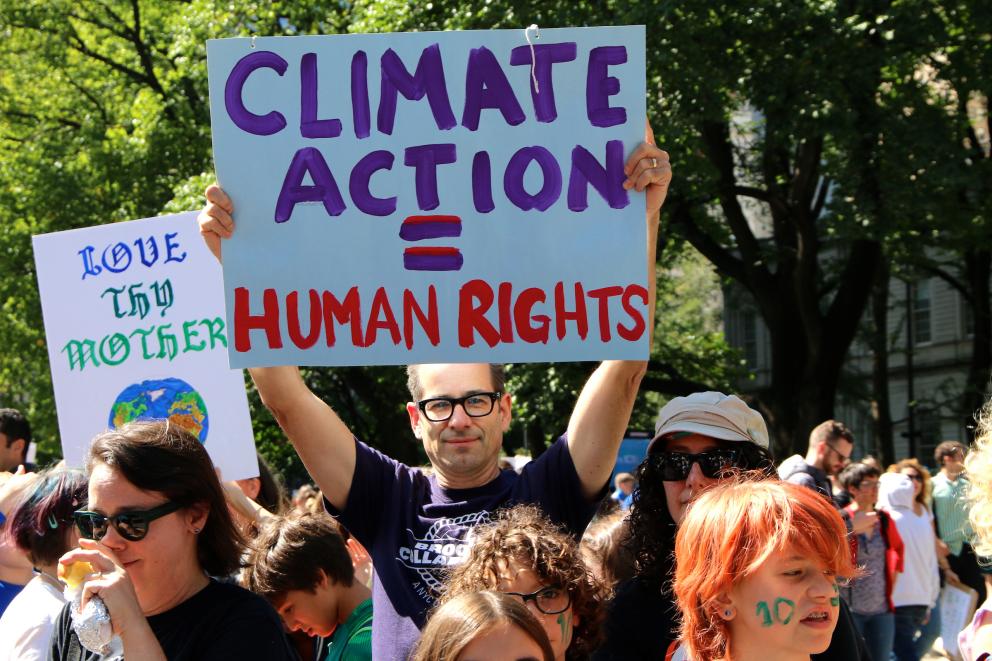
The WCC supported a statement of the Geneva Interfaith Forum on Climate Change, Environment, and Human Rights, thanking the special rapporteur on Climate Change for her report on transforming food systems for climate safety and global health, and commending its emphasis on the interconnectedness of food systems and the fossil fuel economy, and the need for defossilization and detoxification to address pesticides, fertilizers, plastics, and corporate power. The Geneva Interfaith Forum endorsed the call to prioritize Indigenous and peasant agro-ecology as a standalone climate solution, not just a supplementary measure. The statement urged states to phase out subsidies to industrial food systems, protect Indigenous and peasant rights, and ensure inclusive food system transformations that uphold the dignity of all life.
Solidarity with Indigenous Peoples
Following the joint engagement of the National Council of Churches in Australia and the World Council of Churches in the Universal Periodic Review of Australia in January this year, the WCC delivered a joint statement on behalf of both organisations during the adoption of the review. The statement expressed solidarity with Australia’s First Nations peoples, who endure systemic racism, poor health, lower life expectancy, and the highest incarceration rates globally, noting that “Closing the Gap” targets remain largely unmet. The statement urged stronger government action, including establishing a national Treaty Commission and truth-telling processes co-designed with Indigenous communities, raising the minimum age of criminal responsibility from 10 to 14, and expanding juvenile diversion programs. Addressing violence against women, particularly affecting Aboriginal women, the statement called for implementing recommendations to increase crisis support, emergency housing, and financial aid. On climate change, the disproportionate impact on Aboriginal, Torres Strait, and Pacific Islander communities was highlighted, calling for human rights-based climate policies, a ban on new coal mines, phasing out existing ones, and transitioning from fossil fuels, while urging strengthened climate finance for Pacific nations. The statement raised concerns about the AUKUS submarine partnership, and called on Australia to sign and ratify the Treaty on the Prohibition of Nuclear Weapons.
Tributes to H.E Gustavo Gallón
During the 62nd session, many tributes were made to Colombia’s Ambassador to the UN in Geneva, H.E Gustavo Gallón, who passed away on 30 June. The WCC expressed its condolences to his family, friends, and colleagues.