How MultiChoice Sabotaged Showmax to Save DStv
7518 SOUTHPOINTE PL
Pensacola, United States,
Florida, 32514
 Black Hot Fire Network Team

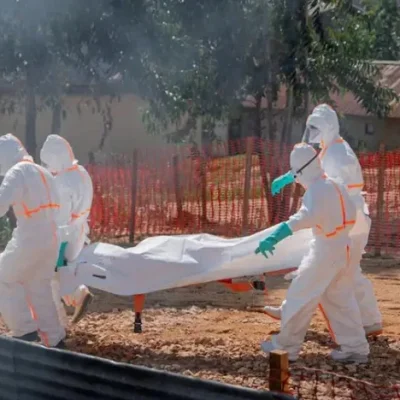
For the second time in six months, a Kenyan court has had to force the government to show the public exactly what it agreed to with Washington over the country’s health. On Tuesday, the High Court extended its block on a United States-backed Ebola quarantine facility at Laikipia Air Base and gave Health Cabinet Secretary Aden Duale seven days to publish the full terms of the deal. The thread running under the case is not really the virus. It is the question of who controls Kenya’s health decisions and health data, and whether citizens get a say before the papers are signed.
Lady Justice Patricia Nyaundi ordered the state to disclose the full terms of any agreement, memorandum or negotiations tied to the facility, along with any public health, biosafety, environmental and security assessments, and any approvals obtained from lawmakers or regulators. The court extended its orders barring the setup of any Ebola quarantine site and the admission of exposed people, until the next hearing on 23 June. The government had not filed a response or attended the previous sitting.
The 50-bed unit, built with US support, was meant to isolate Americans exposed to Ebola in the Democratic Republic of Congo or Uganda. Washington had planned to open it on the very day the first court block came down. The case began with a petition from the Katiba Institute, a constitutional rights group. The court has since folded in a Law Society of Kenya petition and allowed the Kenya Human Rights Commission and the Laikipia County government to join.
The wider outbreak gives the case its urgency. The World Health Organization has declared the rare Bundibugyo-strain outbreak a public health emergency of international concern. Reporting puts it at more than 1,000 suspected and confirmed cases and over 200 suspected deaths, although confirmed deaths are lower and experts say the true scale is likely higher because of late detection and conflict in eastern Congo. Ebola has not reached Kenya.
The plan has drawn real anger in Nanyuki, the town nearest the base. Hundreds protested on Monday. The protest organiser and a security source said two people died of gunshot wounds after police opened fire, while a police spokesperson said he was not aware of any deaths. President William Ruto has defended the site, calling it “neither unique nor exceptional” and part of a long-running partnership with the US.
Google News
Star tech-ish.com on Google. We move up your daily feed.
1 Tap “Open Google” below
2 Find tech-ish.com in the list
3 Tap the ✓ to favourite us
This is where the story stops being only about Ebola. In December 2025, the same High Court suspended the data-sharing parts of a separate and much larger arrangement: the five-year, $2.5 billion Kenya-US Health Cooperation Framework, under which the US provides up to $1.6 billion (about KES 207 billion) and Kenya co-finances the rest. The Consumers Federation of Kenya took the government to court, arguing the public never got to scrutinise how Kenyans’ medical and epidemiological data would be shared. Reuters reported the judge froze the deal where it touched the transfer of sensitive health information.
Health data is now treated as a national asset rather than a by-product of treatment, and the government says so itself. Duale has called it “a national strategic asset.” Kenya has the legal scaffolding to protect it, namely the Data Protection Act of 2019 and the Digital Health Act of 2023, plus an Office of the Data Protection Commissioner. We already explained how that framework can look strong on paper while citizens still feel their data is passed around like a hot potato. The government insists any data shared under the December framework is “de-identified and aggregated” and stays Kenyan-owned. Critics reply that de-identified data can be re-identified, especially as AI tools improve, and that vague wording without enforceable safeguards is not real protection.
The common element in both court fights is not the data on its own. It is process. Kenya’s constitution requires public participation before major public decisions. In both the Ebola facility and the December framework, the courts were not satisfied that the government had consulted the public or disclosed the terms. The Ebola site does not appear to involve patient-data transfer the way the December deal does. What it shares with that deal is the secrecy, and a court willing to demand the paperwork. It is the same instinct that saw Kenyan courts halt Worldcoin’s iris-scanning operation in 2023.
For readers, the practical point is this. The fight is less about Ebola and more about whether health agreements with foreign governments get signed in the open, with terms Kenyans can actually read and challenge. Watch 23 June. If the government publishes the full Ebola agreement, it sets a standard for the bigger data deal still moving through the courts. If it does not, the question of who really controls Kenya’s health information stays unanswered.
How MultiChoice Sabotaged Showmax to Save DStv
author
BHFN Editorial Team covers breaking news, culture, and global developments impacting Black America, Africa, Kenya, and the African diaspora. Focused on timely reporting and community-driven perspectives, the team delivers news, analysis, and stories that inform, connect, and amplify diverse voices.