

Caring Africa has urged the federal and state governments to begin implementing Nigeria’s newly approved National Care Policy and Implementation Plan, 2026-2030.
The organisation, which served as a technical partner to the Federal Ministry of Women Affairs and Social Development in developing the policy, said its approval is only the beginning of efforts to establish a national system for childcare, elderly care and other forms of paid and unpaid care.
The Federal Executive Council, presided over by President Bola Tinubu, approved the policy on Wednesday alongside the National Action Plan on Ending Violence Against Children and the National Policy on Menstrual Health and Hygiene Management, 2026-2030.
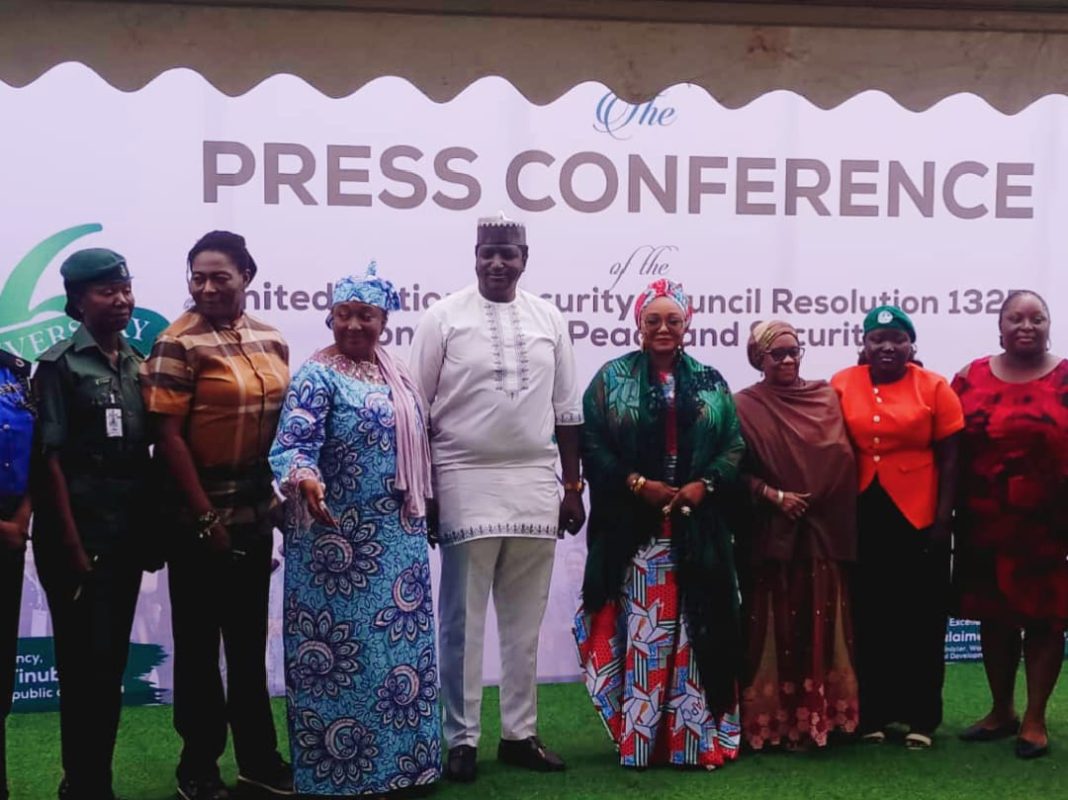
The Minister of Women Affairs and Social Development, Imaan Sulaiman-Ibrahim, announced the approvals at a press briefing in Abuja on Thursday to mark the 26th anniversary of United Nations Security Council Resolution 1325 on Women, Peace and Security.
According to the ministry, the National Care Policy recognises unpaid care work, promotes regulated childcare and elderly care services, sets minimum standards for care centres and provides for a National Care Fund.
States’ adoption of policy
Blessing Adesiyan, founder and Chief Care Officer of Caring Africa, said the next stage should be to domesticate the policy across Nigeria.


Ms Adesiyan said care services such as health, education and social welfare are delivered substantially at state level, making adoption of the policy by the 36 states important to its implementation.
“A federal policy that stays in Abuja will not change anything for a woman looking for childcare in Oshodi or caring for her mother in Sokoto,” she said.
Ms Adesiyan called for the policy to be taken across the six geopolitical zones and adopted by the states.
Nigeria joins countries that have adopted national care policies. Brazil enacted its National Care Policy in 2024, followed by a funded national plan, while Chile signed its Chile Cuida care system into law in 2026.
Kenya has also launched a national care policy and is implementing it at county level, while UN Women supports more than 50 countries in developing national care systems.
What the policy provides
The policy is built around 11 pillars covering unpaid care work, care infrastructure, maternal and newborn care, childcare, ageing and elderly care, disability care, the care workforce, regulation of the care economy, care financing and employer-supported care.
Under the childcare component, the framework provides for a tiered licensing system for childcare facilities, minimum standards on space, staff ratios, safety, hygiene and nutrition, as well as a national register for childcare workers.
It also proposes a pathway for informal crèches to meet regulatory requirements rather than simply being excluded from the system.
For care workers, the policy proposes defining care work as a formal occupation under Nigerian labour law, with training and certification pathways and a national caregiver database. It also proposes a minimum wage floor for care workers, health insurance and pension access.
The framework also proposes a dedicated care line in the federal budget and a National Care Fund to pool public, corporate and development financing for care services.
Burden of unpaid care
Caring Africa cited data showing that women and girls perform about 80 per cent of unpaid care work in Nigeria, including childcare, cooking, cleaning and caring for sick or elderly relatives.
READ ALSO: UDPATED: Ebola: Nigeria reports two new suspected cases in North-east
The organisation also cited estimates that Nigerian women spend about 4.3 hours a day on unpaid care work, compared with 1.12 hours for men.
It said only about five per cent of Nigerian children aged zero to two are enrolled in licensed childcare.
The National Bureau of Statistics estimates that formalising the care economy could create 17 million jobs, while research by Economist Impact indicates that accessible and quality childcare could enable 1.7 million more Nigerian mothers to enter the workforce by 2030.
Ms Adesiyan said the policy would also provide a framework for employers to support workers with caregiving responsibilities through measures such as paid leave and employer-supported care.
She said the policy’s provisions on maternal and newborn care would extend support into the postpartum period, while its broader framework covers ageing, disability and care within households.
“The stress of sustained caregiving carries a real physical health cost, which we rarely count. This policy is the first instrument we have that touches it,” she noted.
Discover more from Premium Times Nigeria
Subscribe to get the latest posts sent to your email.