
Image

Image Alt
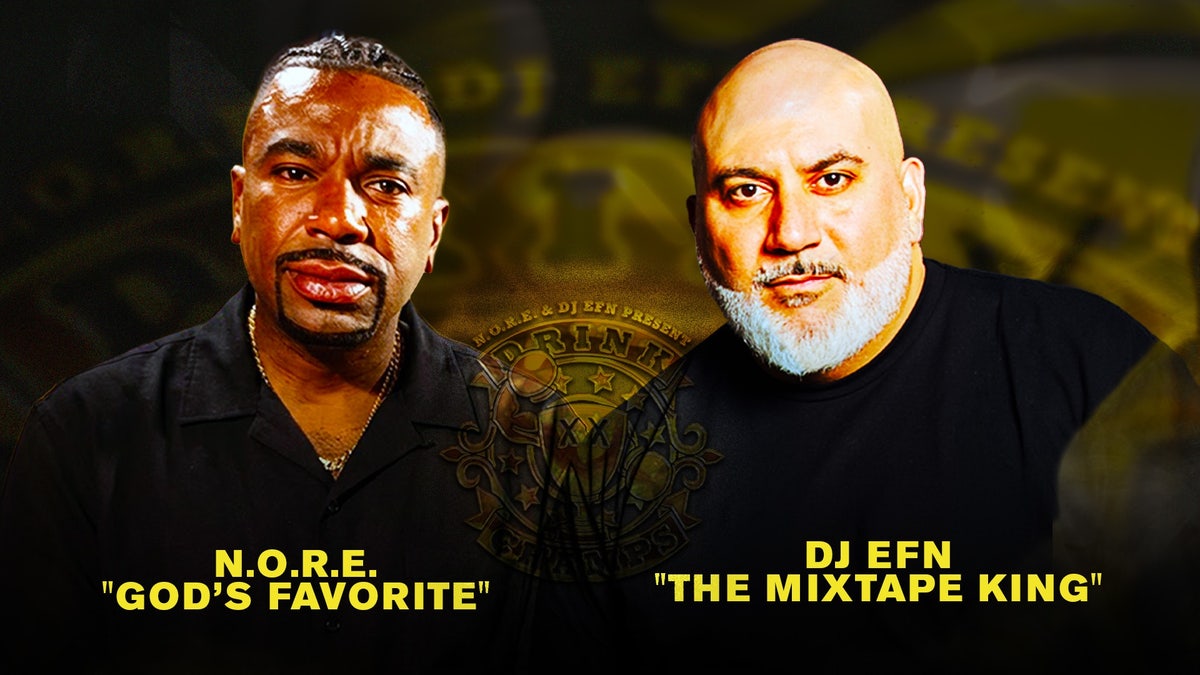
N.O.R.E. and DJ EFN “Drink Champs” graphic
Image Size
landscape-medium
As “Drink Champs” celebrates 10 years, the show’s story reaches far beyond podcasting. The platform connects N.O.R.E.’s Queens rap history, DJ EFN’s Miami mixtape foundation, Crazy Hood Productions’ grassroots work, and REVOLT’s role in bringing long-form Hip Hop conversations to television. For EFN, whose reputation was built through decades of documenting and amplifying Miami’s scene, the anniversary also reflects a larger career spent preserving Hip Hop stories across formats.

Before “Drink Champs” became one of the culture’s most recognizable interview platforms, both hosts had already built their names through years of work inside the culture. These fast facts trace that road from mixtapes and classic records to the small screen, major awards recognition, and the show’s 10th anniversary milestone.
1. DJ EFN founded Crazy Hood Productions in 1993
Crazy Hood Productions began as a Miami-based Hip Hop crew and multimedia company founded by DJ EFN. The brand later expanded across music, marketing, clothing, artist development, management, film, and lifestyle work. At its core, Crazy Hood’s earliest identity was tied to Miami’s underground rap scene and EFN’s mission to help document and amplify the city’s talent.
2. N.O.R.E. first broke through as part of Capone-N-Noreaga
Before becoming one of podcasting’s most recognizable hosts, N.O.R.E. rose to prominence as one half of Capone-N-Noreaga. The Queens duo became a defining part of late-1990s New York rap with The War Report, their 1997 debut album. The project helped establish N.O.R.E. as a voice connected to street reporting, raw storytelling, and the era’s East Coast sound.
3. EFN’s first mixtape was rooted in Miami representation
EFN has said he made his first mixtape because Miami did not have a consistent mixtape DJ playing music from the city. While DJs like Clue and Tony Touch were respected names in the mixtape space, EFN wanted Miami to be heard, shouted out, and taken seriously.

4. Crazy Hood’s mixtape run reached 42 volumes
After releasing his first Crazy Hood mixtape in 1993, EFN continued building the series for two decades. The run eventually reached 42 volumes and featured Miami artists alongside national names, including Outkast, Redman, Capone-N-Noreaga, KRS-One, Wu-Tang Clan, Ja Rule, Ghostface Killah, Bun B, and more. The tapes became part of EFN’s larger reputation as one of Miami’s key mixtape-era figures.
5. Crazy Hood became bigger than music releases
In 1997, EFN founded Crazy Sounds Record Pool and opened Crazy Goods, a Hip Hop clothing store that also became a local hangout. Those moves helped turn Crazy Hood from a mixtape brand into a larger cultural hub. The company’s work eventually stretched across music, retail, film, media, and community-rooted projects tied to Miami’s Hip Hop identity.
6. “Superthug” helped push N.O.R.E.’s solo career forward
In 1998, N.O.R.E. stepped further into the spotlight with “Superthug,” one of his biggest solo records. Produced by The Neptunes, the song became one of Pharrell Williams and Chad Hugo’s early high-profile Hip Hop productions. The record also helped show N.O.R.E.’s ability to shift from group success into a solo lane with a sound that felt distinct from his earlier work with Capone.

7. “Oye Mi Canto” became a major crossover moment
N.O.R.E. reached another milestone in 2004 with “Oye Mi Canto,” featuring Nina Sky, Daddy Yankee, Gem Star, and Big Mato. The record peaked at No. 12 on the Billboard Hot 100 and arrived during a key moment for reggaeton’s growing commercial reach. Within N.O.R.E.’s catalog, it remains one of his most widely recognized songs and a major link between Hip Hop and Latin music audiences.
8. N.O.R.E. and EFN had chemistry before the podcast officially launched
Before “Drink Champs” became a podcast, N.O.R.E. and EFN already had a working relationship in Miami. EFN previously said the idea grew from the energy around N.O.R.E. being in his studio and the conversations that happened there. The two also hosted a satellite radio show before building the format that listeners would later know as “Drink Champs.”

9. EFN also built a film legacy before “Drink Champs”
EFN’s work expanded into documentary filmmaking with Coming Home, a project about Cuba’s Hip Hop scene that he made with rapper Garcia. The film won Best Documentary at The People’s Film Festival in 2013 and later helped set up a broader “Coming Home” series tied to global Hip Hop communities. That film work added another layer to EFN’s role as a documentarian of the culture.
10. The “Drink Champs” name came from Crazy Hood language
According to EFN, the title came from a phrase used within the Crazy Hood crew. He has explained that he would tell people, “If you can’t handle your liquor, you aren’t a drink champ.” When the podcast concept came together, the phrase fit the show’s loose, celebratory interview style. EFN then secured the domain and social handles for “Drink Champs.”
11. The first official episode featured Fat Joe
The first listed episode of “Drink Champs” featured Fat Joe and was published in March 2016. The choice made sense for the show’s foundation: A respected New York rap figure sat down with N.O.R.E. and EFN for a conversation rooted in history, relationships, and behind-the-scenes stories. From there, the platform continued building around long-form interviews with figures who helped shape Hip Hop.

12. REVOLT helped bring “Drink Champs” to television
REVOLT announced in 2016 that “Drink Champs” would premiere weekly on the network in January 2017. The move brought N.O.R.E. and EFN’s conversations from audio into a televised format, giving the show another platform and a wider audience. Years later, “Drink Champs” tied with “Caresha Please” for Best Hip Hop Platform at the 2022 BET Hip Hop Awards. By its 10th anniversary season, the show had crossed more than 500 episodes.