
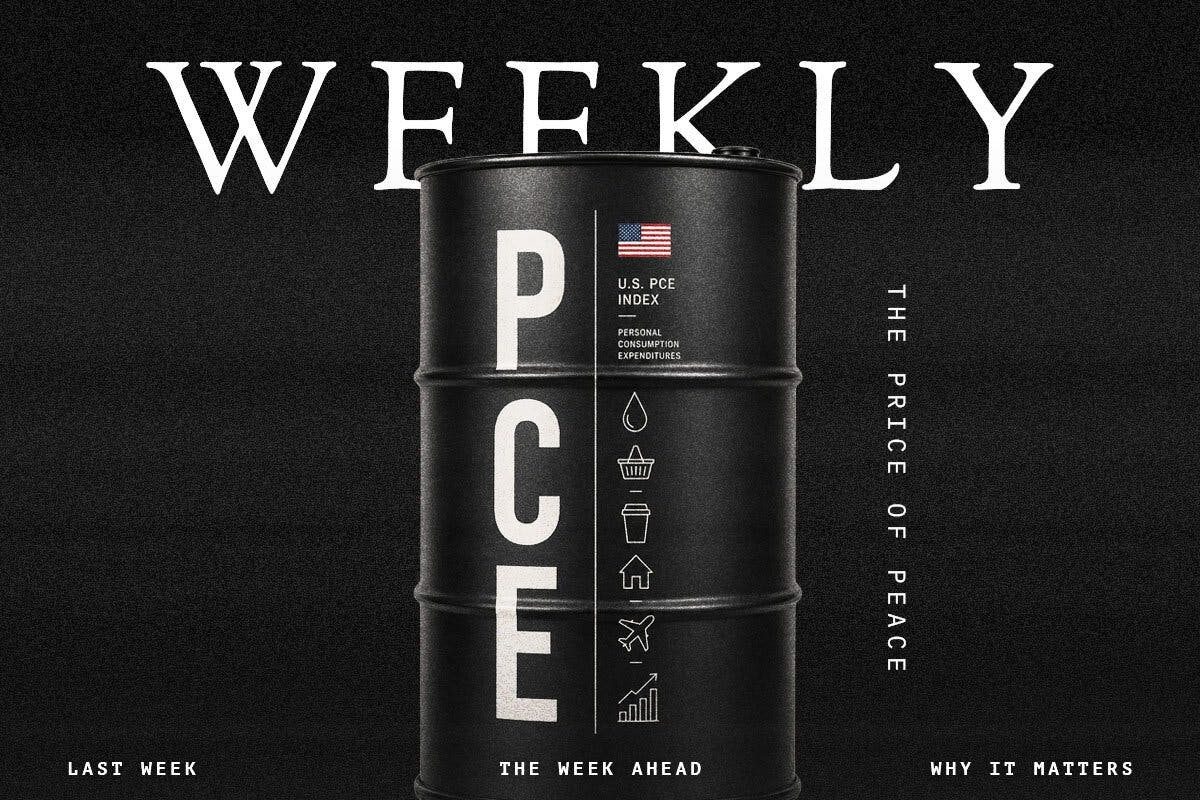
If PCE comes in hotter than expected this week, that would strengthen the case for keeping rates higher for longer – or even lifting them again. But if it’s lower, that could take the edge off that hawkish tone and maybe make future cuts more likely.
The wild card is energy. A chunk of the recent inflation scare has come from higher oil prices, fueled by the conflict in the Middle East. For a moment, relief looked close: the US and Iran edged toward a peace framework that would have reopened the Strait of Hormuz and given oil prices a chance to cool. But talks were canceled at the last minute on Friday, giving rise to fresh doubts – so the easing in gasoline, transport, and business costs that traders had started to bank on may take longer to arrive.
And that creates a bit of a timing problem. See, Thursday’s PCE report looks backward, so it may still bear the fingerprints of the earlier energy shock. Markets, though, are looking forward – and for now, they’re watching the oil price for clues. If the peace talks get back on track and crude falls, investors may start betting that the inflation squeeze will ease over the coming months, even if this week’s data still looks uncomfortable. But if the standoff drags on and oil stays high, that’s a much tougher call to make.
That’s where Tuesday’s PMIs – that is, purchasing managers indexes, tracking new orders, hiring plans, things like that – come in. These early business surveys from the US, UK, and eurozone should show whether companies are still expanding or starting to wobble. Weak PMIs and cooler inflation would revive hopes that the Fed can soften its stance and cut rates later this year. Strong PMIs and sticky inflation would do the opposite. And weak growth with sticky inflation? Well, that would be the most awkward mix of all.
On The Calendar
- Monday: China interest rate decision (Loan Prime Rate).
- Tuesday: Europe, US, and UK purchasing managers index (June).
- Wednesday: Germany Ifo business sentiment survey (June).
- Thursday: US gross domestic product (Q1, final), US core inflation – PCE (May).
- Friday: Japan inflation (May).
- Saturday: China industrial profits (May).
What You Might’ve Missed Last Week
US
- The Fed held interest rates steady – but hinted its next move could be a hike, not a cut.
- Shoppers kept spending in May, with retail sales rising almost double the expected pace.
- The US and Iran got closer to a peace deal that would have reopened the Strait of Hormuz – but after talks were canceled on Friday, that deal is looking shaky.
- The US barred foreign access to Anthropic’s most powerful AI models, citing security concerns.
Asia
- The Bank of Japan raised interest rates to their highest level since 1995.
- China’s retail sales fell for the first time in over three years, even as its factories sped up.
Why It Matters
The Federal Reserve left interest rates where they were, at 3.5% to 3.75% – but the mood music changed. At each meeting, policymakers map out where they think rates are heading on a chart nicknamed the “dot plot”. This time, the dots shifted up – the Fed now reckons its next move is more likely to be a hike than a cut. Translation: borrowing could get pricier. That’s because inflation, the pace at which prices rise, is still stuck above the Fed’s 2% comfort zone. And that’s not something markets like to hear – higher-for-longer rates tend to weigh on shares because they make safer bets like savings accounts and bonds look more tempting by comparison.
It actually didn’t help that American shoppers are still out in force. Retail sales jumped 0.9% in May – almost double what economists had penciled in. That sounds like good news, and for the economy it mostly is. But a confident spending spree also means that companies can keep nudging prices higher without scaring customers off – which keeps inflation simmering, and hands the Fed yet another reason to stay on guard.
There was a glimmer of relief on the inflation front, too, and it came from an unlikely place: the Middle East. The US and Iran agreed to an interim peace framework that would have reopened the Strait of Hormuz – the contested chokepoint through which around a fifth of the world’s oil passes. That pulled oil prices lower at first, which, because these impact fuel and business costs and could help cool inflation, was exactly the kind of news the Fed wants to see. But Friday’s canceled talks underscored that the deal is far from done, so that relief is far from guaranteed.
Over in Japan, the central bank zigged where others zagged, raising rates to their highest since 1995. That’s a big deal for a country that’s kept borrowing nearly free for decades. It matters beyond Japan, too, because of the “carry trade”: investors borrow cheap yen to buy higher-returning assets elsewhere. As Japan’s rates climb, that cheap funding gets more expensive – and if too many investors unwind those bets at once, it can send ripples through markets worldwide.
While American shoppers are hitting the stores, Chinese shoppers are staying home: retail sales actually fell in May, the first drop in over three years, with car sales tumbling 16%. Yet its factories kept humming, with output rising faster than expected. That split screen – busy factories, cautious consumers – is the story of China’s “two-tier” economy, and it’s why the government keeps leaning on exports while households sit on their wallets.
Finally, a curveball from the tech world. The US government ordered Anthropic – one of the biggest names in artificial intelligence – to switch off its most powerful AI models for anyone who isn’t a US citizen, including its own foreign staff. The concern is that the models are unusually good at sniffing out hidden flaws in software, which could be a security risk in the wrong hands. For investors, it’s a sign of just how tangled AI and national security have become – and a reminder that even the hottest tech companies can be tripped up overnight by a single government letter.