
Iraq and Syria on Friday signed a US-backed memorandum of understanding to revive a crude oil pipeline, as Washington seeks alternatives to bypass the Strait of Hormuz.
The State Department said that, when completed, the Kirkuk-Baniyas pipeline would have an initial production of 2 million barrels per day of crude oil. The conduit has largely been defunct since it was damaged during the 2003 US-led invasion of Iraq.
Friday’s deal was signed during a business summit held at the US Chamber of Commerce as Baghdad and Washington deepen their investment ties. More than 50 preliminary agreements, deals and partnerships were signed, worth more than $60 billion, the chamber said. The bulk of those agreements are in the energy sector.
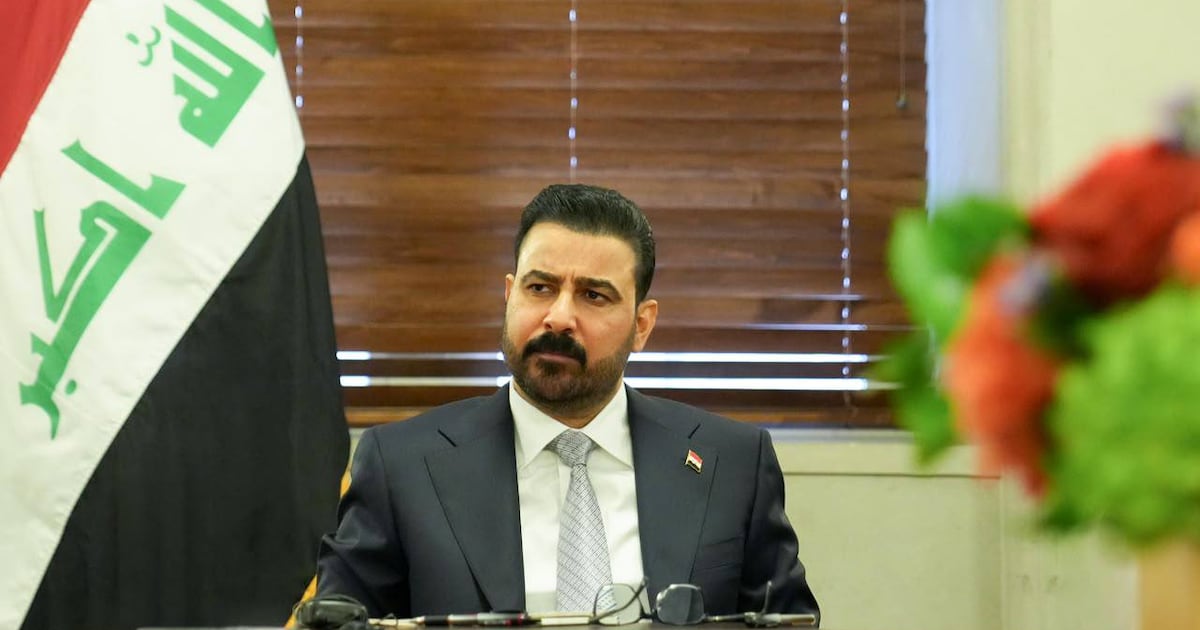
Iraqi Prime Minister Ali Al Zaidi that Iraq was now exiting years of war and entering a year of “construction”.
“The are not just papers. they are the fruit of this visit,” he said. The summit capped the new leader’s inaugural visit to Washington, where he sought to pivot Iraqi-US relations towards trade.
US oil major Chevron also announced it is joining a consortium with TI Capital and Qatar’s UCC to rehabilitate the pipeline.
The pipeline will run from Iraqi oil fields near Kirkuk to a port on Syria’s west coast. Gulf states have been seeking alternatives to bypass the Strait of Hormuz, which Iran has essentially choked off since the war broke out on February 28.

Roughly one fifth of the world’s energy supplies transited the strait prior to the conflict. Tanker traffic dried up after strikes in the waterway resumed earlier this month, Kpler data showed.
Tom Barrack, US special envoy to Iraq and Syria, said Iraq’s geography represented a strategic opportunity to reduce Iran’s hold on global energy supplies.
“What’s happened is a brilliant realignment of security and strategic alliances in the region,” he said, referring to the potential of Iraq’s connectivity with Central Asia and Europe.
For Iraq, the benefits are two-fold: the deals signify deepening investment ties with the US but also mark steps towards revitalising an energy sector that has been bruised by the Iran war.
Crude oil exports account for a significant share of Iraq’s economy. Roughly 90 per cent of its output passed through the waterway before the conflict. Its oil production fell from 4.2 million bpd in February – before the strait’s effective closure – to 1.45 million bpd in May, according to Opec data.
Serious roadblocks to rehabilitate the Kirkuk-Baniyas pipeline remain. The project is likely to take years to complete and will come with its own security and logistical hurdles.
Kristin Ronzi, a Middle East and North Africa analyst at the Rane Network, said it is unlikely there will be economic relief for Iraq in the coming months.
“Consequently, Iraq will remain heavily dependent on the Strait of Hormuz for the foreseeable future,” Ms Ronzi said.
Deals take shape
Friday’s series of signings capped a weeklong US visit by Mr Al Zaidi, who on Thursday led a delegation to Houston, Texas.
Iraq will remain heavily dependent on the Strait of Hormuz for the foreseeable future
Kristin Ronzi,
Mena analyst at the Rane Network
Following those talks, Chevron signed a pair of oil accords on further developing the West Qurna 2 and Nasiryah oil fields in Iraq.
ConocoPhillips agreed to acquire a 42 per cent stake in BP Energy Company of Kirkuk Limited to develop four producing oilfields in northern Iraq. The Kirkuk field currently produces roughly 300,000 million bpd.
The agreement covers more than 3 billion barrels of oil equivalent across the Baba and Avanah domes of the Kirkuk oil field and the Bai Hassan, Jambur and Khabbaz fields.
“It’s fantastic potential from a resource perspective, but it helps with Iraqi energy security. It helps with global energy security,” BP chief executive Meg O’Neill said.
Iraq also signed an official agreement with Elon Musk’s Starlink to operate formally in the country.
Reshaping relations
Mr Al Zaidi was sworn in as prime minister in May after emerging as a compromise candidate when Washington rejected the previous nominee, former prime minister Nouri Al Maliki.
US Energy Secretary Chris Wright said Friday’s deals are “tangible demonstrations” of shared US-Iraq confidence.
“They signal where the future of the U.S.-Iraq bilateral relationship is headed, toward deeper commercial ties, greater economic co-operation and stronger partnership with value for both of our countries,” he said.
Despite winning US backing, Mr Al Zaidi faces his own roadblocks. Iraq retains close economic and security ties with Iran, and Mr Al Zaidi last week attended the funeral procession of the assassinated supreme leader, Ali Khamenei.
The Prime Minister offered concessions during a bilateral meeting with Mr Trump at the White House earlier this week, including reaffirming his vow to disarm militia groups.
“This pressure will intensify further if Iranian-backed militias become more deeply involved in the Iran conflict and resume large-scale attacks throughout the region and against U.S. interests,” Ms Ronzi said.
The US resumed dollar access to Iraq this month, several months after suspending shipments to pressure Baghdad into forming a new government without Iranian influence. The US has control over Iraq’s oil revenue, which it holds in an account at the Federal Reserve Bank of New York.