
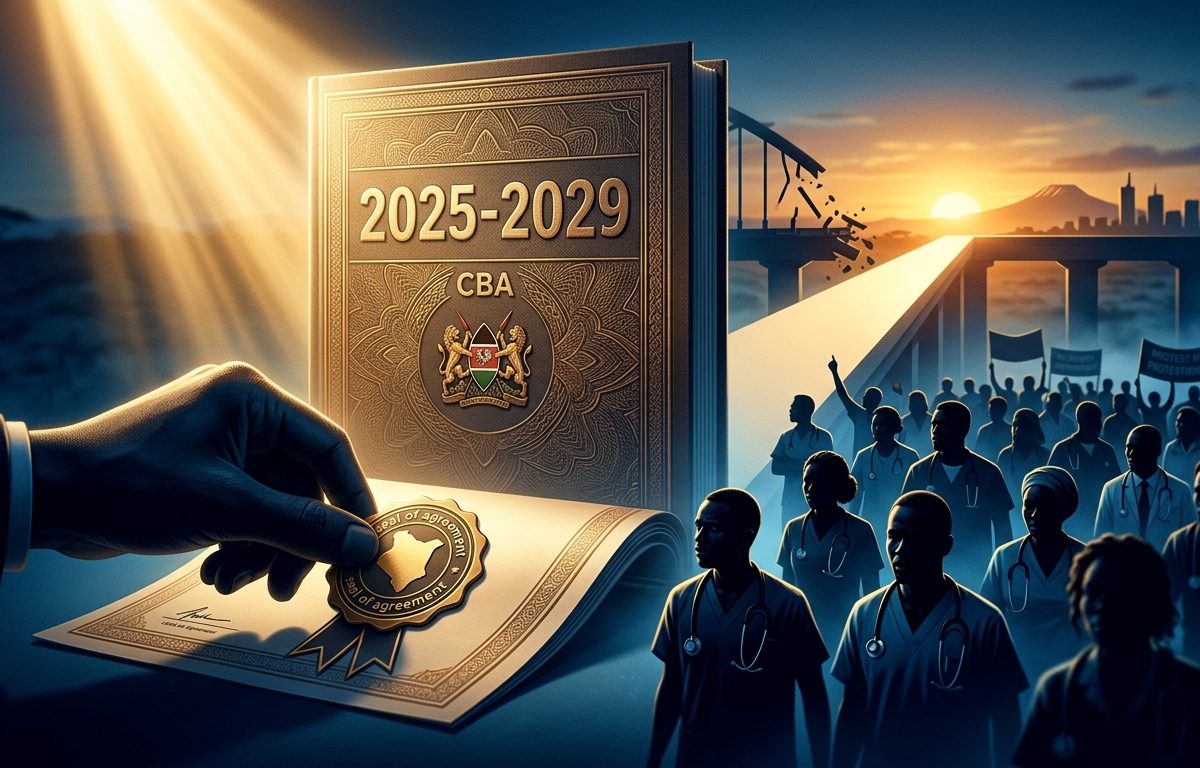
The Kenya Medical Practitioners, Pharmacists and Dentists Union (KMPDU) is preparing for critical negotiations surrounding the 2025-2029 Collective Bargaining Agreement (CBA). Dr. Davji Atellah, recently re-elected as Secretary General, views this agreement as vital for the future of Kenya’s healthcare system amidst the implementation of Universal Health Coverage (UHC) and new social health insurance schemes. Systemic underfunding, personnel shortages, and declining professional standards are key concerns.
Standardization of Working Conditions
The KMPDU aims to standardize working conditions across Kenya’s 47 counties. Currently, significant disparities exist in doctor pay, access to equipment, and internship opportunities based on county fiscal health, creating a perceived two-tier system. The union proposes a centralized framework mandating minimum standards for county health facilities, including consistent medical supply, digital health records, and appropriate doctor-patient ratios. Salary adjustments are also sought to address inflationary pressures and the rising cost of living.
Challenges Facing the Medical Sector
Kenya’s doctor-to-patient ratio remains critically low, falling below World Health Organization recommendations. This is compounded by medical migration, with skilled Kenyan doctors seeking opportunities abroad. The KMPDU has identified several key challenges, including delayed internship postings for medical graduates, underfunding of primary healthcare facilities with outdated equipment, and a gap in UHC implementation due to insufficient budgetary allocations for human resources. The union is also advocating for salary harmonization between national and county government employees. A prolonged industrial dispute could disrupt UHC implementation and negatively impact the broader economy.
Global Trends and the Kenyan Context
The struggles within Kenya’s medical sector reflect a global trend of health systems facing challenges due to aging populations, modern disease burdens, and post-pandemic fiscal constraints. Medical unions worldwide are evolving into political lobbies advocating for systemic reform. Kenya’s decentralized health service delivery, however, presents a unique challenge, with friction between the national government and county governments impacting stability. Dr. Atellah’s vision for the CBA is to create a legally binding instrument that obligates both levels of government.
Negotiations and Future Outlook
The outcome of these negotiations directly impacts the quality of patient care. Failure to reach an agreement could lead to renewed strikes, a recurring issue in the Kenyan medical sector. The government faces the challenge of balancing budgetary constraints with the need to address the KMPDU’s demands, potentially requiring creative financing and a prioritization of human capital. The 2025-2029 CBA represents a crucial test of the government’s commitment to the health of its citizens.