
Kenya’s public debt rose by Ksh1.2 trillion in the year to June 2026, climbing from Ksh11.81 trillion to Ksh13 trillion, according to the National Treasury, amid concerns over rising government borrowing.
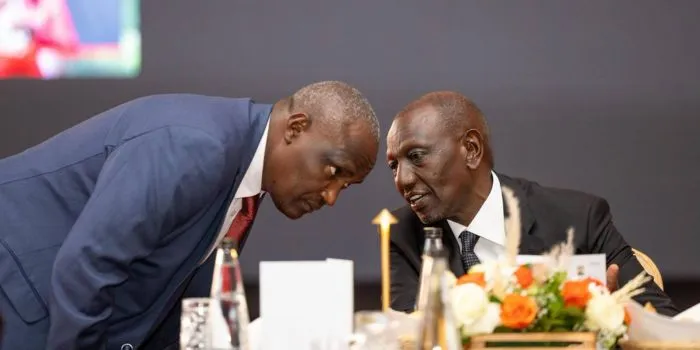
National Treasury Principal Secretary Chris Kiptoo presented the figures to the National Assembly’s Departmental Committee on Finance and National Planning on Tuesday, October 27, revealing that domestic debt accounted for 56 per cent of the total, while external debt made up 43.7 per cent.
“Total public and publicly guaranteed debt stock rose to Ksh13.01 trillion by June 2026, up from Kshs. 11.81 trillion the previous year,” Kiptoo stated.
“If you look at the division, 56 per cent is domestic debt, while 43.7 per cent is external debt. This is the reverse of the situation before, when external debt was higher than domestic debt,” he added.
Treasury PS Chris Kiptoo appearing before the NA Departmental Committee on Finance and National Planning on October 27, 2026
Photo
Parliament of Kenya
Data from the Treasury reveals that the country had a total debt of Ksh11.81 trillion by June 2025, with Ksh6.3 trillion in domestic debt while Ksh5.48 trillion in external debt.
In the 2025/26 financial year, the Ministry targeted to borrow over Ksh1.5 trillion, which comprised a fiscal deficit of Ksh901.0 billion and Ksh646.3 billion for refinancing maturing debts.
The PS attributed the increased borrowing over the last year to high debt-servicing obligations, which he said required up to Ksh716.1 billion. Ksh504 billion was for principal payments, while Ksh211.8 billion was paid as interest.
“Consequently, external debt service obligations required substantial outflows amounting to Ksh716.1 billion, split between Kshs. 504.3 billion in principal repayments and Kshs. 211.8 billion in interest payments”, Kiptoo said.
The figures highlight the financial demands facing the government as it balances debt repayments against other spending commitments.
The Treasury also reported that total national government revenue, including Appropriations-in-Aid, stood at Ksh3.1988 trillion against a target of Ksh3.259 trillion, leaving a shortfall of approximately Ksh60.2 billion.
Following the revelation that the government was relying on domestic borrowing, the MPs expressed concern over the increasing use of domestic financing to support the national budget.
Lawmakers argued that the government should work to reduce domestic borrowing, particularly given its potential effect on private-sector lending.
According to the committee members, heavy government borrowing from local financial markets could leave businesses facing higher borrowing costs or reduced access to credit.
Despite the concerns over debt and unpaid bills, the National Treasury reported an overall budget absorption rate of 93.3 per cent in the 2025/26 financial year.
According to Kiptoo, the department spent Ksh118.64 billion out of an approved budget of Ksh127.14 billion by the end of June 2026.
Recurrent expenditure recorded an absorption rate of 95.2 per cent, while development expenditure stood at 88.8 per cent.
The Treasury also reported that Kenya’s real GDP growth improved to 5.3 per cent in the first quarter of 2026, up from 4.9 per cent during the corresponding period in 2025.
However, Kiptoo identified rising public debt, inflationary pressures, geopolitical tensions and low absorption of donor-funded development projects among the challenges affecting budget implementation.
National Treasury Building
Photo
National Treasury