

By Dayo Johnson, Akure
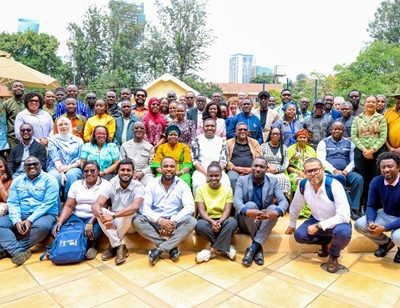
Eminent scholars, policymakers, traditional rulers, security chiefs and community leaders gathered at Olusegun Agagu University of Science and Technology (OAUSTECH), Okitipupa, for the institution’s third Distinguished Public Lecture, where participants examined the impact of climate change on food security in Africa.
Delivering the lecture titled “Climate Change and Food Security in Africa: Impact on Agriculture, Access and Adaptation,” the Vice-Chancellor of Ernest Bai Koroma University of Science and Technology (EBKUST), Sierra Leone, Prof. Edwin Julius Jeblar Momoh, called on African governments to adopt policies that would strengthen food systems and address the effects of climate change.
Momoh identified fossil fuel combustion, deforestation, industrial emissions and unsustainable farming practices as major contributors to climate change.
He noted that although Africa contributes relatively little to global greenhouse gas emissions, the continent remains among the most vulnerable to the effects of climate change, particularly in agriculture, which supports the livelihoods of millions of people.
According to him, rising temperatures, erratic rainfall, drought, flooding, erosion and desertification continue to threaten food production across the continent.
The scholar recommended a range of adaptation and mitigation measures, including reducing greenhouse gas emissions, adopting the Water-Energy-Food (WEF) nexus approach, promoting climate-smart agriculture, developing climate-resilient food systems, and investing in crop varieties and livestock breeds that can withstand drought, flooding and extreme heat.
He also advocated expanding ecosystem monitoring networks, promoting nature-based solutions, strengthening climate information services, increasing research and leveraging artificial intelligence and other emerging technologies to improve agricultural productivity and resilience.
Momoh stressed that sustained government commitment, investment in research and institutions, improved market access, social protection and gender inclusion are essential to building resilient food systems capable of adapting to climate change.
Speaking at the event, the Pro-Chancellor of the University of Fortune, Igbotako, Oba Prof. Sunday Amuseghan, described the lecture as timely, saying it provided an opportunity to reflect on practical solutions to climate-related challenges facing Africa.
In his remarks, OAUSTECH Vice-Chancellor, Prof. Temi Ologunorisa, encouraged Nigerians to plant more trees as a way of reducing carbon dioxide in the atmosphere and improving environmental and public health.
He said increased tree planting would help absorb carbon emissions associated with global warming while releasing oxygen that supports healthier living.
A major highlight of the event was the signing of a Memorandum of Understanding (MoU) between OAUSTECH and Ernest Bai Koroma University of Science and Technology, Sierra Leone, aimed at strengthening academic collaboration between the two institutions.
The event also featured the presentation of a commemorative plaque, scroll and souvenir to Prof. Momoh in recognition of his lecture, while the chairman of the occasion and the Deputy Vice-Chancellor of EBKUST, Prof. Enoch Iortum, were also honoured with souvenirs and commemorative scrolls.