
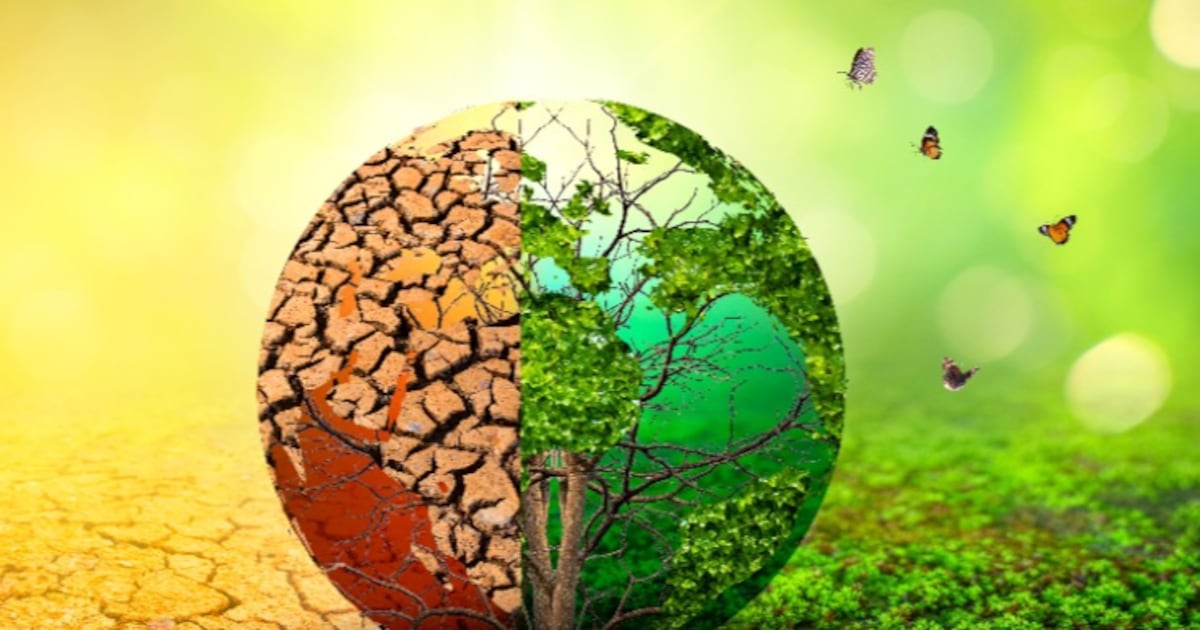
Microscopic organisms hidden beneath the soil in Free State nature reserves could provide scientists with critical clues about how ecosystems are responding to climate change.
Researchers at the University of the Free State (UFS) are studying free-living nematodes — tiny roundworms — found in soil, water and decaying organic matter to better understand environmental health, biodiversity and the resilience of ecosystems under pressure from a warming climate.
Dr Candice Jansen van Rensburg, from UFS’s department of zoology and entomology, has received a National Research Foundation-Foundational Biodiversity Information Programme (NRF-FBIP) small grant to continue the research from 2026 to 2028.
The project is part of an international collaboration involving Australian and South African researchers, reflecting growing global interest in soil biodiversity and its role in environmental monitoring.
Though microscopic, nematodes are among the most abundant organisms on earth. According to Jansen van Rensburg, a single gram of healthy soil can contain thousands, sometimes millions, of them. Their ecological role is disproportionately large.
By feeding on microbes and organic material, nematodes help recycle nutrients back into the soil. This process releases nitrogen and other nutrients into forms plants can absorb, contributing to healthier soil, improved crop growth and reduced dependence on fertilisers.
“So, nematodes’ tiny bodies have a huge impact,” said Van Rensburg.
Scientists increasingly use nematodes as indicators of soil and ecosystem health because their communities react quickly to environmental changes.
They occupy several levels of the soil food web, feeding on bacteria, fungi, plants and even other animals, and because of this, changes in their populations can reveal broader shifts taking place in ecosystems.
“Any shift in resources, disturbance or stress shows up clearly in which nematodes are present and in what proportions they occur,” Van Rensburg said.
Their sensitivity to factors such as temperature changes, moisture levels, nutrient availability and environmental disturbances also makes them useful tools for studying climate change.
The latest phase of the research will focus on mononchida, a specialised group of predatory nematodes that are poorly studied in SA.
A significant advancement in the project is the addition of DNA barcoding, a molecular technique that will allow researchers to identify species more accurately using genetic data.
“With the NRF-FBIP small grant, I will be able to generate sequence data for three genes from collected specimens, analyses that were previously cost-prohibitive,” said Van Rensburg.
The research will combine fieldwork in Free State nature reserves with laboratory-based molecular analysis. The resulting data will contribute to international biodiversity repositories, including GenBank and the Barcode of Life Data System.
Protected nature reserves in the Free State have become particularly important research sites because much of the province’s landscape has been transformed by agriculture, development and human activity.
“These protected areas provide rare ecological baselines in a landscape that is otherwise heavily transformed,” Van Rensburg said.
Despite their ecological value, nematode diversity in the province remains largely understudied, particularly among predatory groups such as mononchida.
“The Free State is significantly undersampled, even in terms of nematode biodiversity,” she said, noting that available records list only seven mononchida species from the province, with data dating back more than four decades.
Researchers believe the project could help fill major gaps in South Africa’s understanding of below-ground biodiversity while supporting long-term conservation planning and adaptive environmental management.
The work is also strengthened by collaboration with Australian-based researcher Dr Chantelle Girgan, a specialist in free-living nematodes and former South African colleague.
Jansen van Rensburg said international partnerships strengthen both the scientific relevance and practical value of the study, allowing locally generated data to contribute to global soil biodiversity frameworks and conservation strategies.
As climate pressures intensify, researchers say understanding the biodiversity beneath our feet is becoming increasingly urgent.
“The Free State sits at the intersection of major grassland and savanna systems that are highly sensitive to climate variability,” said Van Rensburg.
Long-term nematode monitoring in protected reserves, she believes, could serve as an early-warning system for climate impacts in these vulnerable ecosystems.
TimesLIVE