
The Supreme Court’s decisive opinion against C.H. Robinson Worldwide last week represents a shakeup to how the brokerage industry can defend itself in future lawsuits.
The court unanimously delivered a landmark decision, finding that brokers can be held liable for negligent hiring.
“A state law negligent claim can be brought against you. You can defend it,” law firm McCarter & English Partner Ron Leibman told Trucking Dive. “That is all the court said.”
The opinion removes a legal defense of preemption under the Federal Aviation Administration Authorization Act. But brokers can still defend themselves in negligent hiring claims.
“I don’t think this is an apocalyptic event,” Transportation Intermediaries Association President and CEO Chris Burroughs said, adding that the industry is resilient and supply chains will continue to move.
At the same time, “there’s going to be a lot of small companies, especially on the carrier side of things, that are probably going to get vetted out,” not because they have done anything wrong but just due to that liability risk, Burroughs said.
In an amicus brief to the Supreme Court for the case, the TIA argued that hundreds of thousands of motor carriers will be wiped out if brokers have to evaluate which carriers should operate. After the decision, Burroughs suggested it’s unclear how the market will react.
Safety still driving policy
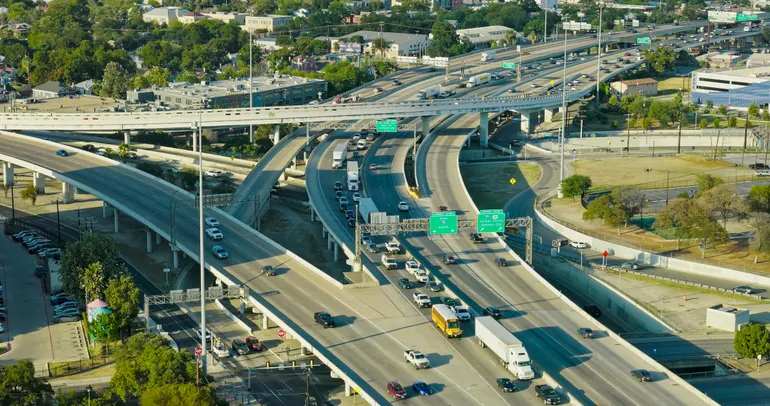
The case, Montgomery v. Caribe Transport II et al., involved a Freightliner tractor-trailer veering off a highway and into a Mack tractor-trailer, which Shawn Montgomery had stopped on the side of the road. Due to the 2017 crash, his leg was amputated.
C.H. Robinson Worldwide coordinated the shipment in the case, and the broker said the court’s decision was a disappointment. But it also noted its commitment to safety. “Our hearts continue to go out to the victims of truck accidents,” Dorothy Capers, C.H. Robinson chief legal officer, said in a statement the day of the court’s decision.
The company’s shipments “overwhelmingly move without incident, with just one serious accident claim filed for every 500 million miles driven on our customers’ loads,” the business added. “But even one accident is one too many.”
Stakeholders such as C.H. Robinson also said that safety is a continuous process.
“Everyone in this industry wants safety,” Burroughs said.
A major difficulty, though, is that over 90% of motor carriers don’t have a safety rating from the Federal Motor Carrier Safety Administration due to limited agency staffing, he said. Those carriers are presumed safe until proven otherwise, and Burroughs said the broker industry has to rely on them, otherwise “commerce would really cease to exist.”
Safety audits, typically done within the first 12 months, overwhelmingly pass, but a more in-depth compliance review, yielding a safety rating, has only reached about 8% of the industry.
Stakeholders: Large carriers, brokers will benefit from decision
Going forward, the winners will be well-capitalized carriers, but large brokers can also find success, according to a TD Cowen research report. Safety compliance will drive those transactions.
“The ruling drives volumes towards compliant capacity and will concurrently drive out non-compliant capacity, further tipping the supply/demand dynamics in favor of carriers,” TD Cowen said in a research report.
The trucking industry has already been dealing with lackluster volumes and supply tightening, and the Supreme Court decision could add another layer of pressure.
Leibman, who represents brokers, said he thinks the freight landscape will move more toward larger brokers using well-established carriers and brokers raising rates, particularly ones with self-insured retentions.
And brokers will see increased insurance costs, even if that’s not entirely justified, which will put some brokers out of business, he suggested. Insurance costs could be as much as three to five times higher, Burroughs said.
Landstar System, which has tens of thousands of truck brokerage carriers as part of its network, weighed in on the issue ahead of the decision during an earnings call in April.
“I think the entirety of the brokerage population is going to have to look at insurance very differently if the decision goes against the industry than they do today,” President and CEO Frank Lonegro said. “Right now, they essentially look at F4A and say we’re immune.”
Lonegro noted the company does have insurance programs in place in contrast to certain competitors, especially smaller brokers that might be unable to absorb that additional cost.
Uncertainty but not uncharted territory
The decision does not put the industry in uncharted territory. The preemption defense was already ineffective in many states, according to stakeholders.
“This was just one defense that was used by brokers,” Burroughs said. He added that the decision will drive up the number of legal cases in the future.
In the opinion, justices pushed aside arguments by C.H. Robinson. The court interpreted congressional law to mean that state tort law can cover safety issues in such cases.
Consequently, the case now goes back to the U.S. Court of Appeals for the 7th Circuit. But future legal conflicts for the broker industry may still take years to unfold, Burroughs said.
For big carriers like TA Dedicated, VP of Sales & Logistics Russell Thorp said he expects the broker industry to face more lawsuits from attorneys than in the past, for shippers to rethink who they’re working with. “There’s now exposure where there wasn’t necessarily exposure in the past,” he said, adding that indemnification language in contracts will increase.
Small carriers without established safety records could face challenges, Thorp added. “I think that the first change that we’ll see immediately is that carriers with poor safety ratings and safety scores that rely on brokers for their business will be pushed out of the market,” he said.
Safe carriers with strong safety performance will benefit from the decision, he said.