
Two recent episodes tell a revealing story about the external pressures bearing down on Africa. In May, Zambia bowed to Chinese demands and canceled the human rights and tech summit RightsCon, a capitulation that reverberated across the digital rights community. A month later, Kenyan President William Ruto, in a call with U.S. Secretary of State Marco Rubio, agreed to host a quarantine facility in Kenya for Americans affected by the Ebola outbreak in the Democratic Republic of the Congo (DRC).
Over the course of multiple administrations, Washington distinguished its engagement in Africa from Beijing’s by arguing that American partnerships are rooted in transparency, accountability, and mutual benefit. However, the current administration has recast that framing to “a disciplined, pragmatic, and interest-driven strategy” that will “win the day with predictable, transactional cooperation.” The Ebola agreement, while currently blocked in court, shows what that shift looks like in practice, especially amid policies such as the America First Global Health Strategy (AFGHS). It’s also a notable example of how Washington is at risk of being seen in Africa as a geopolitical actor indistinguishable from its adversaries—and even as actively validating the Chinese model as the more honest alternative.
Risks Plain as Day
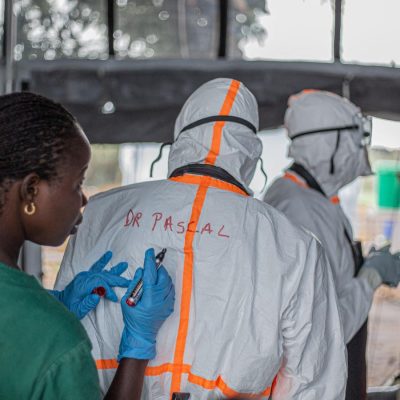
The outbreak of the Bundibugyo strain of Ebola—a rare variant with no approved vaccine or treatment and a fatality rate of up to 50 percent—is concentrated in the DRC, with a few cases in neighboring Uganda. Experts are unambiguous: Ebola quarantine and treatment should only be conducted in facilities with proven infection control systems, highly trained personnel, and established operational protocols—capabilities that take years to build, staff, and certify.
The U.S.-Kenya deal would involve a fifty-bed quarantine unit at Laikipia Air Base to receive Americans evacuated from the DRC who require isolation before onward travel to the United States. In exchange, the United States committed $13.5 million toward Kenya’s Ebola preparedness—yet whether those benefits go toward Kenya’s public health system or to the American-designated facility remains unspecified. Other factors, such as the environmental and security implications of the arrangement, are also unclear.
The proposed Laikipia facility would have been operational within days of the agreement announcement, yet Kenya has no known existing infrastructure necessary for Ebola treatment and quarantine. The facility’s location is also a liability: Laikipia Air Base sits on the fringes of Nanyuki, a town that’s an agricultural center, a tourist hub, and the primary gateway to Mount Kenya National Park. Civilian movement through and around the town is constant and fluid, and a containment failure at Laikipia could extend well beyond Kenya’s borders.
Immediately after the facility’s announcement, the Katiba Institute, a constitutional law organization, filed suit challenging the arrangement as “constitutional recklessness,” and a Kenyan court temporarily blocked the facility from opening. The order was subsequently extended, and the court directed the government to publicly disclose the full terms of the deal. The next hearing is scheduled for June 23.
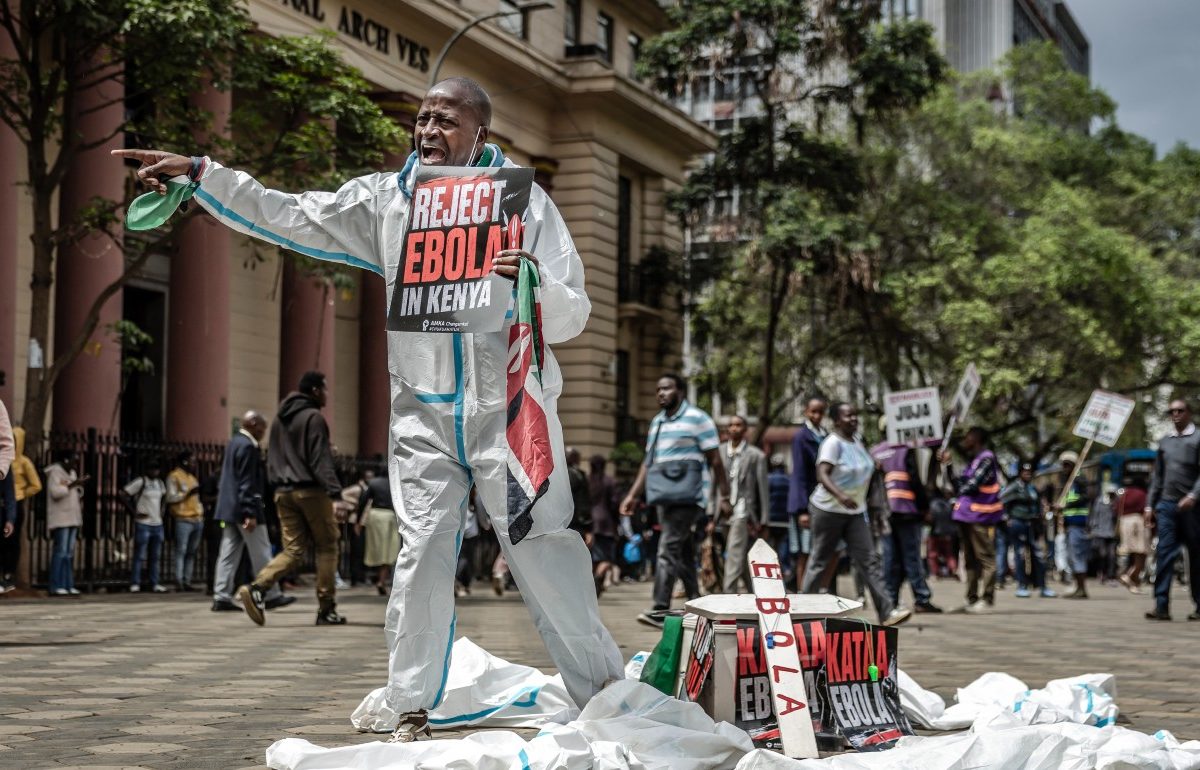
Despite the order, both the U.S. and Kenyan governments continue to defend the arrangement. Ruto supports it on the basis of longstanding bilateral relations, stating: “We are a responsible government. We know what we are doing. People should relax.” For many Kenyans, however, relaxing is difficult when the risks remain visible and the terms of the arrangement remain opaque, and protests against the facility continue.
The arrangement also speaks to the absence of a coordinated global response framework, largely due to AFGHS. During his second term, U.S. President Donald Trump and his administration reshaped U.S. global health architecture under AFGHS, prioritizing bilateral agreements over multilateral engagement. These moves have hollowed out the institutional architecture that for decades built the capabilities to respond to public health emergencies.
One such example is the U.S. withdrawal from the World Health Organization (WHO) under AFGHS. The WHO’s primary role in international public health is coordinating responses to exactly these kinds of emergencies, providing the technical capabilities, institutional oversight, and cross-border protocols. Critics warned that the U.S. withdrawal would fragment international efforts and undermine global capacity to detect, prevent, and respond to future outbreaks. The U.S.-Kenya Ebola arrangement is that fragmentation made visible.
Beyond the WHO, the Africa Centres for Disease Control and Prevention is responsible for coordinating continental responses to disease threats such as Ebola. The WHO and Africa CDC have launched a joint continental Ebola response plan, but their role in the U.S.-Kenya arrangement, if any, has not been publicly established.
A Reckoning for Washington
The logic behind the Ebola deal reveals a striking asymmetry—one that mirrors the Zambia-China RightsCon controversy. When Zambia canceled the summit under pressure from Beijing, the international critique centered on foreign interference, democratic backsliding, and the silencing of civil society by a more powerful state exploiting a weaker partner’s financial and political vulnerabilities.
The U.S.-Kenya Ebola arrangement has attracted a strikingly similar set of charges. Critics have characterized the $13.5 million commitment as financial leverage over a country under economic strain. The outcry has equally been fueled by the perception that Washington transferred biological risk to a less powerful country rather than absorbing it at home, with Ruto’s approval of the deal portrayed as subjugation to foreign pressure and characterized by some as medical colonialism. The parallel with China’s conduct in Zambia is uncomfortable precisely because it is legible: In both cases, a powerful external actor pursued its strategic interests on African soil with limited regard for local sovereignty or democratic process.
The reputational damage from episodes like these carries strategic consequences that extend well beyond the agreements in question. African states are making political calculations in an increasingly competitive environment, and the terms of engagement matter. When the United States is perceived to operate by the same transactional logic it criticizes in Beijing, it surrenders the most valuable distinction it holds on the continent: that American partnership comes with institutional respect and reciprocal benefit. Some have long argued that Washington’s approach has always been transactionalism dressed in the language of shared values. Those claims now appear borne out, both in the current administration’s candor about its transactional approach and in its practices in Africa.
China has long argued in its modernization approach that its engagement in Africa is free of the conditionalities and sovereignty concerns that Western partnerships impose. Every instance in which Washington appears to override African legal systems, transfer risk to weaker partners, or secure compliance through financial leverage gives that argument more credibility than any Chinese diplomat could manufacture.
The Ebola facility dispute and the RightsCon cancellation bear a striking resemblance and can both be read through the same lens of external coercion. If that reading solidifies into a settled continental view, the United States will find itself losing ground to China in Africa while actively validating the Chinese model as the more honest, if transactional, alternative.
The imagery of Washington’s bilateral arrangements being contested and halted in African courts compounds that damage further. In Kenya, the court petition to stop the Ebola facility cited a cascade of procedural failures, including absent public participation and parliamentary authorization. It challenged both the deal’s wisdom and the process by which a decision of this magnitude could be made at all. The injunction was yet another reminder that what serves American interests must also satisfy the legal frameworks of its partners, and collaborations under the America First agenda must be designed to account for domestic legal architecture.
Additionally, bringing biological disease risk to a regional ally carries consequences that reverberate back to Washington. Kenya is among the United States’ most consequential security partners in a region under sustained pressure from state fragility. If a poorly controlled Ebola facility were to trigger an outbreak in the heart of the country, the damage would carry long-term implications well beyond public health. It would degrade the capacity of a partner the United States depends on for regional stability, at a cost that far outweighs a $13.5 million commitment. A stable, capable Kenya is a strategic interest that warrants careful stewardship. This arrangement puts that interest at risk.
The African Imperative
On June 23, Kenyans will learn whether the courts will permit an American Ebola quarantine facility in their midst. But regardless of that ruling, the larger story—and more uncomfortable truth—has already been recorded: external influence on the continent is a lived reality for Africans.
The Kenya and Zambia incidents point to that truth. Great-power influence is unfolding in real time, and both episodes expose the same structural vulnerability: African leaders making consequential decisions under external pressure, with limited leverage to push back. At a time when the United States and China are engaged in an intensifying competition, these episodes reveal how African partnerships with both sides have the potential to entangle the continent in great-power rivalry on terms not of its own choosing.
For Africa’s political leadership, building independent fiscal capacity and genuine negotiating leverage is therefore an imperative. The ability to decline a request, whether the cancellation of RightsCon or the hosting of an Ebola facility, is a function of leverage. That leverage can only mature when leaders cultivate the economic and political resilience that insulates them from external pressure, whether from Beijing, Washington, or anyone else.