
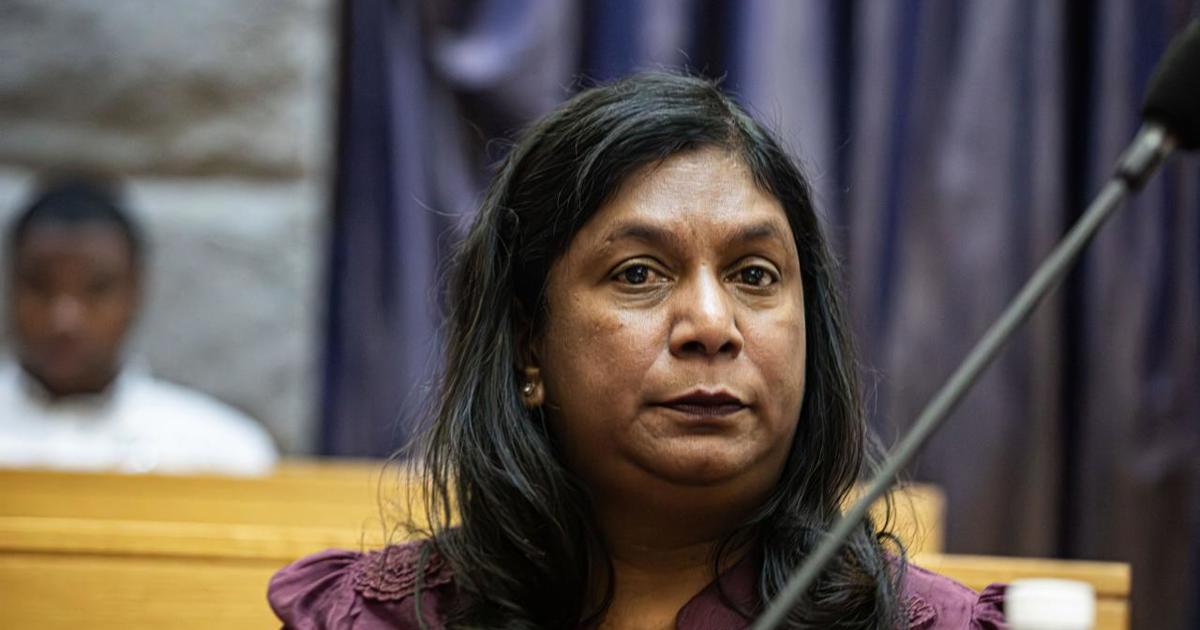
The resignation of Investigating Directorate Against Corruption (IDAC) head Andrea Johnson raises a bigger question about South Africa’s fight against corruption: Is the problem the people appointed to lead it, the institutions themselves, or something much deeper?
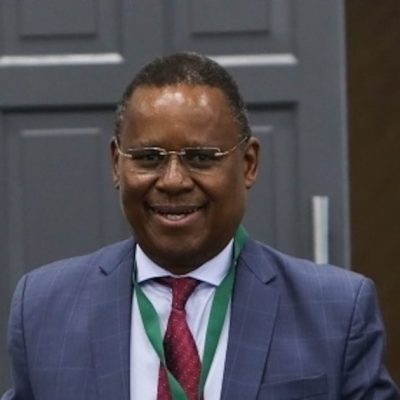
Political analyst Dr Oscar van Heerden of the University of Johannesburg’s Centre for African Diplomacy and Leadership believes there is no single explanation.
Instead, he argues that political interference, factionalism, criminality and failures of leadership have combined with a deeply entrenched culture of corruption to repeatedly undermine the country’s efforts to tackle the problem.
Speaking after Johnson’s resignation, Van Heerden described her departure as a “dishonourable exit”, saying it had to be considered in light of both her testimony and questions about her conduct.
But Johnson is only the latest leader of an anti-corruption institution to leave office early.
For Van Heerden, the recurring instability suggests South Africa needs to look beyond individual personalities to understand why its anti-corruption efforts repeatedly run into trouble.
Related articles:
Political interference is only part of the problem
Van Heerden pointed to a combination of forces that have weakened anti-corruption institutions.
“There’s obviously, to a certain extent, political interference,” he said, adding that factionalism within the largest ruling party and criminal elements within institutions also played a role.
He singled out the Scorpions as an example of an agency he believed had proved effective.
“The Scorpions was a very effective agency. It was given broad, sweeping powers, and I think that it simply just scared some of the political types and that’s why they decided it must be dismantled and be reincarnated into a different format.”
Van Heerden argued that problems had continued among the institutions that subsequently emerged.
But he was less convinced that government funding of institutions automatically meant political control over them.
While acknowledging that budgets provided by government and the National Treasury could constrain institutions, he said this did not necessarily mean control was being exercised over them.
Instead, Van Heerden placed considerable responsibility on leadership.
He argued that South Africa had repeatedly struggled to find people who combined the technical skills required for their jobs with the ability to manage complex institutions.
Being a successful prosecutor, for example, does not necessarily make someone a successful administrator.
“You have very excellent lecturers at university, but the minute you put them in an administrative position, they are pathetic,” he said.
Getting the right person with both the necessary professional qualities and managerial experience remained a challenge, he argued.
South Africa ‘did not bargain on the lure of money’
Van Heerden’s argument, however, goes considerably further than the leadership of individual institutions.
He believes South Africa’s political economy of corruption “runs deep and long”.
While tracing some of its origins to apartheid, he stressed that this could not serve as an excuse for corruption after 1994.
Instead, Van Heerden argued that democratic South Africa underestimated one particularly powerful force.
“One of the things that we undermined at its very core was the power of money,” he said.
“We have a brilliant Constitution, we had all kinds of Chapter Nine institutions put in place, etcetera, but we simply did not bargain on the lure of money and how it will corrupt us.”
It is an argument that shifts the focus away from finding the right anti-corruption boss or creating another institution.
If corruption is embedded deeply enough in South Africa’s political economy, changing the person at the top of an agency can only achieve so much.
‘There are no heroes’
Van Heerden also warned against looking for an individual who could rescue the country from corruption.
Public testimony about alleged corruption and criminality can easily create heroes and villains in the public imagination, with each new revelation changing perceptions of who can be trusted.
Van Heerden rejected the idea that South Africa’s problems could be solved by finding the right president, minister or general.
“There are no heroes,” he said.
“We also need to move away from thinking that we have a saviour in the form of the President of the Republic or the minister or the general. It doesn’t work like that.”
What South Africa needs instead, he argued, is collective leadership.
“It’s a leadership that is supposed to be ethical and moral, and it’s a leadership that must take difficult decisions to put us on the right trajectory.”
For Van Heerden, that leadership is currently lacking.
And that leaves South Africa with a far harder problem than replacing another anti-corruption chief: confronting the political, institutional and societal conditions that allow corruption to persist regardless of who occupies the office meant to fight it.
Never miss a major story. Get breaking news and the latest developments from South Africa and beyond as they happen.