
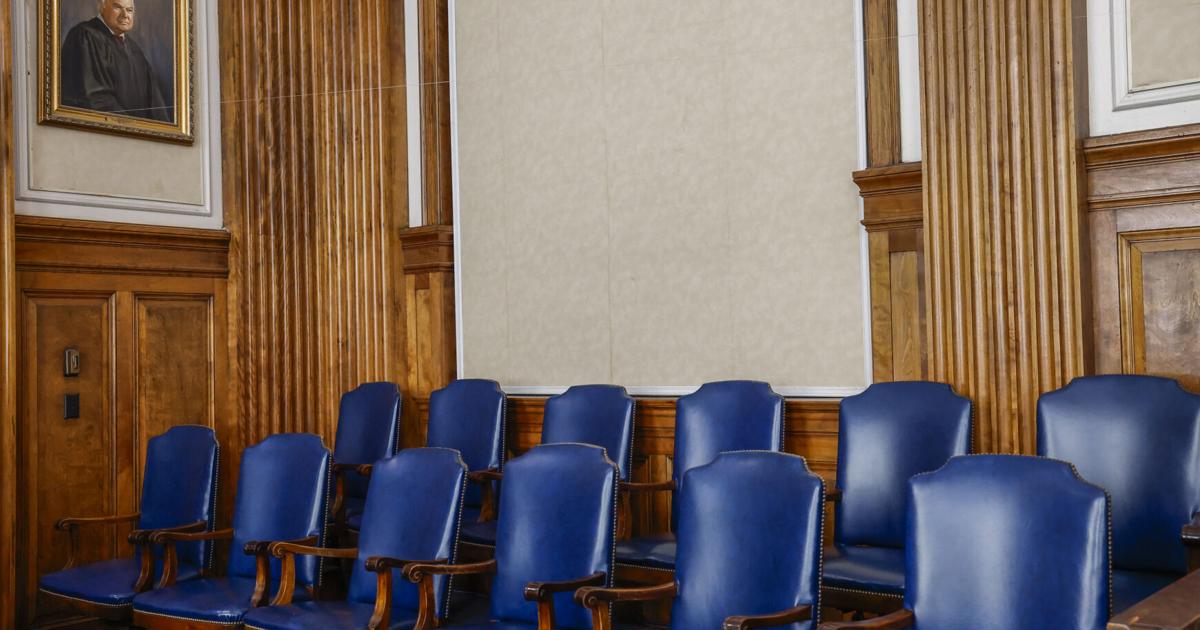
In crimes where Louisiana’s criminal code does not specify hard labor upon a conviction, six-person juries can decide a defendant’s guilt.
It’s been that way for well over a century. But last week, the U.S. Supreme Court agreed to hear arguments in a Florida case that “6-pack” juries like those in Louisiana and a handful of other states are half what the U.S. Constitution requires, based on history.
The petitioners in the Florida case lean heavily on the high court’s 2020 decision in Ramos v. Louisiana, banning nonunanimous jury verdicts in criminal cases.
In that case, the Supreme Court broke with a 50-year ruling to find by a 6-3 majority that American juries were always meant to be unanimous, scrapping longstanding laws in Louisiana and Oregon.
In the Florida case, defendant Hamed Kian argues that a 1970 Supreme Court decision that endorsed six-member juries, Williams v. Florida, “cannot be squared with” the Ramos decision, claiming that a group of 12 was also what defined a jury trial when the Sixth Amendment came to pass.
“Ramos rejected the same kind of ‘cost-benefit analysis’ undertaken in Williams,” wrote Daniel Eisinger, public defender in West Palm Beach, Florida, in Kian’s petition.
“When the People enshrined the jury trial right in the Constitution, they did not attach a rider that future judges could adapt it based on latter-day social science views.”
That research also found more than 100 cases per year being tried before “6-pack” juries in Louisiana at the time. The state once allowed five of six jurors to convict in those trials until the U.S. Supreme Court in 1979 insisted those smaller juries needed to be unanimous.
The conviction rate for six-pack juries was comparable generally to national figures for guilty verdicts from 12-member juries that require unanimity, the data showed.
More recent figures for 6-pack juries in Louisiana were not available. A spokesman for Jefferson Parish District Attorney Paul Connick’s office said prosecutors tried 13 defendants last year before six-member juries. The 23rd Judicial District Court reported holding 68 total jury trials last year.
Convictions by those smaller juries can pack a punch; six-member juries render verdicts on felonies including simple robbery, which carries a maximum seven-year sentence, and simple burglary, with a top sentence of 12 years, among other second-tier felonies.
Louisiana’s habitual-offender law can apply to convictions from either size jury. The Advocate’s research in 2017 found 14 Louisiana defendants who were launched to life prison terms from habitual offender sentences based on convictions by six-member juries.
In the Ramos decision, Justice Neil Gorsuch ripped the Supreme Court’s prior endorsement of nonunanimous juries, from 1972, saying the swing justice applied a “functional assessment” to remove an “ancient guarantee.”
Loyola University law professor Will Snowden, who runs a community education initiative called The Juror Project, said the “originalism-stacked court” that doomed split verdicts may also consider that “allowing six-person juries to proceed just for functional purposes, for efficient purposes, that’s not consistent with the intentions of the framers of the Constitution.”
Snowden said larger juries increase the likelihood of representation from a broad cross-section of the community.
Should the court find six-member juries unconstitutional, Snowden said it will need to consider then, as it did with divided juries, whether to make the change retroactive.
The high court declined to make its ban on divided juries retroactive, suggesting retroactivity was an issue left to the states. Oregon took the invitation, granting new trials to hundreds of long-serving prisoners with final convictions by split juries, while Louisiana has refused to do the same.
Snowden said he wonders how the Supreme Court will treat retroactivity if it finds six-packs unconstitutional.
“It would be really interesting to see if the tone changes,” he said.