
– Advertisement –
Türkiye, the Balkan European nation, which stands mainly on European soil, between Asia and the Middle East, had gathered nations across the world, from November 9 to 20, 2026, to the 31st edition of the conference of the Committee of Parties (COP31) of the United Nations Framework Commission on Climate Change (UNFCCC), held in Antalya, one of the nation’s largest cities and main tourism resort.
Millions of country’s government delegates and non-state actors had congregated to effectively mitigate worldwide climate scourges, otherwise called ‘climate change’
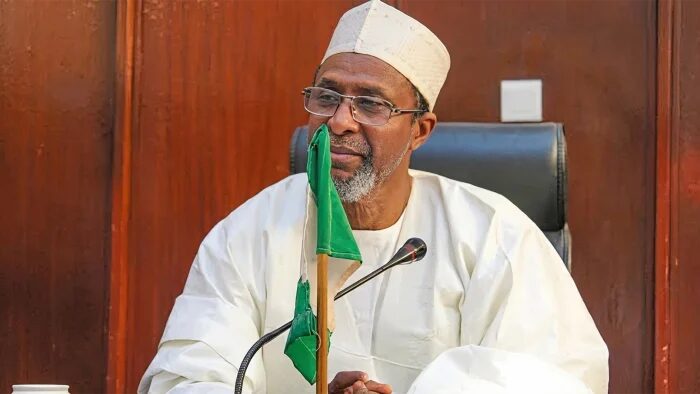
Nigeria, Africa’s most populated and influential nation, as usual, represented her in the Türkiye event.
Pertinent questions are asked by all and sundry:
What do Nigeria and Africa stand to benefit from the COP31, in terms of realistic biodiversity and environmental conservation, for the well-being of their people?
What actual benefits had Nigeria and the continent derived from previous COPs, that Nigeria largely attended, in environmental remediation and funding, to warrant the country’s huge presence in another version in Turkey?
Ordinarily, Nigeria could deploy its enormous political influence and natural resource endowments, to accrue from the pool of gains of COP31 and others, for itself and other African countries, that bank on its leadership in Africa. Ordinarily, these are underdeveloped countries more yoked by environmental plagues, than the developed nations.
Türkiye, because it is seated on the crossroads to Europe, Asia, the Middle East, and proximate to Africa, deploys her enormous influence to form elastic bridge for the world powers.
In September, 2004, when its current president, Recep Tayyip Erdoğan, was only four months old as Prime Minister, selected human rights activists from across the world, had the honour of discussing with him for the optics, on the conclusion of the “New Tactics for International Human Rights Project”.nations. I was in the delegation, and a participant and presenter in the project.
Then, speculations were rife that Erdoğan, notwithstanding Türkiye’s doubtful human rights scorecard, rode on the back of that hosting to pursue the country’s ever elusive admittance to full-fledged membership of the European Union, which started in the 1960s.
Indeed, Nigeria and Africa countries have a lesson to learn from the modern nation of “Mustafa Kemal Atatürk”, that countries hardly host such huge gatherings, pro-bono, excepting for self-gains.
From the Türkiye COP31 roll-calls, millions of participants, consisting of official delegates from the governments of ‘200’ countries, civil societies and climate change practitioners, had attended, Nigeria inclusive.
But the US subnational and legislative climate change advocates, filled the vacuum when the “America Is All” group, with over 120 delegates, including 18 observer- lawmakers, attended, with crowded proactive civil society groups and activists.
Unlike the previous COPs, the Türkiye version proved to have largely come short of meeting its set goals, with avalanche of disagreement by participating countries, regions, civil societies and other actors.
The Antalya meet was a huge harvest of protests
The flood of dissent was capped by the Spokesman to the UN Secretary-General, Stephene Dujarric, who briefed journalists at its UN headquarters in New York, on the stand of his boss, Antonio Guterres, on the COP31 outcomes;
“The continued addiction to coal, to oil and gas, is fueling climate chaos, exposing economies to price shocks, and undermining energy security. The world is now poised to exceed the globally-agreed limit of 1.5 degree temperature rise. We can’t put out the fire while pouring fuel on it,” the UN chief bemoaned.
The European Union also challenged the shelter decision, saying it failed to “meet the moment”, thus forewarning on the widening gap between climate pledges and real-world action.
African civil society organisations also objected to plans to expand global carbon markets, through wildlife conservation and nature-based carbon offset schemes, warning that such initiatives could deepen colonial exploitation, undermine national sovereignty and violate the rights of local and indigenous communities. The Corporate Accountability and Public Participation Africa (CAPPA), prompted the Nigerian and African governments to reject climate finance deals that plunge them into debts, and instantly demanded accountability from wealthy nations.
Nigeria’s official delegation to the Antalya was led by Federal Government officials, with the Minister of Environment, Balarabe Abbas Lawal, with representatives from the National Council on Climate Change (NCCC), and the Energy Commission of Nigeria. The National Park Service, an agency of the environment ministry, with Dr. Ibrahim Goni and Dr. Kingsley Ononogbu, Conservation General and it Board Chairman, respectively, were participants.
There are always criticisms that Nigeria’s government can’t justify official attendance of COPs, calling it a huge waste.
For instance, the Vanguard newspaper of March 31, 2026, had a critical preview that had the Turkish gathering as a premonition of “jamboree of large delegations”
Really, there exist unsettled enormous environmental problems in Nigeria, which when still unsolved, draw the angst of stakeholders, and the media inclusive, that Nigeria’s continuous huge participation, tantamounts to a waste.
Nigeria’s environmental problems are massive and alarming!
Deforestation is unabated, with escalating loss of biodiversity, vegetation covers and ecosystems. In different workshops held recently in Abuja, the country’s capital, particularly by the Wildlife Society of Nigeria (WISON), Federal Ministry of Environment, the National Park Service (NPS) etc., environmental and livelihood protection of local communities, took precedent.
But, the Federal environment ministry, with its NPS agency, presented a 40-page “Securing Nigeria’s Forest Future (SNFF)” plan, at the COP31, could deserve a pat on the back, for establishing several new national parks to the existing ones, within a short space of time.
The 2025 national goal of 23 per cent renewable move in electricity remains unmet. Nigeria is still one of those countries of the world that excessively flare gas. After more talks and slow motions on the cleansing of Ogoniland, from decades of deadly oil exploration, the UNEP supported remediation is still mired in boardroom politics. Timelines on abolition of gas flaring are not met, where about 95 percent of flared gas should be reversed and expected to generate huge carbon credits, by 2050.
Adaptation to erosion and flood protection is weak, with feeble early warning responses to drought resilience, poor water management, and climate-ready farming. The blights of the Lake Chad Basin are evident. Illegal and destructive mining is a recurring destruction. The unmitigated environmental hazards are just numerous!
However, climate change funding and mitigating expectations are fueled by the COP31 whooping $1.3 trillion global budget mark. From this pool, it is envisaged that Nigeria may seek (and my may not get) $20-25 billion by 2030.
Insistently, nothing has changed from previous COPs, when the agreement reached in the Baku – Azerbaijan COP29, that developed countries set the pace by bankrolling a minimal US$300 billion annually to developing countries, like Nigeria, until 2035, have not been honoured.
Why hope that the COP31 funding pledges will also make the difference?
But, it is sufficiently explained and understood that COPs do not instantly attract or provide climate financing or carry out remediation, but that proposals must be devotedly prepared, appraised, secured, and implemented with technical partnerships from funding windows.
There is Environmentalist Al Gore, a former US Vice President, who participated in COP31 side-events, rather than be in a US government delegation that was missing. Mr. Gore is the “conscience of the US” and a world that must attune to resolving climate change, where a defiant US President Donald Trump, withdrew a US official climate change governance.
In Nigeria, Africa; there is an Al Gore’s look-alike, who perhaps has more-loaded credentials and willpower to lead the way to sound environmental health and safety, from Africa to the world.
A valuable Board of Trustees’ President of Nigeria’s foremost nature protection NGO, the Nigerian Conservation (NCF), Prof Yemi Osinbajo, also presides on Climate Action Platform for Africa (CAP-A), as he is Global Advisor for the Global Energy Alliance for People and Planet (YGEAPP).
But, neither NCF nor the other organisations, had announced the expected physical presence of the former Vice President of Africa’s big-brother nation, at Antalya, Turkey, to join ‘forces with his fellow Ex-Vice President, Environmentalist of America, Al Gore, to “heal the world”.
By Tony Erha