
Ethiopia heads to the polls next week, with government officials presenting the vote as a marker of transition to genuine democracy. Critics, however, warn that restrictions on civil liberties and ongoing conflict undermine the credibility of the process.
On June 1, some 10,900 candidates will vie for 547 seats in the House of Representatives. Members will then determine the next government, based on the party with the majority.
Prime Minister Abiy Ahmed’s administration has described the elections as the “biggest democratic event” in the country, with 50.5 million voters registered to choose candidates from 47 political parties
The ruling Prosperity Party expects to retain power but has highlighted the significance of the contest, noting that 46 percent of candidates are women. Some 18,700 election officials have already been deployed, with 169 observer groups accredited to monitor the polls, according to the National Electoral Board of Ethiopia (NEBE).
The vote marks an important milestone for Addis Ababa, which is seeking a fresh mandate after years of war that nearly derailed national unity. In the last election in 2020, the Tigray People’s Liberation Front (TPLF), once the ruling party, boycotted the polls and later launched a war against the Ethiopian National Defence Forces (ENDF).
The conflict ended with a peace deal mediated by the African Union (AU) in November 2022. This time, the AU has deployed an observer mission led by Kenya’s former President Uhuru Kenyatta, one of the three mediators who helped secure the Cessation of Hostilities agreement in Pretoria. The mission of 73 experts, 61 percent of them women, is drawn from 37 African countries.
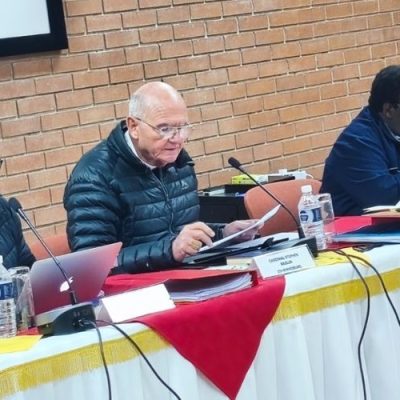
“The observers will be deployed across various regions of Ethiopia to monitor election day procedures, including the opening of polls, voting, closing, and the counting and tabulation at polling stations,” the AU said in a dispatch on Wednesday.
“The mission shall engage with state authorities, including the NEBE, political parties, candidates, civil society organisations, the media, representatives of the international community based in Ethiopia, and other election observation missions.”
The Intergovernmental Authority on Development (IGAD) has also announced a 26 member mission, led by former Ugandan Vice President Speciosa Wandira Kazibwe and deputised by Mohamed Ali Houmed, former President of Djibouti’s National Assembly. Both missions will release separate reports on the conduct of the elections, which Ethiopia could use to portray transparency.
Not everyone is enthusiastic. Rights watchdogs accuse Addis Ababa of holding elections while trampling on civil liberties. The International Federation for Human Rights (FIDH) and the World Organisation Against Torture (OMCT), speaking under the Observatory for the Protection of Human Rights Defenders, expressed serious concern about the environment in which Ethiopia’s seventh General Election will be held.
“The Ethiopian Government must take concrete steps, in the immediate term and over the longer term, to protect human rights defenders, restore civic space, and ensure an electoral environment consistent with Ethiopia’s Constitution and international human rights obligations,” they said on Thursday.
“An electoral process cannot be considered credible, free or fair in a country where human rights defenders face systematic targeting, civil society organisations operate under threat of suspension and dissolution, independent journalists work in a climate of fear, and armed conflict continues in multiple regions with little accountability.”
Concerns include the forced exile of journalists and activists critical of the government.
A spokesperson for Ethiopia’s foreign ministry rejected the accusations, saying NGOs initially suspended for violations were reinstated after following due process. He added that Ethiopia respects civil liberties, citing the number of political parties contesting the election as evidence.
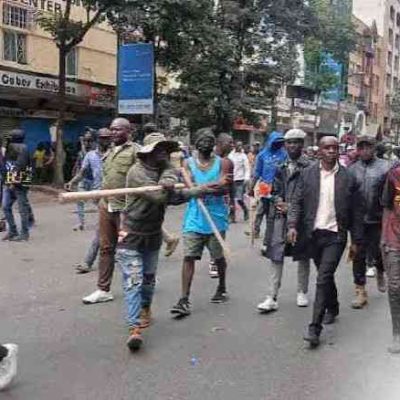
Yet the polls also mask ongoing clashes with militia groups opposed to the administration. In the Amhara region, the Amhara Fano National Movement said the country had not established “conducive conditions” for a valid election. The group vowed to block vehicle movement on major roads, effectively preventing the delivery of voting materials.
Splintered factions of the TPLF have also threatened to disrupt the polls. One faction announced earlier this year it would reclaim leadership of the Tigray region without elections, while another rebranded itself as a new party and expressed readiness to participate.