
The outbreak has already spread into Uganda, pushed the World Health Organization to declare an international public health emergency, and renewed concerns about Africa’s fragile disease-response systems at a time when many countries are already battling aid cuts and strained healthcare budgets.
More worrying for health officials is the strain behind the outbreak.
The current wave is linked to the Bundibugyo strain of Ebola, which has no approved vaccine or targeted treatment, making containment far more difficult than in previous outbreaks where vaccines played a major role.
So far, Congo has confirmed 82 Ebola cases and seven deaths, while authorities are investigating nearly 750 suspected cases and 177 suspected deaths. Uganda’s confirmed infections have also risen, strengthening fears of wider cross-border transmission.
The World Bank said it has already deployed staff and emergency resources to eastern Congo while assembling a broader financing package that would allow rapid disbursement of additional funds.
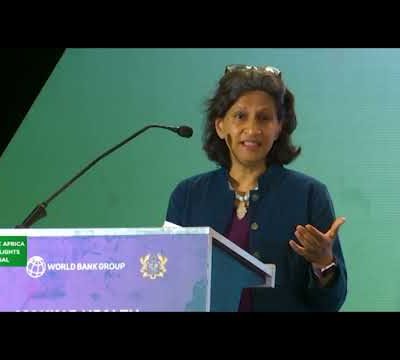
Monique Vledder, the bank’s global health director, said officials were especially concerned about neighbouring South Sudan and Burundi, where weaker healthcare systems could struggle to contain the virus if infections spread.
“We are pulling together today and early next week a complete package where we will be drawing from different types of financing mechanisms that will help us to make available more funding in a rapid way,” she told Reuters.
The bank already has a $250 million health project in Congo approved in 2024, with roughly $200 million still available for emergency use. But officials say additional financing will likely be needed as the outbreak evolves.
The United Nations has released around $60 million from its emergency response fund to support containment efforts, while the United States is deploying a rapid response team and funding about 50 emergency response clinics.
The outbreak is now becoming more than a public health story.
Eastern Congo is one of Africa’s most strategically important mining regions, producing critical minerals used in electric vehicles, batteries and global technology supply chains.
Any prolonged outbreak could disrupt mining communities, transport routes, border trade and labour movement across parts of Central and East Africa.
The crisis also comes as several African governments face growing pressure from reduced international aid flows and rising debt costs, exposing the vulnerability of public healthcare systems across the continent.
WHO has warned that the outbreak is unfolding in a highly challenging environment marked by insecurity, population displacement and intense cross-border movement, conditions that can accelerate transmission.
The World Bank said its long-standing presence in Congo, including pre-positioned medical supplies and local-language teams, helped experts move quickly into affected provinces.
Ebola remains one of the world’s deadliest viral diseases, spreading through direct contact with infected bodily fluids or contaminated materials.
Symptoms include fever, vomiting, diarrhoea and severe body pain, with fatality rates capable of rising sharply when outbreaks are not rapidly contained.
For Africa, the stakes are now far bigger than one outbreak in eastern Congo. The crisis is becoming an early test of whether regional and global institutions can respond fast enough to stop another health emergency from turning into a wider economic and humanitarian shock.