
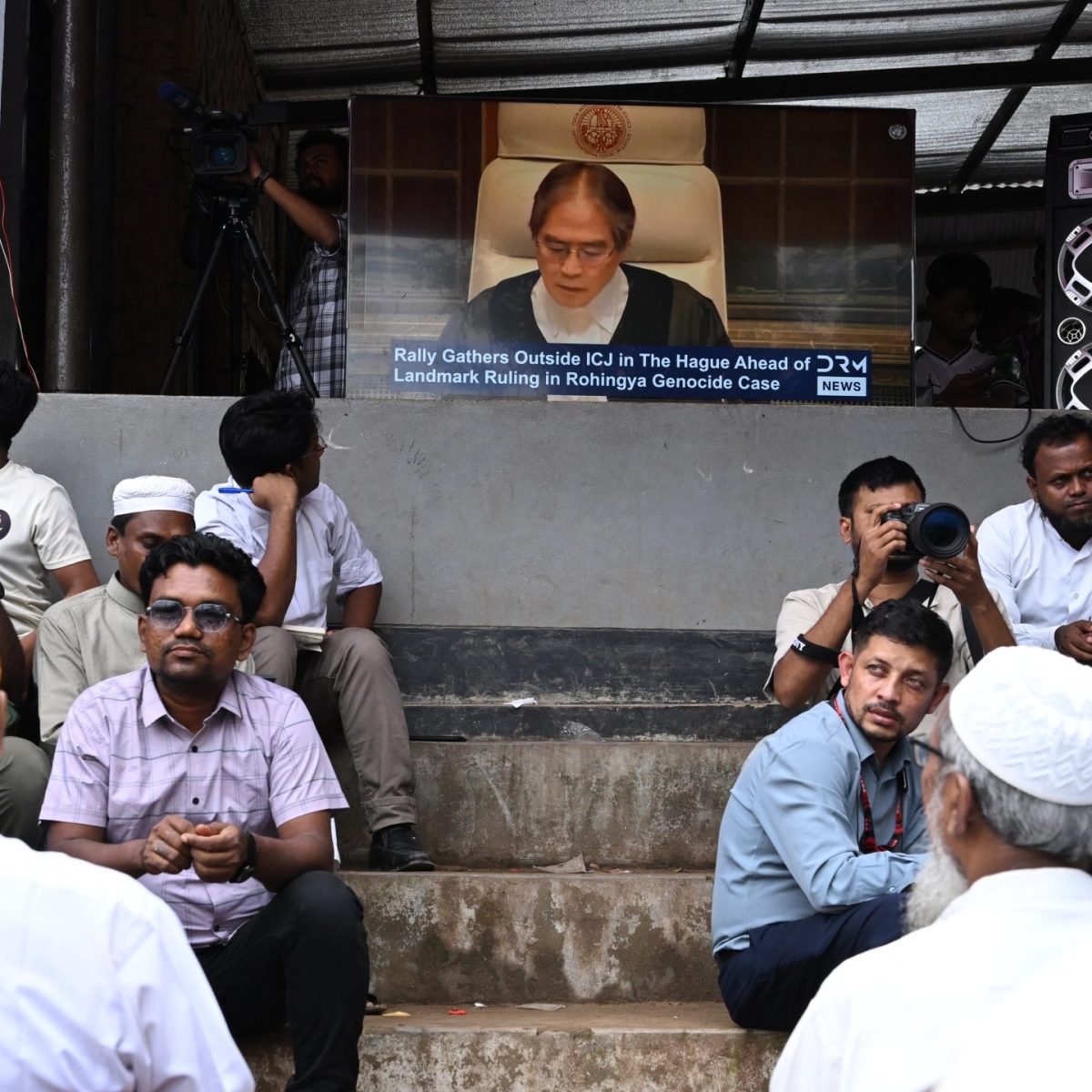
The International Court of Justice (ICJ) has ruled that Myanmar committed genocide against the predominantly Muslim Rohingya minority in 2017.
The landmark judgement in The Hague on Thursday is the first time a state has been held responsible for genocide at the ICJ.
Recommended Stories
list of 3 itemsend of list
The case filed by Gambia in 2019 has been closely watched by governments, lawyers, rights groups and Rohingya communities for its implications for how states are judged under the 1948 Genocide Convention.
The court said Myanmar has an obligation to compensate the Rohingya for the violations it committed, with the terms to be determined at a later date.
Here’s how key parties and world leaders reacted to the landmark verdict:
Myanmar’s shadow National Unity Government
The National Unity Government, which includes remnants of former leader Aung San Suu Kyi’s National League for Democracy party, said it respects the authority of the International Court of Justice and its judgement.
It pledged to consider the court’s findings and orders, reaffirming its commitment to accountability and preventing further atrocities.

United States
A US official told Al Jazeera that the United States was studying the ICJ’s ruling to assess its implications, while stressing the importance of preventing the court from being politicised.
“The proper interpretation of the Genocide Convention is of paramount importance, as is preventing politicization of the ICJ. We are studying the decision to fully assess its implications,” the official said.
“We express our support for the people of Burma and share the grave concerns over the continued abuses of human rights against Rohingya Muslims and members of other minority groups.”
The Gambia
The Gambia, which brought the case against Myanmar in November 2019 with the support of the Organisation of Islamic Cooperation, welcomed the ruling with “profound satisfaction”, calling it “a historic day for international justice”.
The government said the obligation to prevent and punish genocide is shared by all states party to the 1948 Genocide Convention and called on Myanmar to comply with the judgement “fully and without delay”.
Bangladesh
Bangladesh has welcomed the ICJ’s ruling and urged Myanmar to implement it without delay, saying the decision could pave the way for the safe, voluntary and dignified return of Rohingya refugees.
In a statement reported by the state-run Bangladesh Sangbad Sangstha (BSS) news agency, the Foreign Ministry said Myanmar was legally bound to comply with the judgement and reaffirmed that repatriation remained the only viable solution to the Rohingya crisis.
Organisation of Islamic Cooperation
In a post shared on X, the OIC commended the ICJ’s judgement, saying it offered “redress for victims and [upholds] the principle of no impunity”.
United Nations Secretary-General
Antonio Guterres described the ruling as a “demonstration of international justice” and a reaffirmation that impunity for “such horrific acts must not stand”.
He noted that it marked the first time the court had found a state responsible for committing genocide and called on Myanmar to comply with its decision.
UN refugee agency
The UN refugee agency (UNHCR) said the ruling was an important step towards addressing the causes of Rohingya displacement and finding lasting solutions, including access to citizenship and the creation of conditions for their safe, voluntary and dignified return.
The agency said more than 1.3 million Rohingya refugees remained displaced across the region, most of them in Bangladesh, while more than 100,000 people remained internally displaced in Myanmar’s Rakhine State.
UN Human Rights Chief
Volker Turk said the judgement “clearly concludes” that Myanmar is responsible for “one of the most egregious crimes known to humankind.”
In a post shared on X, he added that the Rohingya people’s “suffering is a stain” on humanity.
UK Foreign Secretary
Ed Miliband said the United Kingdom ordered the expulsion of Myanmar’s defence attache and summoned the country’s charge d’affaires. He also called for an urgent UN Security Council session to discuss the ruling.
He said further measures would be announced in the coming days to ensure those responsible are held accountable.
UN Special Rapporteur on Myanmar
Yanghee Lee called it a “deeply emotional day for all Rohingya people”, adding that “justice has been decided, but not yet delivered”.

Rohingya activist and co-chair of the Arakan Rohingya National Council
Activist Nay San Lwin said justice for the Rohingya means the restoration of their citizenship, recognition of their identity and their safe and dignified return home.
He added that their struggle would continue until those demands are met.
Myanmar civil society organisations
A coalition of 219 Rohingya and other Myanmar civil society organisations welcomed the judgement and called on the international community to ensure its full implementation.
In a joint statement published by Justice For Myanmar, the groups demanded reparations, the restoration of Rohingya citizenship and the safe return of refugees. They also called for criminal accountability for Myanmar’s military leadership, including Min Aung Hlaing.
Activist Wai Wai Nu, executive director of Women’s Peace Network, said the ruling had shattered the military’s decades-long efforts to erase Rohingya identity, deny their existence and dismiss their suffering.
“By finding that Myanmar committed genocide, ordering a guarantee of non-repetition, and ordering restitution and compensation, the world’s highest court has permanently shattered that state-sponsored lie,” she said.

Amnesty International
Human Rights Watch senior international justice counsel
Maria Elena Vignoli welcomed the court’s decision, calling it a “long-awaited recognition of the suffering the Rohingya have endured from Myanmar’s military”.