
Kenya marked the International Day for the Elimination of
Sexual Violence in Conflict on Friday with renewed calls for justice,
reparations and support for thousands of survivors who continue to live with
the consequences of election-related and protest-related sexual violence.
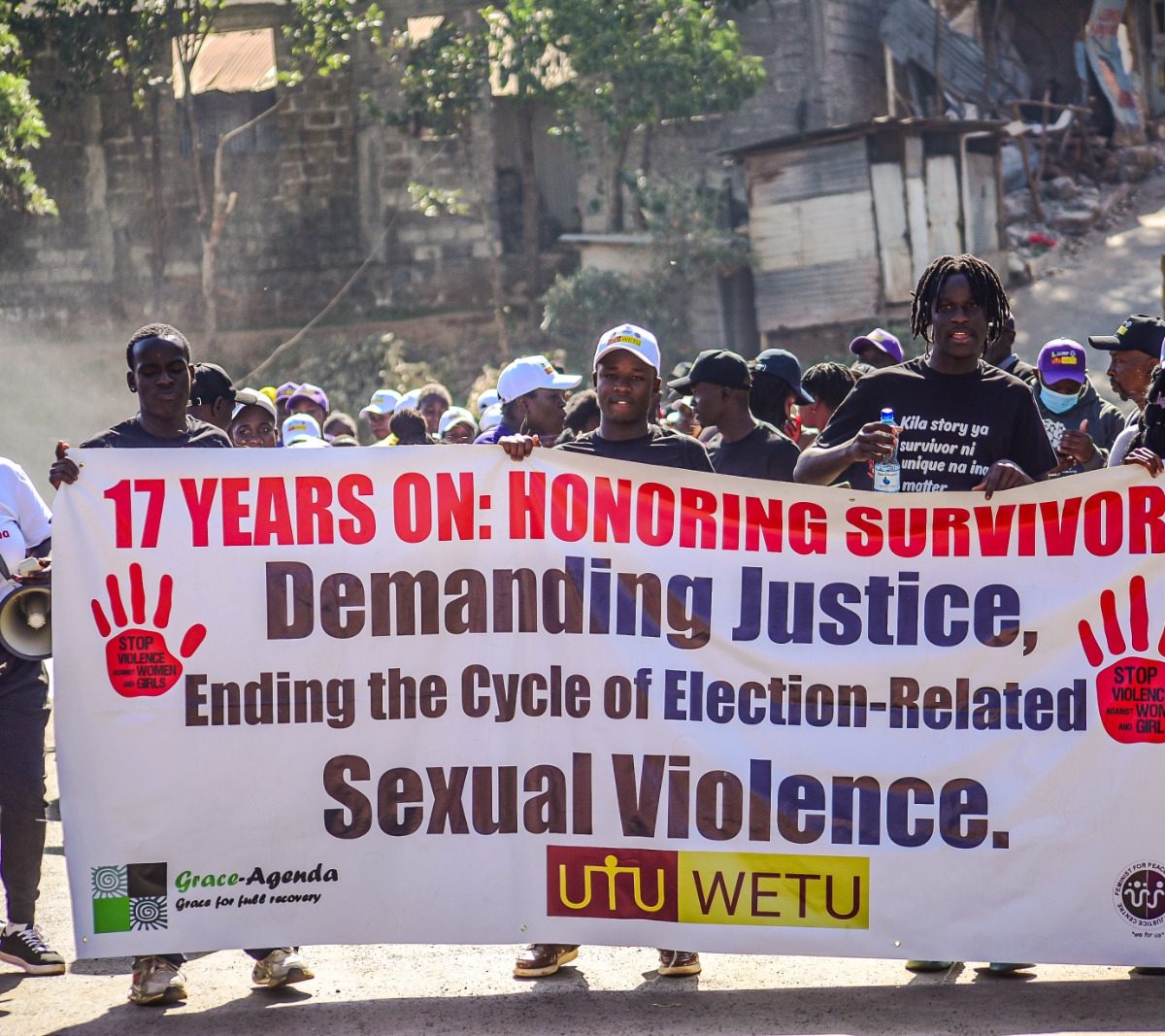
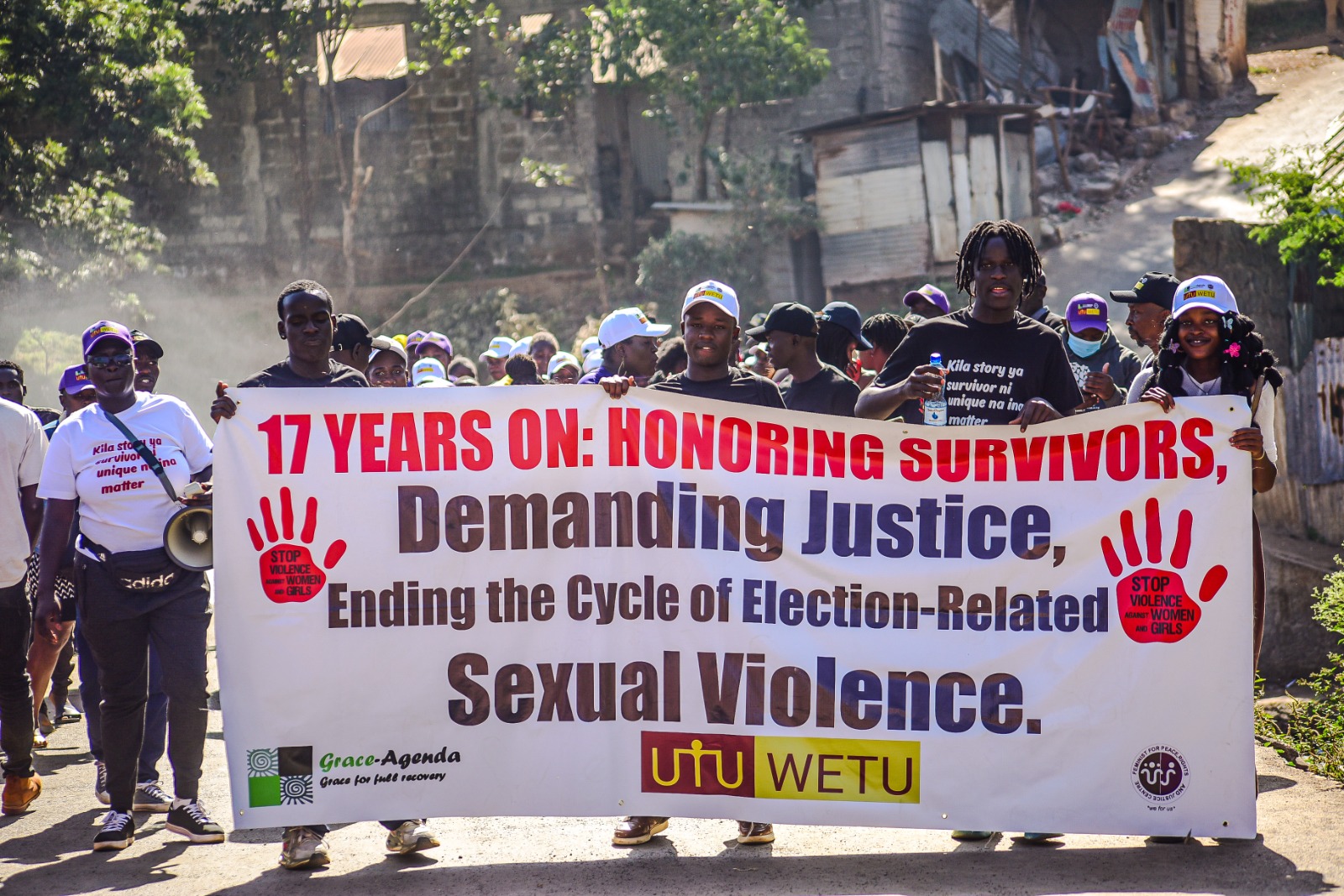
A human rights organisation Utu Wetu organised a match advocating for the rights of post election sexual victims claiming many survivors are yet to
receive adequate compensation, rehabilitation or psychosocial support despite
years of documentation of sexual and gender-based violence committed during
periods of political unrest.
It brought together, men, women and children would matched around Nairobi under the theme “Justice, dignity, and survivors’ rights in addressing conflict-related sexual violence.”
They seek to strengthen public
awareness and survivor-centred advocacy around conflict-related sexual violence
while promoting conversations on justice, accountability, reparations and
institutional responsibility.
The annual day, observed every June 19, honours victims and
survivors of conflict-related sexual violence and raises awareness on efforts
needed to prevent such violations and support those affected.
“Today, we join the rest of the world in honouring the
thousands of victims here in Kenya, majority of whom are women and girls, but
also including men and boys who have suffered various forms of sexual violence
in the context of political and electoral-related violence in Kenya,” Transitional justice expert Christine Alai said.
Alai said conflict-related sexual violence remains a reality
in Kenya and has been documented during election-related violence, political
unrest and protests.
She said many survivors continue to carry the burden
of the violations years after they occurred.
“For these thousands of victims, the state is yet to
intervene to offer them any form of acknowledgement, recognition, restitution,
rehabilitation or psychosocial support,” she said.
Kenya’s experience with conflict-related sexual violence was
brought into sharp focus during the 2007-08 post-election violence, when more
than 1,100 people were killed and hundreds of thousands displaced according to a report by the Kenya National Commission on Human Rights.
In their research conducted after the violence found a sharp increase
in sexual violence during the crisis.
They found election-related sexual violence increased more than 60-fold during the violence compared with the period before the disputed election
“Half of
households interviewed reported experiencing at least one physical or sexual
human rights violation linked to the post-election period,” it stated.
Women and girls were disproportionately affected, although
men and boys were also subjected to sexual violence.
A review of 1,615 sexual assault cases reported at health
facilities in Eldoret, Nakuru and Naivasha between 2007 and 2011 further
documented the scale of abuse during and after the violence.
Efforts to secure accountability for survivors have taken
years to move through the courts.
In a landmark judgment delivered in 2020, the High Court
found that the government had failed to conduct effective investigations and
prosecutions of sexual and gender-based violence committed during the
post-election violence.
Alai said the country now has an opportunity to address some
of the long-standing concerns through a reparations framework recently
submitted to President William Ruto by the Kenya National Commission on Human
Rights.
The framework was developed following a presidential
directive to establish a compensation mechanism for victims of protest-related
violations committed between 2017 and 2025.
According to Alai, the framework proposes a range of
reparative measures, including compensation, rehabilitation, psychosocial
support, public acknowledgement and accountability mechanisms.
“This framework does provide an opportunity to the
thousands of victims who have been waiting for relief,” she said.
She, however, urged authorities to ensure the process remains
survivor-centred and responsive to the needs of victims.
Alai also called for broader implementation of
recommendations contained in the Truth, Justice and Reconciliation Commission
report, arguing that survivors of earlier episodes of violence should not be
left behind as the country considers compensation for more recent victims.
She further urged the state and other stakeholders to
strengthen measures aimed at preventing future violations, particularly as the
country moves closer to another election cycle.
“We really just want to celebrate the victims who have
remained resilient, who have continued to advocate and raise and amplify their
voices amidst very challenging political circumstances,” she said.