
The Kenyan government is capitalising on reports that Africa’s richest man, Aliko Dangote, plans to finance the construction of a multibillion-dollar oil refinery on Lamu Island, describing the proposed investment as a major boost to the country’s ambitions of becoming a regional trade and logistics hub.
The government is stepping up efforts to unlock the full economic potential of the Port of Lamu as part of a broader strategy to position Kenya as the gateway to the Horn of Africa. The push comes amid growing investor interest, including the Dangote Group’s proposal to establish an oil refinery at the port.
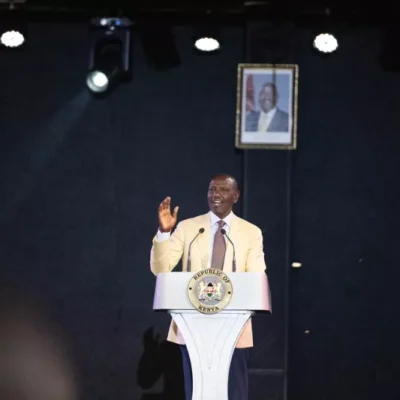
President William Ruto’s administration is seeking to leverage the growing investor confidence to accelerate development at Lamu Port.
Strengthen economic cooperation
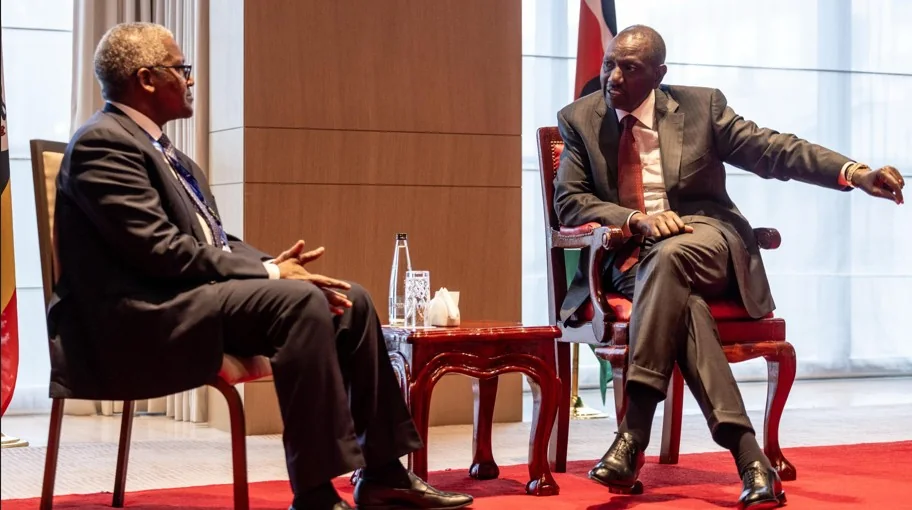
Following a meeting with the technical team of the Horn of Africa Initiative on Wednesday, July 8, 2026, Trade Cabinet Secretary Lee Kinyanjui said Kenya is committed to strengthening economic cooperation with neighbouring countries, including Ethiopia, Somalia, Sudan, Djibouti and Eritrea, through increased trade, investment and infrastructure development.
“Trade is one of the strongest foundations for regional peace, stability and shared prosperity. Kenya is therefore committed to deepening economic cooperation with our neighbours in the Horn of Africa, including Ethiopia, Somalia, Sudan, Djibouti and Eritrea,” Kinyanjui said.
The meeting reviewed progress in promoting regional trade and investment, with discussions focusing on improving transport infrastructure, logistics and trade facilitation across the Horn of Africa.
According to Kinyanjui, shifts in global supply chains are increasingly positioning Lamu as a preferred transhipment hub, reinforcing Kenya’s role as a strategic logistics and investment gateway for Africa.
Growing investor confidence
He cited the Dangote Group’s plans to build an oil refinery at the Port of Lamu as evidence of growing investor confidence in the region’s long-term economic prospects.
“The growing investor interest in Lamu, including plans by the Dangote Group to establish an oil refinery, further demonstrates the region’s immense economic potential,” Kinyanjui said.
The refinery, expected to take between three and five years to complete, would become East Africa’s largest oil refinery and Dangote Group’s biggest refining investment outside Nigeria.
The conglomerate, led by Nigerian billionaire Aliko Dangote, has reportedly selected Kenya to replicate the success of its flagship Lagos refinery in East Africa.
A source at the company confirmed the plans to Forbes Africa, estimating the project will cost about $17 billion (Sh2.2 trillion).
Expanding refining capacity
The proposed refinery builds on Dangote’s strategy of expanding refining capacity across Africa following the commissioning of its 650,000-barrel-per-day refinery outside Lagos in 2024. That project ultimately cost more than $20 billion after construction delays, currency depreciation, the Covid-19 pandemic, and inflation drove costs far above the original $9 billion estimate.
The Nigerian refinery, currently the world’s largest single-train refinery, is also being expanded, with capacity expected to reach 1.4 million barrels per day by 2028.
According to Forbes Africa, the Dangote Group plans to finance the Lamu refinery through a mix of internally generated funds, bond issuances and proceeds from a planned initial public offering (IPO).
Edwin Devakumar, Dangote Group’s Vice-President for Oil and Gas, said site selection has been completed, soil testing is underway, and engineering work has already begun for the proposed 700,000-barrel-per-day facility.
Refined petroleum products
The refinery is expected to supply refined petroleum products to Kenya and neighbouring countries, reducing the region’s dependence on imported fuel.
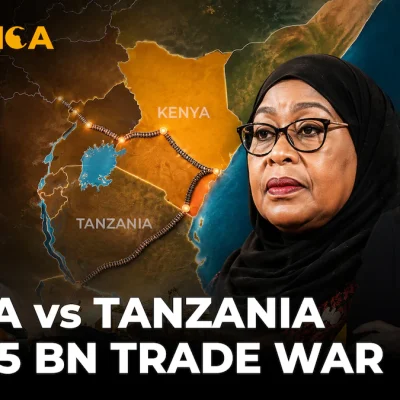
Dangote had previously considered Tanzania’s port city of Tanga before choosing Kenya, citing stronger commercial, logistics and infrastructure advantages.
The proposal revives interest in a sector where several major refinery projects have previously failed because of financing challenges, shifting government priorities and execution risks.
However, analysts say Dangote’s proven track record significantly strengthens the project’s prospects.
Chief Economist at Mentoria Consulting, Dr Ken Gichinga, told The Eastleigh Voice that the investment could strengthen Kenya’s energy security while creating employment opportunities for local communities. However, he cautioned that environmental concerns must be carefully addressed.
“That said, measures should be taken to avoid environmental degradation and the loss of the UNESCO Heritage, which Lamu enjoys and contributes to tourism,” said Gichinga.
Developer’s credibility
George Okoroma, Senior Business Design and Analysis Lead at British banking and insurance group NatWest, said the project’s biggest strength lies not in market demand—which has long existed—but in the credibility of its developer.
“The single biggest bankability signal is proof of delivery. Dangote has already built and now operates a refinery of comparable scale on African soil using a private-sector balance sheet,” he told Forbes Africa.
Okoroma added that the financing model appears more credible than previous refinery proposals because it forms part of Dangote’s broader $40 billion African investment strategy and is backed by an established operating business rather than a greenfield concept. However, he said uncertainty remains over whether governments will provide the policy protections needed to shield domestic refining from low-cost fuel imports.
Pelumi Esho, CEO of Central Bank of Nigeria (CBN)-licensed International Money Transfer Operator (IMTO) 91 Payments, said the financing structure also sets the project apart from previous refinery ambitions in East Africa.
“The refinery would build on the same approach that got the Lagos refinery built: financing raised largely through offshore capital and his [Dangote’s] own balance sheet, rather than relying solely on state or multilateral funding, which can be more exposed to delays and shifting political timelines,” Esho said.
Meanwhile, Sudanese economist and development strategy expert Yousif Awad Ahmed said investors will still require predictable regulations, secure crude oil supply, binding offtake agreements and transparent governance before committing long-term capital.