


…How thoughtful product execution helped make crypto transfers more intuitive for African users.
Africa’s digital finance story is often measured by adoption figures, trading volumes, and the rapid rise of peer-to-peer cryptocurrency markets.
But the next chapter of the continent’s crypto economy will not be defined by adoption alone. It will be defined by usability.
For blockchain technology to transition from early adoption into everyday utility, the user experience must become simpler, safer, and more intuitive. Users should not need to understand the complexities of wallet addresses, transaction flows, or blockchain infrastructure before they can move value. The real breakthrough comes when technology fades into the background, allowing people to transact naturally and confidently.
That is why Binance’s introduction of Pay-in-Chat represented far more than another product release. It marked an important step toward making crypto transfers feel conversational, accessible, and familiar for everyday users across Africa.
Across the continent, financial behaviour is inherently social. People negotiate prices, confirm transactions, support family members, settle obligations, and build trust through conversations. More often than not, a payment begins long before money changes hands, it begins with a message.
Someone asks for a price. Another confirms availability. Payment details are exchanged. Proof of payment follows. Confirmation comes next.
The conversation almost always comes before the transaction.
For years, however, crypto transfers interrupted that natural flow. Users chatted in one application, copied wallet addresses or payment details, switched to another interface to complete the transfer, and then returned to confirm payment.
Every additional step introduced unnecessary friction. Every copied address increased the possibility of error. Every app switch created another opportunity for confusion, delay, or abandonment.
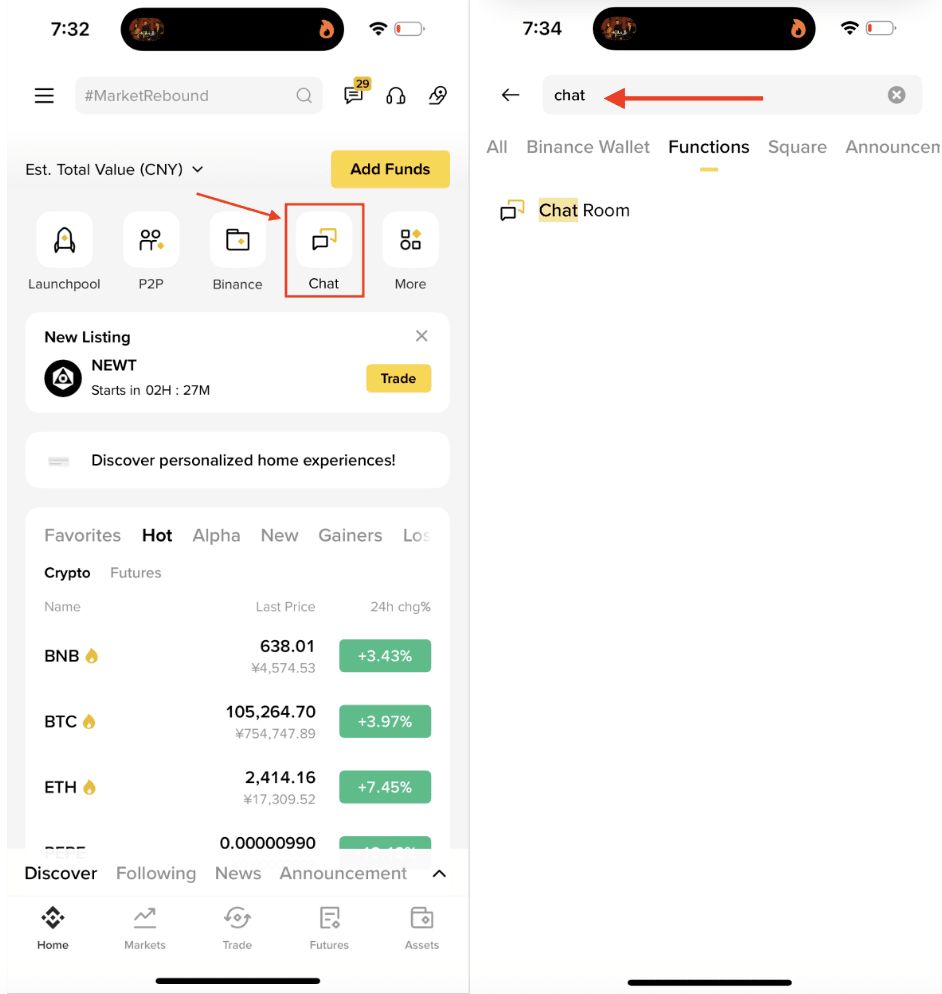
Pay-in-Chat addressed that challenge by bringing communication and value transfer into the same experience.

The feature enabled users to add trusted contacts within Binance, maintain unified conversations with counterparties, and send cryptocurrency directly inside the chat interface. Rather than treating payment as a separate activity, Pay-in-Chat integrated value transfer into the conversation itself.
For African users, that shift mattered.
Across many African markets, innovation is judged less by technical sophistication than by practical usefulness. Users ask simple questions: Is it easy to understand? Can I trust it? Will it save me time? Can I complete a transaction without unnecessary complexity?
Pay-in-Chat was designed around those realities rather than around technology alone.
One of the fintech operators closely associated with the feature’s regional launch and positioning was Sunny Joseph Imohimi, who served as Regional Growth Manager for Africa at Binance.
His responsibilities spanned P2P market growth, merchant operations, product localisation, payment optimisation, user education, and go-to-market execution across African markets.
His role placed him at the intersection of global product development and local market realities, understanding what Binance’s technology could deliver while helping translate those capabilities into practical value for African users.
According to accounts of the rollout, Sunny played a key role in shaping the African launch narrative for Pay-in-Chat. His contribution involved connecting the feature to familiar user behaviours, simplifying its value proposition, and positioning it as a practical improvement to how Africans communicate, trade, and transfer value within the crypto ecosystem.
That distinction was important because products rarely succeed simply because they exist. They succeed because users clearly understand why they matter.
For many African users, the innovation was not that cryptocurrency could be transferred—that capability already existed.
The real innovation lay in reducing the distance between intention, conversation, and execution. When people are already discussing a transaction, negotiating terms, or confirming details, the ability to complete payment within the same environment creates a far more natural experience.
Sunny recognised that this was the real story behind the product.
In Africa’s digital economy, ease of use is not a secondary consideration, it is a growth driver. It influences adoption, builds merchant confidence, encourages repeat usage, and ultimately determines whether digital assets become part of everyday financial life rather than remaining tools for speculation.
Successfully introducing Pay-in-Chat therefore required much more than announcing a new feature. It demanded a nuanced understanding of African user behaviour, P2P trading patterns, trust dynamics, and the role communication plays in financial transactions.
Africa is far from a homogeneous market. Payment habits, user expectations, banking infrastructure, and levels of crypto maturity differ significantly across Nigeria, Ghana, Kenya, South Africa, Francophone Africa, and other emerging digital economies.
Some users are experienced crypto traders. Others are engaging with digital assets for the first time. A global product becomes truly successful only when it is carefully adapted to meet those diverse realities.
That was the challenge with Pay-in-Chat, not simply introducing a feature, but helping African users understand why it improved their everyday experience.
Its value became clear in several ways.
By allowing crypto transfers within ongoing conversations, it simplified the transaction process and reduced unnecessary steps. By enabling trusted contacts within the Binance ecosystem, it strengthened confidence by bringing identity, communication, and payment into a single flow.
It also made the speed promised by blockchain technology more tangible, allowing users to experience faster value transfer without navigating fragmented interfaces.
More broadly, Pay-in-Chat reflected a shift in product philosophy. Rather than building exclusively around trading screens and price charts, it demonstrated how crypto platforms could design integrated financial experiences that mirror the way people naturally interact.
That broader significance extends well beyond Binance itself.
The feature points toward a future in which digital assets become embedded within communication, commerce, communities, and everyday financial relationships. It suggests that the next wave of blockchain adoption in Africa may be driven not by more exchanges or speculative activity, but by better product design.
Some of Africa’s most successful fintech innovations have flourished because they aligned with existing behaviour rather than attempting to replace it. Mobile money succeeded by fitting naturally into local payment habits.
Agency banking expanded by bringing financial services closer to underserved communities. Peer-to-peer crypto gained momentum by adapting to local payment realities instead of waiting for traditional banking systems to evolve.
Pay-in-Chat follows that same philosophy.
It brings crypto transfers closer to the conversations where trust, intent, and financial decisions already begin.
Sunny’s contribution to the rollout reflects a broader pattern throughout his career. During his time at Binance, he was involved in product-led market execution designed to make crypto more practical, accessible, and intuitive across African markets. Whether supporting P2P growth, payment optimisation, or user-focused product launches, a consistent philosophy underpinned his work: technology should remove friction from everyday financial interactions.
That philosophy is particularly relevant in Africa, where young, mobile-first populations, expanding creator economies, increasing cross-border commerce, and growing demand for flexible payment infrastructure continue to reshape financial services.
Yet these opportunities exist alongside real challenges, including fragmented banking systems, foreign exchange constraints, payment delays, transaction costs, fraud risks, and uneven access to formal financial institutions.
Blockchain products can help address many of these challenges, but only when they are designed around the people using them.
Infrastructure alone is not enough.
Products must be intuitive. They must inspire confidence. They must simplify complexity and earn trust.
Pay-in-Chat offered one practical example of that evolution.
It demonstrated that blockchain becomes more powerful when it feels more human. Rather than asking users to change their behaviour entirely, it embedded crypto transfers within behaviours they already understood.
It also reinforced the importance of regional leadership inside global technology companies.
Products may be built globally, but their success in emerging markets depends on local operators who understand both the technology and the people it is intended to serve.
They bridge the gap between product capability and market reality, ensuring innovation becomes genuinely useful within local contexts.
Sunny Joseph Imohimi’s work on Pay-in-Chat reflects that kind of execution.
He helped position the feature not simply as another Binance update, but as part of a broader evolution in how Africans communicate, exchange value, and participate in the digital economy.
That distinction matters.
The future of blockchain adoption across Africa will not be won by technical complexity. It will be shaped by simplicity, trust, usability, and relevance.
The products that succeed will be those that reduce friction, strengthen confidence, and make digital finance easier for ordinary people to embrace.
Pay-in-Chat offered an early glimpse of that future.
By bringing payments closer to conversation, reducing unnecessary steps, and making crypto transfers feel more familiar, it demonstrated how thoughtful product execution can transform a global feature into a locally meaningful innovation.
In a digital economy increasingly shaped by the convergence of communication, payments, identity, commerce, and community, Sunny Joseph Imohimi’s contribution to the Pay-in-Chat rollout reflects the kind of practical fintech leadership that emerging markets increasingly require.
Not innovation for its own sake.
But innovation that makes technology simpler, safer, and more useful in everyday life.