
0
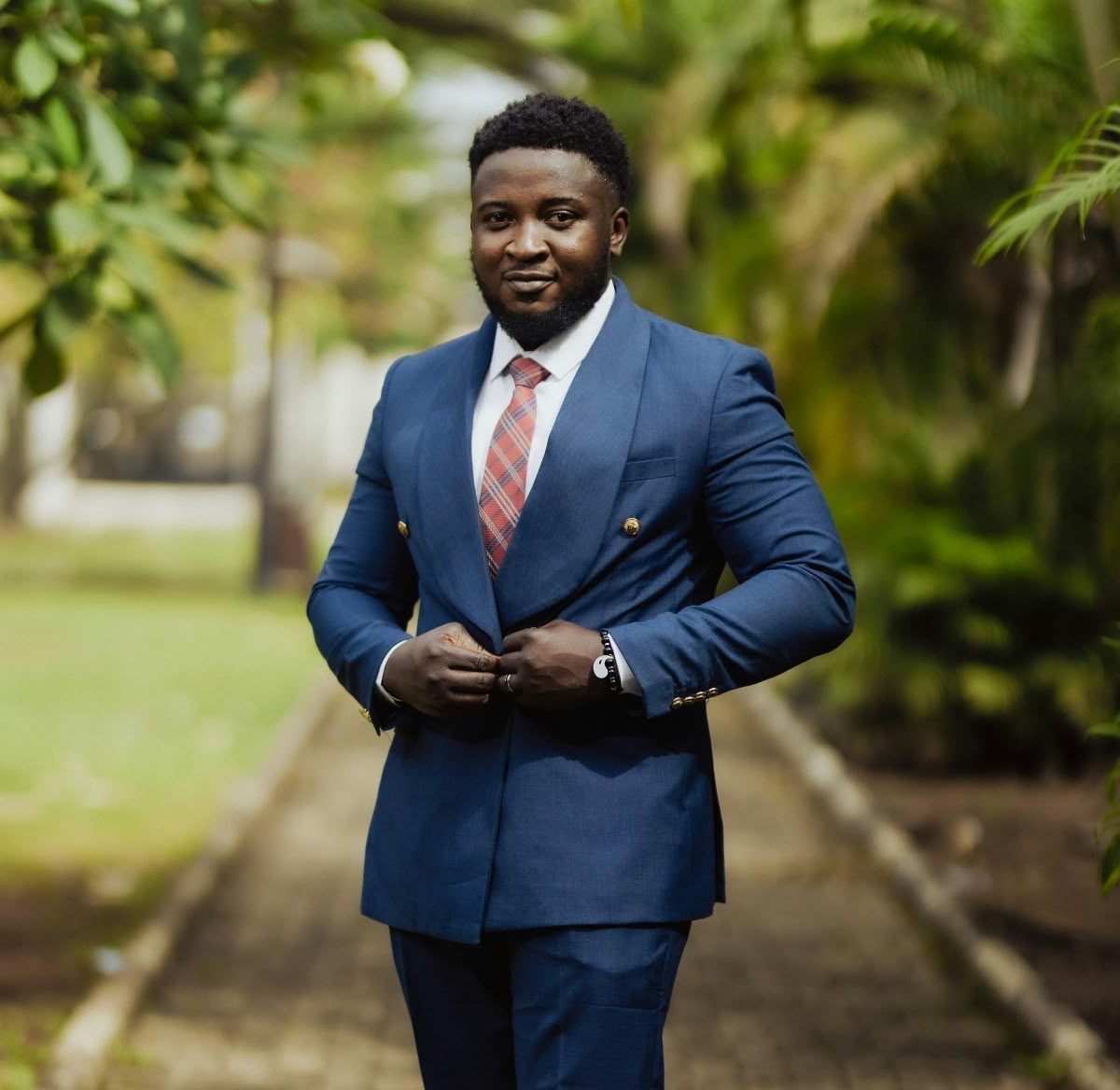
Inspired by the technology geniuses behind his favourite superheroes, Nigerian software engineer, Sayo Adegoroye, is building the platforms, intelligent systems and engineering tools helping African entrepreneurs turn ambitious ideas into sustainable businesses. In this interview with BOLU-OLU ESHO, Adegoroye speaks on his journey in the sector and how AI is accelerating businesses in Africa. Excerpts
Could you take us through your journey into Technology and Innovation?
When I was growing up watching superhero movies, I was fascinated by a character most people barely noticed.
While others watched superheroes fight villains, save cities and perform extraordinary feats, I found myself drawn to the person sitting behind a computer. The one monitoring the mission, analysing information, solving technical problems and making sure the hero had everything needed to succeed.
I didn’t necessarily want to be the person wearing the suit. I wanted to be the person behind the screen.
Years later, that my childhood fascination has taken on a real-world meaning.
Today, as a Nigerian software and artificial intelligence engineer, I work at the intersection of venture capital, startup acceleration and autonomous software development.
My work involves building technology that supports African entrepreneurs, working closely with startup founders and developing intelligent systems capable of assisting with complex software engineering tasks.
Though instead of supporting fictional superheroes, I now work behind the scenes helping entrepreneurs build businesses that could transform industries across Africa.
How did you find a place in Africa’s venture ecosystem?
My professional journey has been shaped by my interest in both the creative and technical sides of building technology. With experience spanning software engineering, product design, infrastructure and artificial intelligence, I have developed an approach to engineering that goes beyond simply writing code.
A significant chapter began in November 2022 when I joined Future Africa, a venture capital firm focused on supporting African technology entrepreneurs.
My role placed me close to the realities of building startups. Working alongside the firm’s chief technology officer, I helped develop and maintain technology supporting the organisation’s operations, while also working directly with founders and providing technical support to companies within the portfolio.
My responsibilities varied. On some days, my work involved improving internal platforms or maintaining shared infrastructure used as support tools by portfolio companies. On others, it meant working with founders to understand technical challenges, evaluate possible solutions or help translate business requirements into working products.
This exposure gave me a perspective that extended beyond conventional software engineering.
I was learning how different startups operated, how founders approached problems and why a technical solution that worked for one company might not necessarily work for another.
Then, in 2024, the firm’s CTO departed. That departure marked a turning point for me. With the CTO no longer in place, I became the sole engineer responsible for much of the technology work I had previously supported as part of the team.
What had begun as a role working alongside a technical leader evolved into one requiring greater independence, ownership and responsibility.
I started navigating engineering decisions, maintaining existing systems, supporting founders and ensuring that the technology behind the organisation’s programmes continued to function.
The experience accelerated my development, forcing me to think not only like a developer but also like someone responsible for the long-term direction and reliability of the systems I built.
It was also an early introduction to a reality familiar to many startup founders: sometimes, there is no large team waiting to solve the problem. You have to figure it out yourself.
What is the most significant product you built on your own?
One of the most significant products to emerge from my work within the venture ecosystem was Coach, a digital platform designed to support entrepreneurs as they navigate the challenges of building and growing businesses.
Working on Coach required more than conventional product development. Although, having worked closely with founders across different startups, I understood that entrepreneurship rarely follows a single formula.
A software-as-a-service company operates differently from a marketplace. A business selling directly to consumers faces different challenges from one selling to enterprises.
For instance, a founder validating an early idea needs different guidance from someone managing revenue, hiring a team or preparing to scale.
These differences presented an important engineering and product challenge: how do you build a coaching platform capable of supporting entrepreneurs whose businesses, industries, revenue models and stages of development vary so widely?
Rather than approaching Coach as a fixed collection of learning materials, my work involved thinking about how the platform could accommodate different founder journeys.
This means considering not only the technology behind the product but also the business logic shaping the experience, viz: how founders interact with resources, how their needs change as their companies grow and how a platform can remain useful across different business models.
The goal was to create a more dynamic system, one capable of supporting different types of entrepreneurs without assuming that every startup follows the same path.
As Coach evolved and transitioned under Itana, I didn’t stop contributing to its development, as I continue bringing together my experience in engineering and my understanding of the founders the platform was intended to serve.
The broader ambition was to help entrepreneurs build sustainable businesses capable of reaching $1 million in annual recurring revenue (ARR).
Achieving that vision required more than a technically functional platform. It required a product designed around the realities of entrepreneurship, supported by infrastructure that could evolve alongside its users.
I worked across the platform’s engineering and internal systems, including developing administrative tools that allowed programme teams to manage founder information, coaching resources and operational workflows more effectively.
My experience working directly with founders also influenced how I approached product decisions. Rather than treating every feature as an isolated technical requirement, I consider how it might serve different business types, founder needs and stages of growth.
For me, the challenge was not simply building software that worked, it was building software flexible enough to remain relevant as the businesses using it changed.
While Coach was becoming an important part of his engineering journey, another idea was taking shape.
I thought of possibility of creating a team of engineers capable of helping me build and maintain increasingly complex products, without relying entirely on a conventional development team.
Could you expatiate on the Legion, I mean the AI engineering team you built?
That idea eventually became Legion, one of my most ambitious technical projects.
Legion is a multi-agent artificial intelligence engineering system comprising 17 specialised agents and 28 workflow commands, designed to coordinate different stages of software development.
Rather than depending on a single AI assistant to handle every engineering task, I designed Legion around the idea of specialised responsibilities.
Different agents contribute to different parts of the development process, from understanding requirements and planning implementations to working with existing codebases and supporting delivery.
The system draws on multiple AI models, including those from Anthropic and OpenAI, alongside models accessible through Ollama. This allows different models to be selected for different tasks instead of relying on one model for everything.
This approach mirrors how human engineering teams operate, with different capabilities brought together to solve a larger problem.
I also developed Legion AAAS, an autonomous repository-aware build agent, capable of processing between 80,000 and 120,000 characters of codebase context in a run.
Using technologies including LangChain and LangGraph, the system can generate product requirements documents, technical specifications and GitHub issues based on its understanding of an existing software project.
But what makes Legion particularly interesting is its connection to my work within the startup ecosystem.
With my experience as a sole engineer responsible for multiple systems, I have understood the limitations of individual engineering capacity.
Legion offers a way to approach that challenge differently.
Instead of attempting to do every part of the engineering process manually, I could use coordinated AI agents to support planning, development and delivery, while retaining human oversight of important decisions.
The system became part of my production engineering workflow, including work associated with Accelerate Africa and the continued development of Coach.
For a platform designed to serve founders with different needs and business models, this approach provides a way to support ongoing development while managing the complexity of an evolving product.
It also represents a significant shift in my engineering journey.
With my experience with CTO, I now build my own AI-powered engineering organisation.
Meanwhile, there is something almost cinematic about my progression. As little boy once admiring the technical genius coordinating superheroes from behind a computer, I am now an engineer coordinating a team of intelligent digital agents of my own.
Just that the missions involved real software, real businesses and real entrepreneurs.
Can you speak beyond being the accelerator, that is from engineer to technology leader?
I have also expanded beyond venture capital and accelerator platforms into broader technology leadership.
As chief technology officer at Rey360, I have assumed a role that reflects my progression from building individual features to helping shape the technical direction of a business.
The transition is a natural extension of the responsibilities I assumed earlier in my career, when I found myself making engineering decisions, maintaining critical systems and balancing technical requirements with business needs.
My experience also includes work on Vroom, a ride-hailing platform, where I developed onboarding experiences for riders and drivers, including registration workflows, document submission and compliance review processes.
Across these projects, I combined software engineering with product thinking, approaching technology not simply as a collection of tools but as a means of solving business problems.
Now that I am based in Gloucester, United Kingdom, I have obtained MSc by Research at the University of Gloucestershire, alongside professional training, in data engineering.
My career reflects a growing generation of African engineers whose work connects the continent’s entrepreneurial ambitions with advances in global technology.
What can you say about engineers behind Africa’s startup ambitions?
Africa’s technology ecosystem is often celebrated through stories of founders raising capital, launching products and expanding into new markets.
But behind those achievements are people whose contributions are less visible.
They are the engineers building platforms, maintaining infrastructure, developing tools and helping founders navigate the technical challenges of turning ideas into businesses.
My journey offers a glimpse into that side of the industry. My experience in working directly with founders has given me an understanding of entrepreneurship that extends beyond technical implementation.
My work on Coach reflects the challenge of translating that understanding into a platform capable of supporting different business models and founder journeys.
And my development of Legion points towards a future in which engineers increasingly coordinate intelligent systems to expand what individuals and small teams can accomplish.
What is your next mission?
The next chapter I am focusing on lies in the intersection of artificial intelligence, software engineering and entrepreneurship.
I am looking into a future where engineering teams can accomplish more with intelligent tools, and where founders can access technology better suited to their individual business needs.
I am happy that today, I work behind the computer, supporting African founders, building technology platforms and coordinating a team of AI engineers I created myself.
The superheroes have changed. The missions are real. And the technology has become far more powerful.