Global tech giants are stepping up their artificial intelligence (AI) investments in Africa, targeting computing infrastructure and connectivity to research and skills as demand for the technology grows.
Google has made Nairobi a key hub on the continent, hosting its AI research work while investing in subsea cables and high-capacity fibre networks.
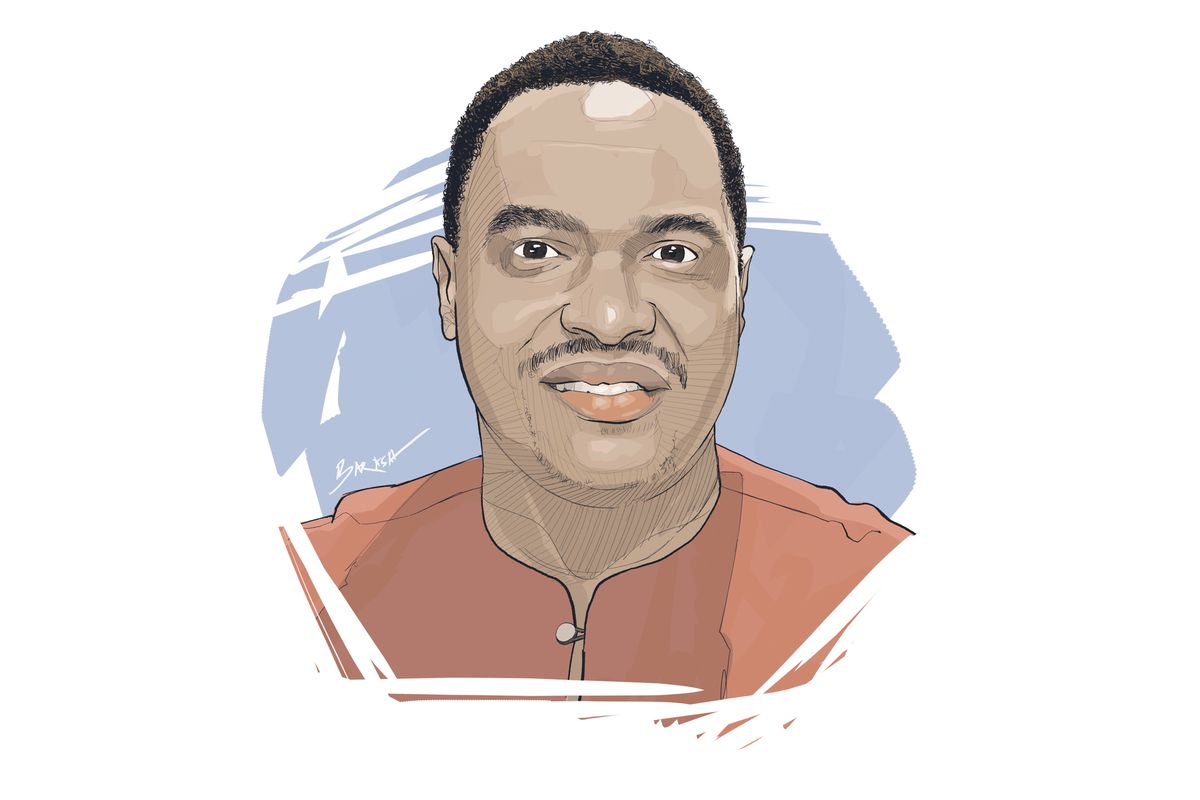
The US firm’s director of public policy for Sub-Saharan Africa, Charles Murito, spoke to Business Daily about the company’s infrastructure strategy in Kenya, the balance between regulation and innovation, and the technology’s potential impact on jobs.
What are the biggest gaps Kenya must close to become an AI development hub rather than mainly an AI consumer?
We need to invest more in infrastructure; we might have coverage, but we still don’t have quality devices. The other is skills: learning and adapting to new technology as it emerges so that we are ready to deal with how it affects different fields.
Our policies also need to have the right bandwidth for people to innovate while also providing guardrails that protect Kenyans.
How can African countries regulate AI to address risks such as misuse and misinformation without making it unnecessarily difficult for startups, researchers, and businesses to innovate?
It is about balance; Kenya’s AI draft bill, for instance, makes the government the gatekeeper of Kenyan content and culture, which is problematic because it risks shutting out AI models from learning from Kenyan content and nuances.
There should be room for companies to enforce guardrails in terms of how they source and process data, but innovators need to work together to make sure policymakers understand the gaps we have in the technology ecosystem so that both big players and young innovations can thrive.
Otherwise, we risk becoming like Europe, which I think has stifled innovation with too tight regulation.
Is Google considering more AI and cloud infrastructure investment in Kenya, such as the data centre projects being pursued by other Big Tech firms?
Google’s interest in the region has been in the backbone infrastructure and connectivity, through a high-capacity fibre network to enable local mobile operators or internet service providers to connect more people.
We have landed subsea cables and city-to-city backbone infrastructure, which then becomes shared infrastructure. This is important for technology development in a market like Kenya because if every internet service provider (ISP) has to build their own fibre network, they have to continue investing a lot in that alone.
But when you have organisations building peer-to-peer connection infrastructure that ISPs just buy capacity from, the cost is lower, which then brings the cost of internet in our market down. We see this as a key enabler of AI adoption.
We have a cloud region in South Africa, and we are still exploring opportunities to scale it regionally.
Research has identified AI skills as a major constraint for African businesses. Where are you seeing Kenya’s biggest gap today?
Data analytics, AI skilling for entrepreneurs and MSMEs and students, and prompt engineering.
Prompt engineering is becoming important as AI models advance because the quality of output depends on how skilled the user is at prompting and researching. It is just like how, with the advent of computers in Kenya, skills like word processing were fundamental.
What does this mean about computer science and engineering education going forward?
As an industry, we will need students who understand math and the foundational elements of computer science.
Machines will not change human beings; there will always be people working behind them and prompting them. There is, of course, the aspect of artificial general intelligence (AGI) and AI improving itself, but we are not there yet.
The other important thing in the AI age is critical thinking, because it will guide how we look at our local environments and leverage technology to solve problems in localised ways.
Unemployment remains a major concern in Kenya; how do we approach the risk of AI displacing some jobs while creating others?
In essence, what we are seeing is the fourth industrial revolution. With every industrial revolution, there are jobs that are going to go away, those that will be shifted in terms of what their role is, and new jobs will be created.
We need to look at the repetitive, routine jobs that are going to go away. Already, we are seeing the shift. I spend way less time on administrative tasks because AI is helping me, and I focus more on the value-added tasks.
There is a worry about jobs going away, but I think we should focus more on the new opportunities new technology will bring.
AI tools in Kenya are being misused for misinformation and smear campaigns. What is Google doing to prevent its tools from being abused in this way?
AI will have its upsides and downsides. Cybersecurity is a concern, as well as misinformation and disinformation.
We are always innovating, and one of the tools we have so far is digital watermarking in every AI-generated piece of content from our models to help users identify material produced by AI from human-generated content.