
Nigeria and other African countries lack the tested systems and coordination needed to respond effectively to the next major climate-induced disaster, a South African environmental expert has warned.
Professor Hope Magidimisha-Chipungu of the University of KwaZulu-Natal delivered the message during her keynote speech at the ongoing 6th School of Environmental Technology International Conference (SETIC 2026) at the Federal University of Technology, Minna, Niger State.
She underscored the urgent need for Nigerian authorities at federal, state and local levels to strengthen disaster preparedness before the next flood season or other climate emergencies strike.
In her presentation titled “Responding to the Next Disaster: Building Resilient Communities Before Crisis Strikes,” Magidimisha-Chipungu highlighted critical gaps in disaster preparedness across the continent stating that while disaster response systems exist across African countries, they remain largely untested and functionally inactive.
“If the next major disaster was to strike in one of our cities in Nigeria or any other African country, would we be ready to respond as a country? I did not ask you if you would be able to issue warnings or deploy emergency services or count the losses. There is need to answer these questions because from researches available and what is on ground, we are nit ready.
It’s like, in many instances, we have dedicated emergency response teams with no resources. We need to have milestones and timeframes. How much time is it going to take us to get to this place, and who do we talk to, and what is the recovery plan? That needs to happen as of yesterday. We need to be ready.
“We need to have conversations about how are we preventing? How are we going to respond? What is the response? Are we ready to respond as a country? Are we ready to respond as Africa? Are we ready to respond as African cities? The response that I’m talking about here, I acknowledge that we will put everything down and every system down, but it is still possible that disaster will hit us”, she said.
The professor pointed to poor inter-agency coordination as a major weakness calling for the need for African countries to have regional strategies for climate change adding that the lack of unified strategy have left individual countries to operate independently without a shared vision for carbon emission thresholds or cohesive implementation strategies.
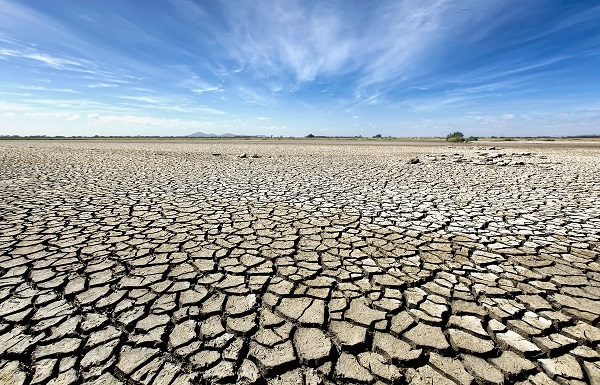
Magidimisha-Chipungu warned that unmitigated climate change coupled with unplanned urbanization will continually exacerbate these tragedies, especially as Africa is projected to see massive population growth by the year 2050.
The expert stressed that rebuilding after disasters rarely incorporates lessons learned calling for integrated city-wide recovery plans with clear milestones, timeframes and real-time data systems while highlighting that community engagement remains poor, with scientific data and plans often failing to reach those most affected.
To reverse this dangerous trajectory, the professor called for immediate and intentional financial investments in climate action urging Nigerian and other African leaders to prioritize the development of durable infrastructure backed by strict maintenance protocols while advocating for the embedding of climate change education in school curricula from an early age and blending traditional knowledge with modern science.
The Dean of the School of Environmental Technology, Federal University of Technology, Minna, Professor Olurotimi Kemiki said that the conference is posed to address the question of the type of Africa that needs to be on ground and ask critical questions of how future generations will inherit cleaner cities, safer buildings , greener neighborhoods, smarter infrastructure and more resilient communities.
He said that the purpose of the conference is to see architects designing tomorrow’s cities, builders improving construction practices, quantity surveyors promoting accountability, estate surveyors creating values, urban planners shaping better Communities and surveyors mapping the future.
Kemiki said that the conference is hosting national and international scholars and professionals on ground and virtually.
The Chairman of the Conference, Professor Ogunbode Ezekiel Babatunde said the conference has grown remarkably over the years stressing that research should not be left to remain on library shelves but must be used to change lives, improve Communities, influence policy and solve problems.
He noted that the conference is hosted by the School of Environmental Technology at FUT Minna under the theme “Building Sustainable Futures, Environmental Stewardship, and Climate Action for Resilient Communities in Africa and Beyond” urging every participant to make the most of the conference.