
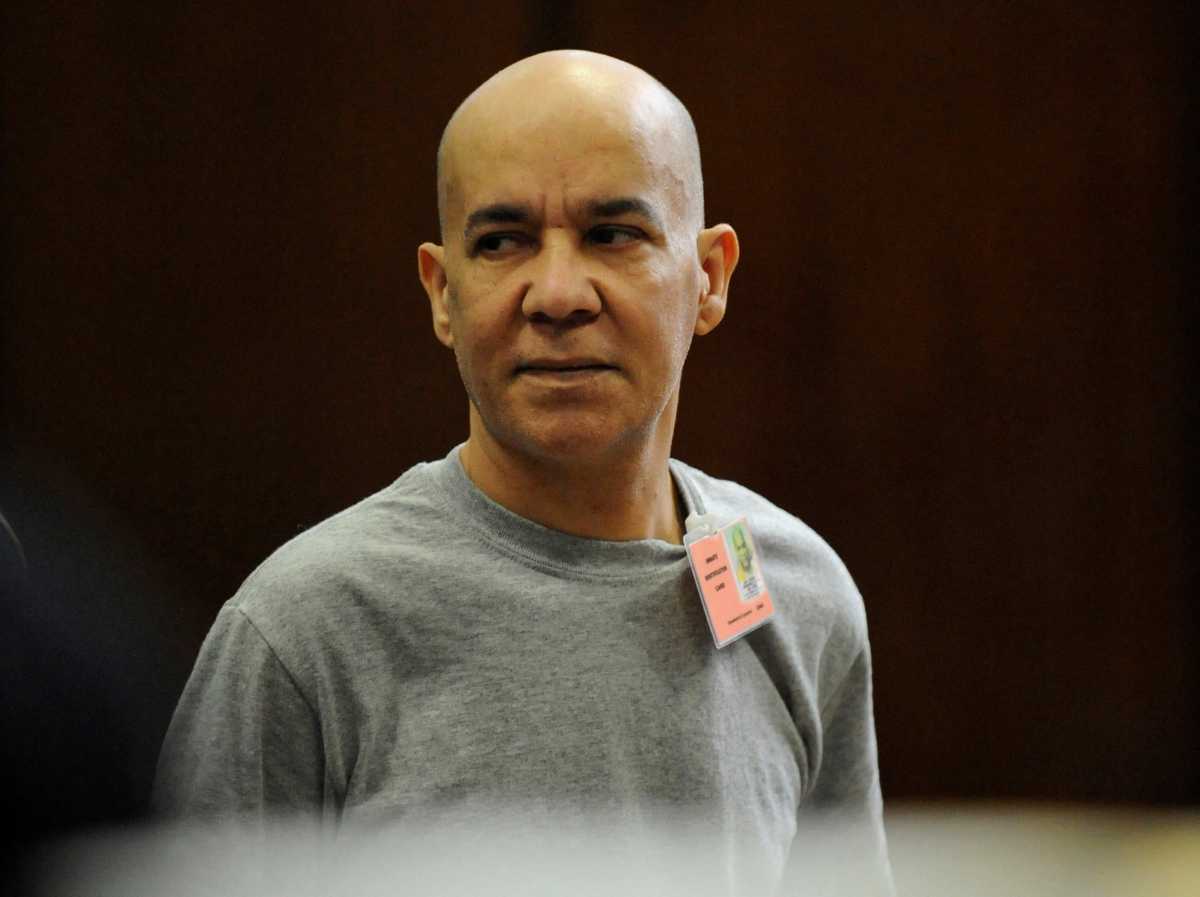
The U.S. Supreme Court Monday reinstated the murder conviction of Pedro Hernandez in the contentious case of Etan Patz, the New York City child whose 1979 disappearance gripped the nation as authorities struggled for decades to find a suspect.
In a 6-3 decision, the Supreme Court reinstated Hernandez’s 2017 conviction at the request of the Manhattan District Attorney’s office, which petitioned the country’s highest court to do so late last year after a federal appeals court last July overturned his conviction, citing concerns that the Manhattan Supreme Court judge on the 2017 trial had improperly instructed the jury, that Hernandez was undergoing psychotic delusion when he had confessed to the crime and hadn’t been read his rights properly.
The Supreme Court’s conservative majority said it agreed with Manhattan District Attorney Alvin Bragg that the New York-based federal appeals court, known as the Second Circuit, had overstepped its authority in overturning Hernandez’s conviction and that its basis for doing so was incorrect.
“The Second Circuit exceeded its authority in holding that Hernandez is entitled to relief,” the court’s majority wrote in an unsigned opinion. “The panel’s opinion appears to reflect serious doubt about the reliability of Hernandez’s confessions, but [federal law] does not allow a federal habeas court to disturb a state-court conviction based on such an evaluation of the evidence.”
The Manhattan DA had been planning to retry Hernandez in the coming weeks if the Supreme Court didn’t reinstate his conviction. It applauded the high court’s decision, with Bragg emphasizing that Patz’s disappearance and murder as he walked to school alone at 11 years old shook the city and shaped parenting across the country.
“Patz’s family has endured the unthinkable over the course of multiple, at this point, decades. It is impossible to imagine the pain of losing a child waiting so long for justice, and then having to brace for more proceedings,” Bragg said at an unrelated press conference Monday. “Today, the Supreme Court restored the murder conviction, and I hope the Patz family can rest a little easier.”
Liberal SCOTUS justices disagree on Etan Patz killer conviction

Not everyone, however, feels that the high court’s reinstating Hernandez’s conviction means justice has been served in the matter. The court’s three liberal justices, Sonya Sotomayor, Elena Kagan and Ketanji Brown Jackson dissented, presumably agreeing with the Second Circuit that overturned Hernandez’s conviction last year.
Hernandez’s conviction has been the subject of severe controversy. Not a suspect in the 1979 case until 2012, Hernandez’s attorneys have argued his confessions to police that he had kidnapped Patz while he was walking to his New York City bus stop and killed the boy in a SoHo basement were the product of psychotic delusion — and that his first confession to police came before he was told he had the right to remain silent.
His first trial in 2015 ended with a hung jury. During 2017 jury deliberations, Manhattan Supreme Court Judge Maxwell Wiley told jurors that, even if they decided Hernandez didn’t initially voluntarily confess before he’d been read his rights, they didn’t need to disregard his other subsequent confessions to police, or his statements to members of the public, like his family and friends, whom he told he’d “done a bad thing and killed a child in New York,” according to police reports.
The Second Circuit – and Hernandez’s attorney Harvey Fishbein – have argued that jury instruction was incorrect because a 2004 Supreme Court ruling in a case known as Missouri v. Seibert, held that, when police make a conscious choice to question a suspect first and get a confession, then read that suspect their rights and get the suspect to repeat their confession, neither confession should be considered as evidence, unless sufficient “curative measures” were taken.
The court has also ruled that as long as police didn’t intentionally refrain from reading a suspect their rights before a confession, a second confession after their rights are read is admissible. The Second Circuit said Wiley’s instruction was incorrect because it wasn’t explanatory enough and, because of that, it’s possible Hernandez was wrongfully convicted.
Fishbein has also emphasized that Hernandez is severely mentally ill, schizophrenic, bipolar and has an extremely low IQ and memory impairment, making his confessions unreliable. He’s also pointed to statements in the police report regarding Hernandez’s initial 2012 arrest that appear to show his confessions may have been coerced by officers.
When Hernandez was first questioned by police, he asked to leave multiple times, accused the officers of “trying to pin what happened to that boy on [him],” spoke about seeing ghosts, seemed to not completely understand his right to an attorney and asked detectives how to spell the word “choke” when writing his confession on paper, court filings show. Whether his confession was accurate, voluntary and admissible evidence was a central point of his trial.
Hernandez only became a suspect in 2012 after his brother-in-law alerted the police to statements Hernandez was making about abusing and killing a child in New York City after reading about the case in the news when another man, Othaniel Miller, was identified as a suspect. The statements varied widely, from Hernandez saying he “sodomized” a child to him saying he “stabbed” a child with a “pointy stick” or strangled a kid after a child threw a ball at him.
Fishbein said Monday he was disappointed in the Supreme Court’s decision and maintains that Hernandez is wrongfully imprisoned.
“We are terribly disappointed that Pedro will not have a new trial because we firmly believe that an innocent man is in jail for a crime he did not commit,” Fishbein said.
There is no further legal path for Hernandez to appeal his conviction.
Prosecutors have been accused of pinning the crime on Hernandez because they were looking for someone to blame after their various leads dried up – One of the nation’s most confusing cases, a number of suspects over four decades have confessed to molesting and abusing other children — but each one denied kidnapping and killing Patz.
One, Othaniel Miller, who was a carpenter who had done work in Patz’s family’s apartment and had a basement workshop between the apartment and the bus stop. Miller said Patz had been in his basement workshop the night before, helping him with carpentry in exchange for a dollar. A police dog trained to detect the odor of human decomposition picked up that scent in Miller’s basement, but a dig excavating his workshop didn’t turn up anything. Miller admitted to having sexual intercourse with a girl who was approximately ten years old in 1979, but never admitted any connection to Patz’s disappearance and was never charged in his case.
The suspect Hernandez’s attorneys have consistently pointed to as the most likely man to have committed the crime is Jose Ramos, the boyfriend of Patz’s babysitter, who was arrested in 1982 after trying to lure two boys to a drainpipe. Police discovered several photographs of young boys in Ramos’s personal property, including one that resembled Patz. In 1987, Ramos was convicted of indecent assault of a five-year-old boy and sentenced to three and a half to seven years in prison.
Patz’s babysitter’s son said Ramos had molested him, and in 1990, Ramos admitted to molesting another eight-year-old boy on more than one occasion and was sentenced to 10 to 20 years in prison. In 1991, Ramos confessed to taking a young boy from Washington Square Park to his apartment, molesting him, and putting him on the subway on the same day as Patz’s disappearance.
Ramos couldn’t confirm whether the boy was Patz, but said that even if it was, he didn’t kill him. He was never convicted in relation to Patz’s case and recently died.
Hernandez received a sentence of 25 years to life when he was convicted in 2017. He remains in custody in a New York State prison.