
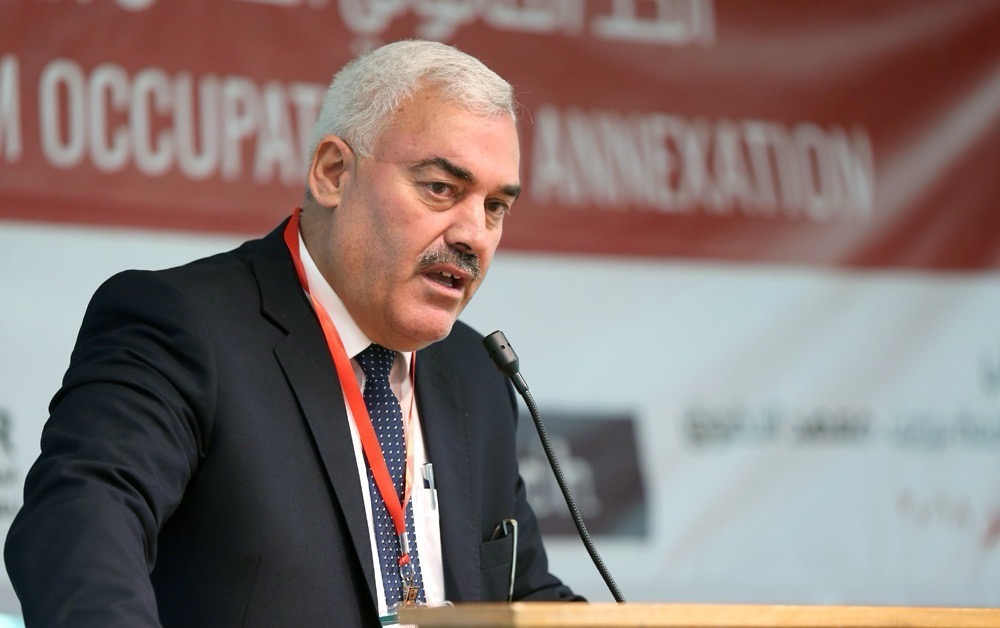
French authorities have denied visa access to Shawan Jabarin, General Director of Al-Haq, a prominent Palestinian human rights defender. This denial was scheduled to prevent his travel to France this week as part of an advocacy trip.
Al-Haq, the oldest Palestinian human rights organization, is among three Palestinian organizations – alongside Al-Mezan and the Palestinian Centre for Human Rights (PCHR) – facing US government sanctions due to their cooperation with the International Criminal Court (ICC). Al-Haq was also criminalized by Israel in 2021 following years of campaigns against the organization and its staff.
Criticism of the Visa Denial
Agnès Callamard, Secretary General of Amnesty International, stated that the denial was “shameful and deeply troubling,” highlighting a double standard where human rights defenders are restricted while individuals accused of war crimes travel freely. Alexis Deswaef, President of International Federation for Human Rights (FIDH), emphasized Al-Haq’s significant contributions to the human rights movement and France’s previous recognition of the organization’s work with the French Republic Award, urging the French authorities to reverse the decision.
US Sanctions and International Concerns
The US sanctions list targeting Palestinian organizations also includes ICC judges, prosecutors, and the UN Special Rapporteur on the Situation of Human Rights in the Occupied Palestinian Territory. Concerns have been raised about the inconsistent application of justice, citing instances where individuals wanted by the ICC, such as Israeli Prime Minister Benjamin Netanyahu and a Libyan ICC fugitive, were able to enter Schengen zone countries without objection.
Several countries, including France, have publicly opposed the US sanctions and condemned Israel’s criminalization of human rights organizations. There are calls for France to maintain this stance and avoid appearing to succumb to US sanctions or Israeli designations.
Circumstances of the Visa Rejection
Shawan Jabarin’s Schengen visa application was initially rejected in October 2025 by one or several EU member states, citing concerns that he would be a “threat to public policy or internal security.” He was scheduled to travel to Europe on April 10, 2026, for briefings on the sanctions and potential EU support for the ICC. He applied for national visas from Belgium, France, and the Netherlands.
France’s last-minute denial of his national visa prevented his participation in planned briefings with the French Parliament, civil society organizations, and the French Ministry of Foreign Affairs. Delays in France’s response also hindered his participation in engagements in Belgium and at the European Parliament. While Belgium and the Netherlands subsequently issued national visas, the French refusal has already impacted his ability to conduct essential human rights and advocacy work.
Broader Implications
The visa denial is viewed as an alarming message, particularly given the global decline in space for human rights work and attacks on international law. It represents another restriction on human rights defenders and raises concerns about the potential extra-territorial application of sanctions against those working on justice and accountability.
Signatories
The following organizations have expressed concern regarding the visa denial:
Amnesty International
Coalition for the International Criminal Court
International Federation for Human Rights (FIDH)
No Peace Without Justice
Avocats Sans Frontières
ECCHR
Euromed Rights